
Analysis: Sheikh Hasina Death Sentence Reveals Critical Constitutional and Legal Flaws in Bangladesh Tribunal
- Date & Time:
- |
- Views: 49
- |
- From: India News Bull
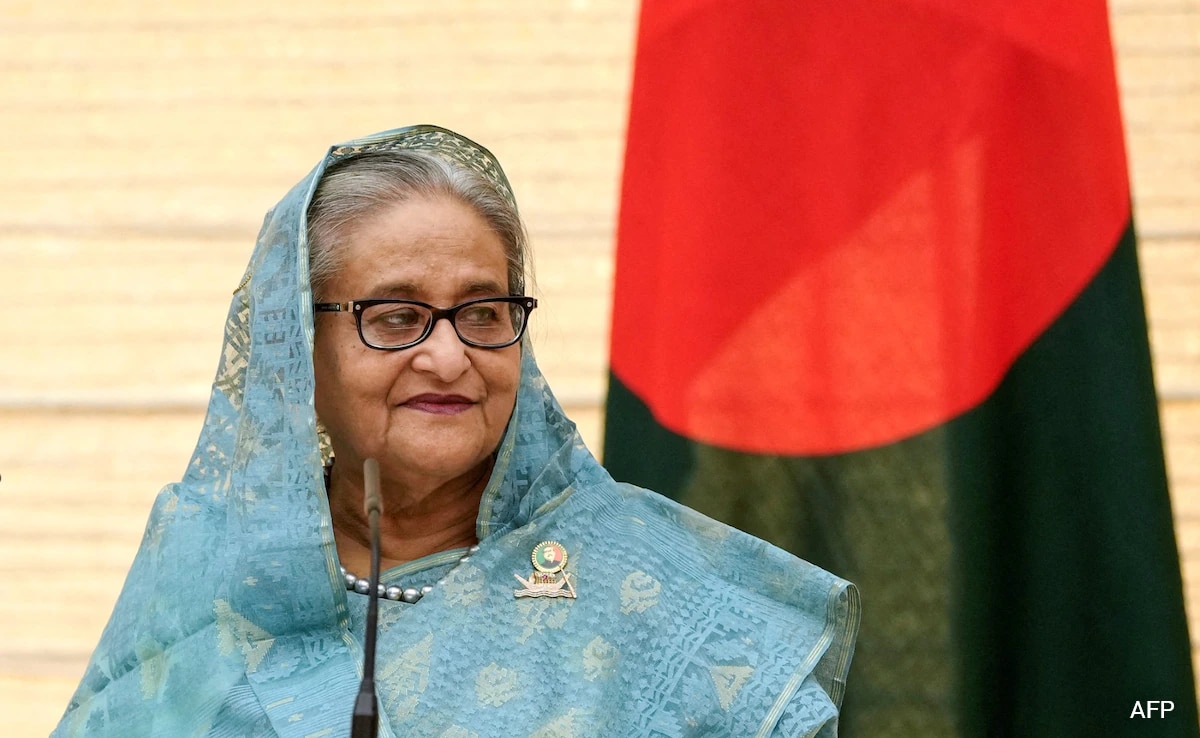
The death sentence imposed on former Bangladesh Prime Minister Sheikh Hasina has raised significant concerns due to multiple legal, constitutional, and procedural irregularities.
Sources indicate the International Crimes Tribunal-Bangladesh (ICT-B) proceedings were compromised by constitutional violations, questionable judicial appointments, evident prosecutorial bias, limitations on defense rights, accelerated timelines, politically-motivated mass cases, and conditions incompatible with fair trial standards.
The ICT-B's legal foundation presents fundamental problems. Created under the International Crimes (Tribunals) Act of 1973, this legislation was specifically designed to address genocide and crimes committed during Bangladesh's 1971 Liberation War, not for events outside this historical context.
Amendments made after August 5, 2024 through an Ordinance are considered invalid from the start because the executive was not properly appointed and Parliament had not approved the changes. The President lacked constitutional authority to issue such an Ordinance under Article 93. The Parliament's dissolution itself followed improper procedures, undermining subsequent legal actions.
The judicial appointments raised serious constitutional concerns. On August 10, 2024, the Chief Justice and five Appellate Division judges were forced to resign after student protesters surrounded the Supreme Court with an ultimatum.
The three ICT-B judges were appointed through questionable processes: Chairman Golam Mortuza Majumder, originally a retired district judge, was hastily made a High Court judge just six days before the ICT announced its intention to take up the cases. Mohitul Haque Mohammed Enam Chowdhury and Shafiul Alam Mahmud were both elevated to permanent positions without fulfilling the two-year probationary requirement mandated by Article 98 of the Constitution.
Additionally, 22 judges aligned with Jamaat-e-Islami were irregularly elevated within a year. None of the ICT-B judges possessed experience in international criminal law, an essential qualification for trials involving crimes against humanity. Judge Shafiul Alam Mahmud's known association with the Bangladesh National Party (BNP), including his 2019 election to the Supreme Court Bar Association on a BNP slate, further suggested political bias within the tribunal.
The prosecution and defense arrangements appeared engineered for a predetermined outcome. Mohammed Tajul Islam's appointment as Chief Prosecutor immediately raised concerns, as he had previously served as chief lawyer for war criminals in earlier trials before the International Crimes tribunal. His appointment by Jamaat-e-Islami suggested a retributive motivation.
Similarly, Toby Cadman, who previously defended Jamaat leaders in earlier war crimes trials, was appointed as Special Adviser to the Chief Prosecutor, reinforcing suspicions of a punitive political agenda.
On November 18, 2024, the ICT ordered the investigation completed within one month, despite the gravity of charges including genocide, suggesting both charges and verdict were predetermined.
Sheikh Hasina consistently maintained she was denied the right to legal counsel of her choice. The state-appointed defense lawyer, Md Amir Hossain, openly admitted, "I did not attempt to communicate with Sheikh Hasina. There is no provision allowing such an attempt... They also did not try to contact me, nor did they provide any form of assistance." This lawyer lacked background in international criminal law.
In August 2025, senior Bangladesh Supreme Court lawyer Z.I. Khan Panna attempted to represent Hasina but was rejected by the Tribunal during the testimony stage. The same state lawyer was appointed to defend both Sheikh Hasina and the former Home Minister, creating serious ethical conflicts.
The defense received the full set of prosecution evidence only on June 25, 2025, approximately five weeks before trial. Despite the voluminous evidence, no request for additional preparation time was filed, raising questions about the seriousness of the defense attorneys.
Prosecutors leveraged a 2013 judgment from the Quader Mollah case to prevent defense attempts to cross-examine witnesses on contradictions. Ironically, these same prosecutors had previously argued against such limitations during Jamaat trials.
After the verdict, the defense lawyer stated he could not file an appeal as his clients were absconding: "If they are arrested or surrender before the tribunal, only then can an appeal be filed." He added that the Tribunal denied him access to a copy of the verdict.
Legal experts argue that conducting a trial in the absence of the accused violates fundamental justice norms, especially when capital punishment is involved. The trial proceeded with unusual speed, running from August 3 to October 23, 2025, with testimony concluding on October 8—remarkably brief for a case involving complex evidence, numerous witnesses, and allegations of crimes against humanity.
Since August 5, 2024, thousands of politically-linked murder and other serious cases have been filed against Awami League officials, activists, journalists, and lawyers. These include over 200 cases against Sheikh Hasina alone, and more than 1,170 cases naming nearly 400 former ministers, Members of Parliament, and leaders. Many cases were filed against unnamed individuals, with the same people often charged in multiple cases at multiple locations on the same day.
On December 5, 2024, the ICT sought to ban media dissemination of Hasina's remarks, even before trials began. Arrests were conducted without warrants or proper legal procedures.
No charges appear to have been filed regarding human rights violations and systematic abuses occurring after August 5, 2024, under the Anti-Discrimination Students Movement's watch. Attempts seem to have been made to dismiss these as 'political violence.'
Meanwhile, individuals linked to Jamaat-e-Islami and extremist groups, including convicted terrorist Lutfozamaan Babar and Jashimuddin Rahmani, were released or granted bail. Reports allege 11 custodial deaths of Awami League-affiliated individuals since August 2024.
Forensic inconsistencies were observed, including bullets not matching police weapons. Multiple attacks on arrested Awami League leaders, accused persons, and lawyers within court premises, such as on Salman Rahman and Dipu Moni, further undermined fair trial conditions.
Before trial proceedings began, senior officials made statements indicating Hasina's fate was predetermined. Chief Prosecutor Mohammed Tajul Islam stated on October 17, 2024: "The court has ordered the arrest of former Prime Minister Sheikh Hasina and to produce her in court on November 18. Sheikh Hasina was at the helm of those who committed massacres, killings and crimes against humanity from July to August. It is a remarkable day for us."
IT Advisor Nahid Islam declared on October 21, 2024: "I want to tell everyone that Hasina will not be able to return to Bangladesh to do politics, but only to walk the gallows."
Despite being a State Party to the Rome Statute since 2010, the interim government did not refer the case to the International Criminal Court, likely due to inconsistencies in the case.
Source: https://www.ndtv.com/world-news/sheikh-hasina-death-sentence-is-illegal-unimplementable-untenable-sources-9659079