
Israel Army Says Will Use 'Unprecedented Force' In Gaza City
- Date & Time:
- |
- Views: 71
- |
- From: India News Bull
Israel warns of "unprecedented force" in Gaza City operations, urges residents to flee southward.
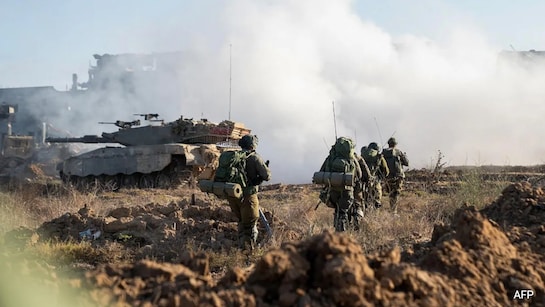
The Israeli military announced on Friday it would employ "unprecedented force" in Gaza City operations, calling for residents to evacuate southward while closing an evacuation route that had been available for the previous 48 hours.
Israel reports hundreds of thousands have already fled Gaza's largest city as international concern mounts over the escalating humanitarian crisis in the territory, which the UN has declared is experiencing famine after nearly two years of conflict.
The timing of this intensified military campaign comes just before several Western nations, including France and Britain, are scheduled to recognize a Palestinian state at an upcoming UN summit.
According to UN estimates from late August, approximately one million people were residing in Gaza City and surrounding areas before this latest evacuation push.
Avichay Adraee, the Israeli military's Arabic-language spokesman, stated on X: "From this moment, Salah al-Din Road is closed for southbound travel. The Israel Defense Forces will continue to operate with unprecedented force against Hamas and other terrorist organisations."
Adraee further noted that Al-Rashid street remained the only available route south, urging residents to "take this opportunity and join the hundreds of thousands of city residents who have moved south to the humanitarian area."
The military had previously announced on Wednesday a "temporary" evacuation route for Gaza City residents following the launch of an intense ground offensive and massive bombardment of the city.
The evacuation corridor via Salah al-Din street, the main north-south thoroughfare through Gaza, was initially scheduled to remain open for just 48 hours from midday Wednesday.
This US-backed offensive began on Tuesday, coinciding with a United Nations probe that accused Israel of committing "genocide" in Gaza, specifically implicating Prime Minister Benjamin Netanyahu and other senior officials for allegedly inciting the crime. Israel promptly rejected these findings, describing them as "distorted and false".
AFP footage captured Palestinians heading south along the Al-Rashid coastal road on Thursday, many traveling on foot or in vehicles loaded with limited possessions.
Speaking from western Gaza City on Friday, displaced Palestinian Sami Baroud described "relentless and intense shelling" to AFP by telephone.
"Our life has become nothing but explosions and danger," the 35-year-old said. "We have lost everything -- our lives, our future, our sense of safety. How can I evacuate when I can't even afford transportation?"
Umm Mohammed Al-Hattab, 49, expressed similar concerns, stating her family had nowhere to go and couldn't afford to relocate.
"My seven children and I are still living in tents in western Gaza City after (Israel) bombed our home," she said. "The bombing hasn't stopped, and at any moment, we expect a missile to fall on us. My children are terrified, and I don't know what to do."
The conflict began following Hamas's October 7, 2023, attack on Israel that resulted in 1,219 deaths, primarily civilians, according to AFP's tally of official figures.
Israel's military response has killed at least 65,141 people, also mostly civilians, according to Gaza health ministry figures that the United Nations considers reliable.