
US Nuclear Testing History: From Trinity to Trump's Announcement (1945-Present)
- Date & Time:
- |
- Views: 51
- |
- From: India News Bull
The United States has conducted 1,032 nuclear tests from 1945 to 1992, representing a significant chapter in global military history.
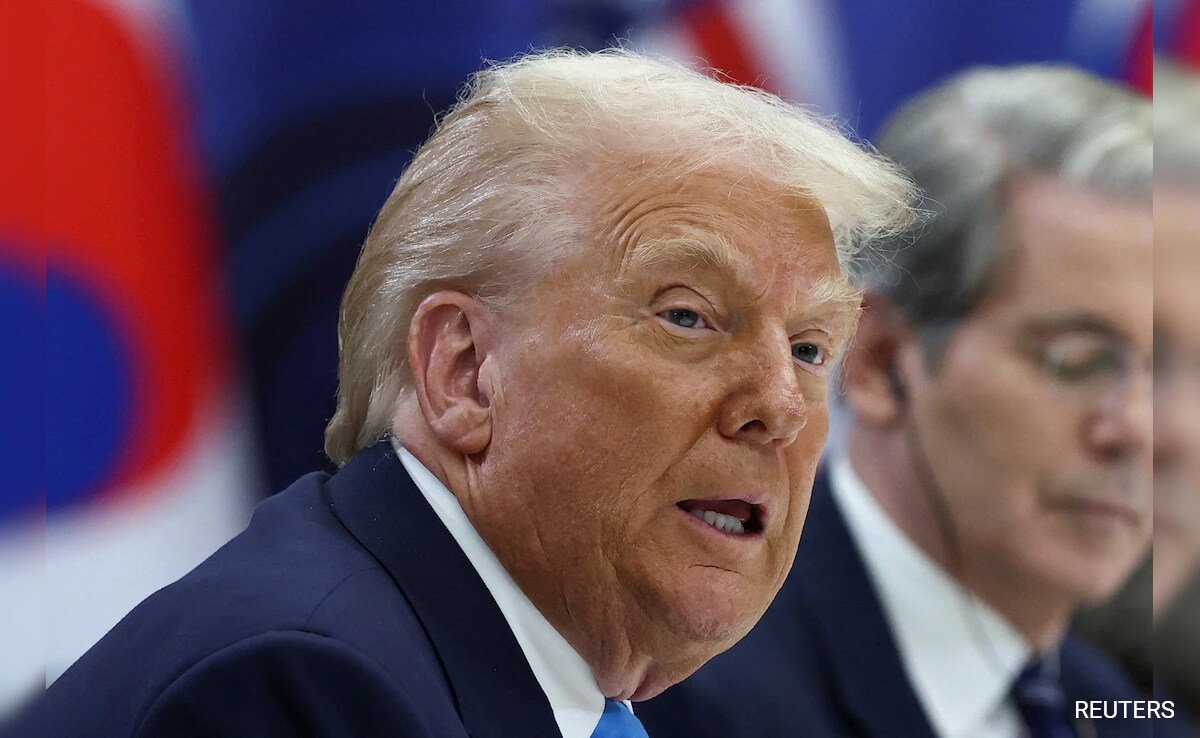
President Donald Trump's recent unexpected announcement that the United States will "start testing our Nuclear Weapons" has disrupted over three decades of nuclear restraint policy. This declaration has generated widespread concern and confusion both domestically and internationally.
Since its last explosive nuclear test in 1992, the US has maintained its nuclear arsenal through subcritical experiments. The nation's nuclear testing history spans several decades and includes numerous significant developments. Here's a comprehensive overview:
1945: The world's first nuclear test explosion, codenamed "Trinity" (inspired by John Donne's poetry), was conducted by the United States in Alamogordo, New Mexico. This test was overseen by physicist J. Robert Oppenheimer.
1946: Operation Crossroads marked the first underwater nuclear test, conducted at the Pacific Proving Grounds in the Marshall Islands. This operation aimed to evaluate the effects of nuclear weapons against naval vessels.
1950: President Harry Truman authorized the establishment of the Nevada Proving Ground on December 18, designating 680 square miles as a dedicated testing area. This site became one of America's most important nuclear weapons testing locations.
1951: The first atmospheric nuclear test, codenamed "Able," was detonated at the Nevada Testing Site on January 27. By July 1962, a total of 100 atmospheric tests had been conducted at this location.
1952: The United States tested its first fusion bomb during Operation Ivy on November 1 on Elugelab Island in the Marshall Islands' Enewatak Atoll. This was an experimental prototype rather than a deployable weapon.
1954: On March 1, the US detonated "Shrimp," a thermonuclear weapon, on Bikini Atoll in the Marshall Islands. This test would become the largest nuclear detonation in American history.
1957: Operation Plumbbob comprised 29 nuclear tests conducted between May 28 and October 7 at the Nevada Test Site. It stands as one of the most extensive and thorough test series ever conducted by the United States.
1958: President Dwight D. Eisenhower announced a unilateral testing moratorium on October 31, with the understanding that the Soviet Union would similarly refrain from testing. However, the Soviet Union resumed testing in September 1961.
1961: The United States resumed year-round testing at the Nevada Test Site on September 15, conducting approximately 27 tests annually over the subsequent three decades.
1963: The Limited Test Ban Treaty was signed by the United States, Great Britain, and the Soviet Union on August 5. Following Senate approval, this treaty prohibited nuclear weapons testing in the atmosphere, outer space, and underwater when it took effect on October 10.
1974: The Threshold Test Ban Treaty (TTBT), also known as the Treaty on the Limitation of Underground Nuclear Weapon Tests, was signed in July. This agreement established a nuclear "threshold" by prohibiting tests exceeding 150 kilotons.
1992: The final US nuclear explosive test, codenamed "Divider," was conducted underground at the Nevada Test Site on September 23, marking the conclusion of 1,032 nuclear tests conducted between 1945 and 1992.
1992: The Hatfield-Exon-Mitchell Amendment was passed by Congress and signed into law by President George H.W. Bush, establishing a temporary unilateral moratorium on underground nuclear testing. The legislation stipulated that the US could not conduct underground nuclear weapons tests after September 30, 1996, unless a foreign state conducted a nuclear test thereafter.
1996: President William J. Clinton signed the Comprehensive Nuclear-Test-Ban Treaty (CTBT) at UN Headquarters on September 24. The United States became the first country to sign this treaty, which prohibits all nuclear test explosions for both military and civilian purposes.
1997-Present: The United States continues to conduct non-explosive subcritical experiments at the Nevada National Security Site to assess the safety and reliability of its nuclear stockpile. In May 2024, the Department of Energy's National Nuclear Security Administration (NNSA) conducted an experiment at the Principal Underground Laboratory for Subcritical Experimentation (PULSE) facility. According to the DOE, this test, like the 33 previous US subcritical experiments, complied with the zero-yield standard under the CTBT.
Source: https://www.ndtv.com/world-news/from-trinity-to-trump-key-dates-and-turning-points-in-us-weapons-testing-9549405