
International Competition for Kenya's Rare Earth Minerals at Mrima Hill: Economic Opportunity vs. Community Concerns
- Date & Time:
- |
- Views: 66
- |
- From: India News Bull
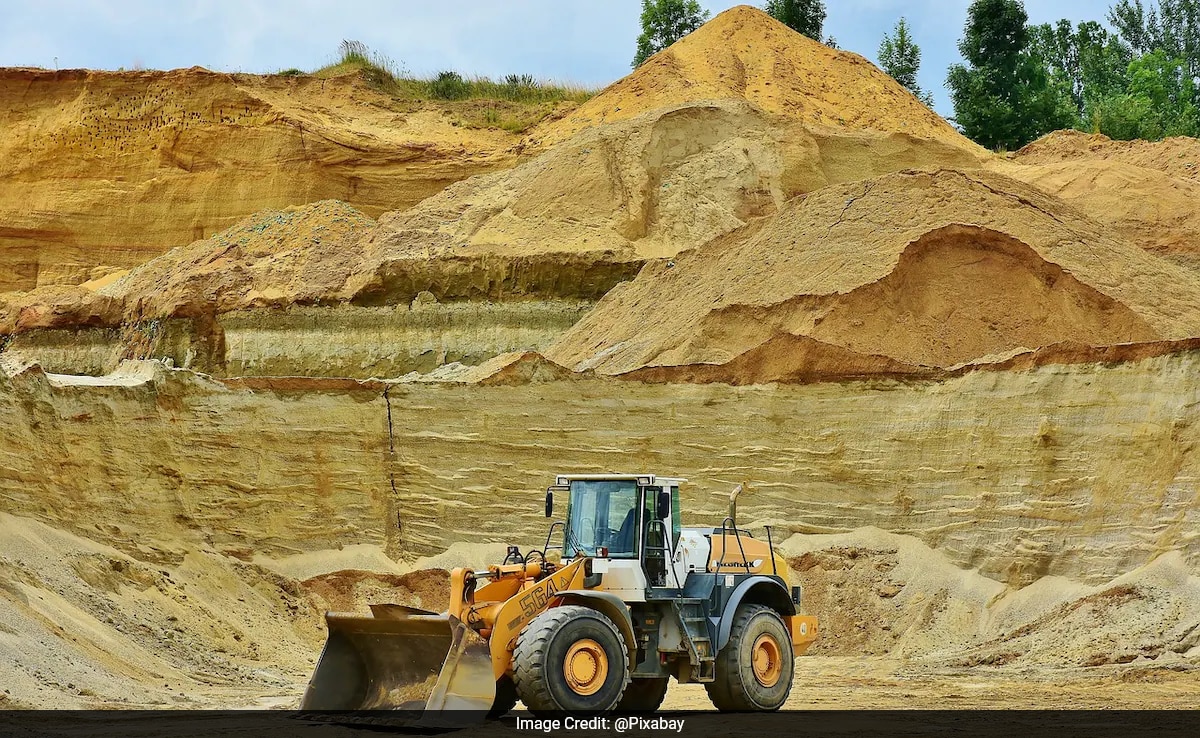
US has positioned securing critical minerals as a cornerstone of its African diplomatic strategy. (Representational)
Kenya's coastal region has become the center of international attention as five villages find themselves caught in a geopolitical contest over Mrima Hill's valuable rare earth deposits—minerals essential for modern technology and green energy industries.
The Trump administration established critical mineral security as a priority in US-Africa relations, evidenced by diplomatic efforts in the mineral-rich Democratic Republic of Congo earlier this year.
Mrima Hill, a 390-acre forested area near Kenya's Indian Ocean coastline, represents another significant resource. The site contains substantial rare earth deposits that Cortec Mining Kenya, a subsidiary of UK and Canada-based Pacific Wildcat Resources, valued at $62.4 billion in 2013, including major niobium reserves used in steel reinforcement.
In June, US interim ambassador Marc Dillard visited the hill, highlighting American interest. Local guards report turning away Chinese nationals who attempted to visit the site in recent months.
An Australian mining consortium comprising RareX and Iluka Resources announced intentions this year to extract rare earths from the site, while local residents observe an influx of land speculators to the area.
The predominantly Digo ethnic community expresses growing concern about potential eviction and exclusion from mining benefits. This lush forest houses their sacred sites and has traditionally supported agriculture and livelihoods, despite more than half the population currently living in extreme poverty according to government statistics.
When AFP attempted to access the forest, they were initially denied entry.
"People arrive in expensive vehicles... but we deny them access," explained guard Juma Koja, citing past negative experiences with potential investors due to perceived lack of transparency.
"I'm determined to protect my community from exploitation," he added.
In 2013, Kenya revoked Cortec Mining Kenya's license citing environmental concerns and licensing irregularities. The company alleged in court that the license was canceled after refusing to pay a bribe to then-mining minister Najib Balala, a claim he denied. Cortec's subsequent legal challenges failed.
Kenya implemented a temporary moratorium on new mining licenses in 2019 due to corruption and environmental degradation concerns.
However, the country now recognizes a significant economic opportunity, particularly as China—the world's largest rare earth supplier—increasingly restricts its exports.
Kenya's mining ministry recently announced "bold reforms" including tax incentives and improved licensing transparency, aiming to increase the sector's contribution from 0.8 percent of GDP to 10 percent by 2030.
Daniel Weru Ichang'i, retired economic geology professor from the University of Nairobi, cautioned that Kenya faces significant challenges, particularly in gathering reliable resource data.
"There's a mistaken impression that mining offers easy wealth... We need a more realistic perspective," he told AFP.
"Corruption makes this inherently high-risk sector even less attractive to investors."
While competition between Western nations and China drives prices upward, Ichang'i emphasized that to benefit, Kenya "must adhere to legal frameworks, and individual interests must be subordinated to national priorities."
At Mrima Hill, residents worry about their future livelihoods, sacred sites, medicinal plants, and the forest that has sustained generations.
"Mrima sustains our existence... Where will we go?" questioned Mohammed Riko, 64, vice chairman of the Mrima Hill Community Forest Association.
Koja expressed concerns about losing unique indigenous species like the giant orchid, noting environmental degradation has begun even before mining operations commence.
"I feel deep sorrow. Mrima contains endangered species we're already losing," he lamented.
Others, like Domitilla Mueni, treasurer of the Mrima Hill association, see potential benefits. She has been developing her land—planting trees and farming—to increase its value when mining companies begin acquisitions.
"Why should we remain impoverished when we possess valuable minerals?" she questioned.
Source: https://www.ndtv.com/world-news/global-race-for-rare-earths-comes-to-kenyas-mrima-hill-9549480