
Gaza Buried Under 61 Million Tonnes of Debris After Two Years of War: The Massive Reconstruction Challenge
- Date & Time:
- |
- Views: 66
- |
- From: India News Bull
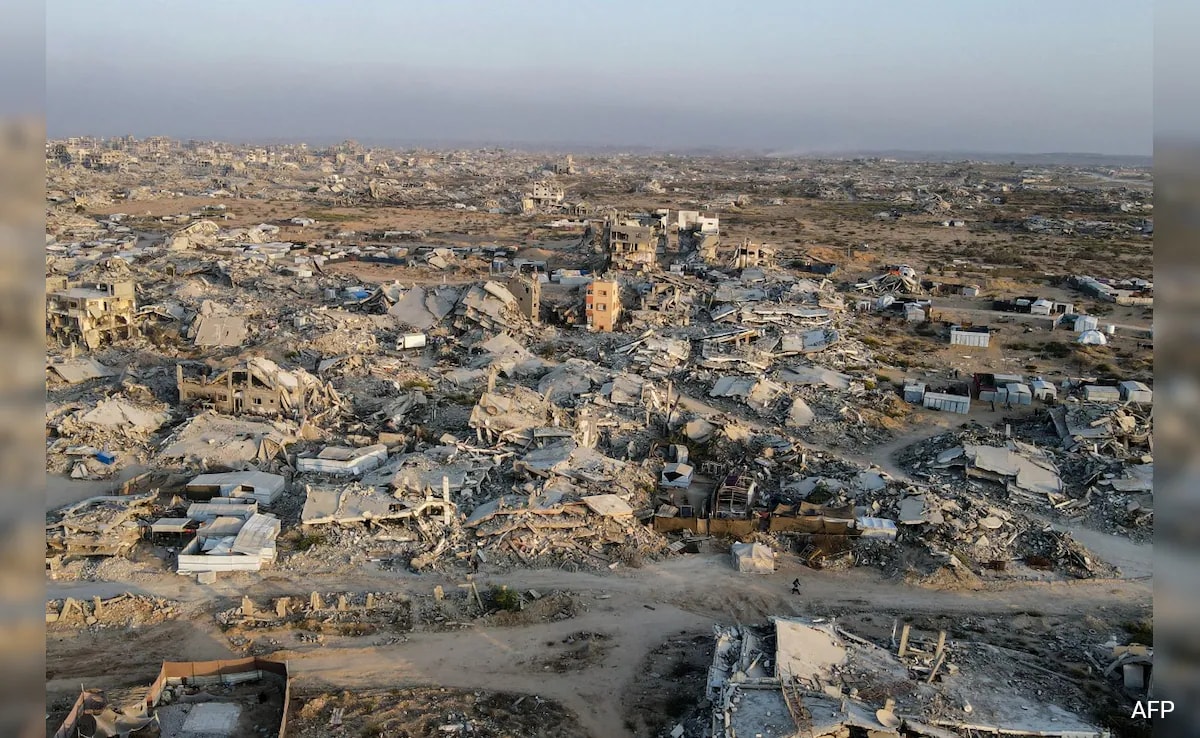
Gaza City's Al-Remal neighbourhood lies in ruins amid widespread destruction across the territory
Following two years of devastating conflict, Gaza now lies beneath an overwhelming 61 million tonnes of rubble, with UN data analyzed by AFP revealing that approximately three-quarters of all buildings have been reduced to ruins.
The recently established ceasefire between Hamas and Israel, which took effect on October 10 under significant pressure from US President Donald Trump, presents an opportunity to begin the monumental task of rebuilding the shattered territory.
A critical challenge in this reconstruction effort will be managing the staggering volume of debris that now blankets Gaza.
According to satellite analysis by the United Nations' UNOSAT programme, as of July 8, 2025, the Israeli military had damaged or destroyed nearly 193,000 buildings in the densely populated Gaza Strip, representing approximately 78 percent of all structures that existed before the conflict erupted on October 7, 2023.
The situation appears even more dire in Gaza City specifically, where a UN assessment of satellite imagery from September 22-23 indicates that approximately 83 percent of buildings have suffered damage or complete destruction.
The total debris accumulation of 61.5 million tonnes represents a weight equivalent to roughly 170 Empire State Buildings. This translates to more than 169 kilograms of rubble covering every square meter across Gaza's limited territory.
Nearly two-thirds of this massive debris field was generated during the initial five months of the war, according to reports from the UN Environment Programme (UNEP).
The pace of destruction accelerated significantly in the months preceding the current ceasefire. Between April and July 2025 alone, an additional eight million tonnes of debris were created, primarily in southern Gaza between Rafah and Khan Yunis.
Beyond the immense physical challenge of removal, the debris poses serious health hazards to Gaza's population. A preliminary assessment published by UNEP in August warned that approximately 4.9 million tonnes of the rubble may be contaminated with asbestos from older structures, particularly near refugee camps such as Jabaliya in the north, Nuseirat and al-Maghazi in central Gaza, and Rafah and Khan Yunis in the south.
UNEP further reports that at least 2.9 million tonnes of debris could be contaminated with "hazardous waste from known industrial sites," creating additional environmental and health concerns.
The Israeli military conducted relentless bombardment of the Gaza Strip following Hamas's unprecedented attack on Israeli soil on October 7, 2023, which claimed 1,221 lives on the Israeli side, primarily civilians, according to an AFP tally based on official figures.
Israel's retaliatory campaign has resulted in at least 68,280 Palestinian deaths in Gaza – mostly civilians – according to statistics from the Hamas-run government's health ministry, figures the UN considers reliable.
Source: https://www.ndtv.com/world-news/two-years-of-war-leave-gaza-buried-under-61-million-tonnes-of-debris-9510690