
Former CIA Officer Reveals How US "Purchased" Pakistan's Musharraf While India-Pakistan Stood at War's Edge
- Date & Time:
- |
- Views: 46
- |
- From: India News Bull
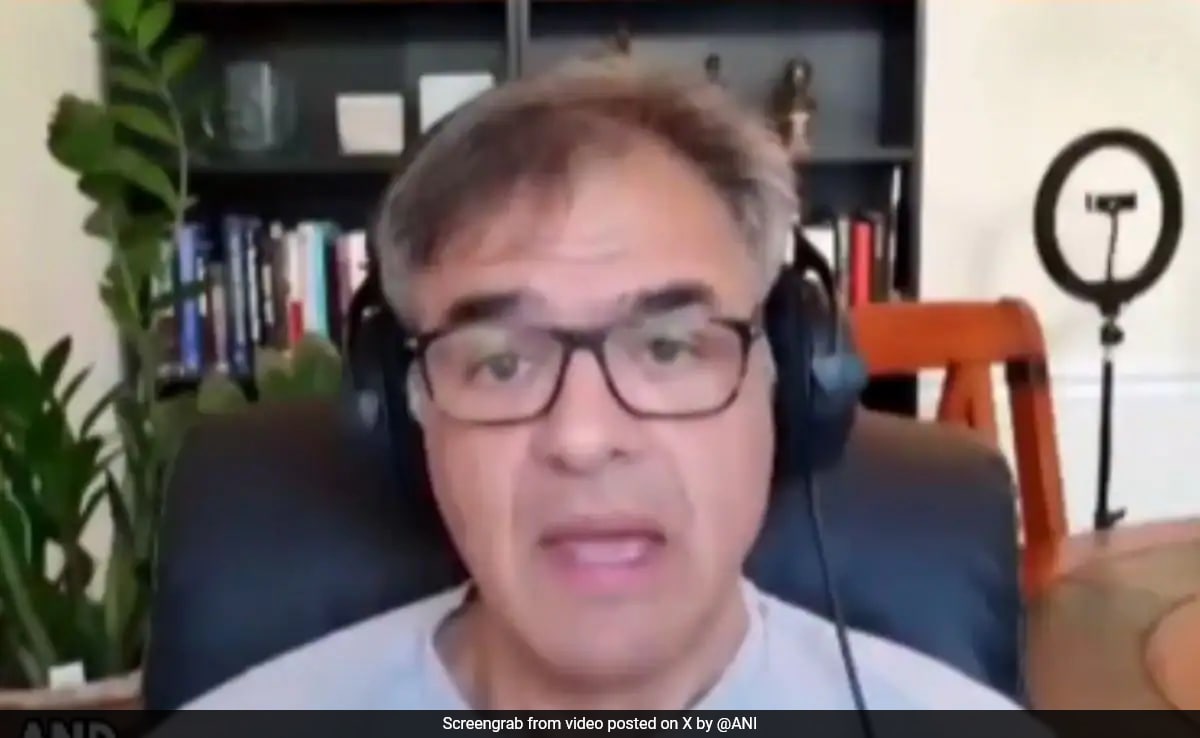
Former CIA officer John Kiriakou has revealed that the United States effectively "purchased" former Pakistani President Pervez Musharraf through millions of dollars in aid during his leadership.
In a candid interview with ANI, Kiriakou, who served 15 years in the CIA as both an analyst and counterterrorism operative, disclosed the complex relationship between the US and Pakistan during the early 2000s.
"Our relations with the Pakistani government were very, very good under General Pervez Musharraf. To be honest, the United States loves working with dictators because then you don't have to worry about public opinion or media scrutiny. We essentially just purchased Musharraf," Kiriakou stated.
According to Kiriakou, this financial arrangement allowed the US significant operational freedom within Pakistan. "We provided millions upon millions in military and economic development aid. We would meet with Musharraf several times weekly, and he essentially permitted us to operate as we wished."
However, Kiriakou highlighted the duplicitous nature of Musharraf's position. While appearing to cooperate with American counterterrorism efforts, Musharraf simultaneously needed to placate Pakistan's military establishment, which was primarily focused on India rather than Al-Qaeda.
"To keep the military and extremist elements satisfied, Musharraf maintained this dual approach—pretending to cooperate with Americans on counterterrorism while enabling terror activities against India," he explained.
Kiriakou noted that India and Pakistan were on the verge of war in 2002, following the December 2001 attack on the Indian Parliament.
The former CIA officer expressed concern about ongoing political instability in Pakistan. "I worry about continued political disagreements in Pakistan potentially spilling into the streets. Pakistanis tend to become highly agitated during political crises, often resulting in deadly demonstrations, attacks against political figures, and assassinations. The country lacks transformative leaders making positive decisions."
Kiriakou also shared a revealing anecdote about former Pakistani Prime Minister Benazir Bhutto during her exile in Dubai. "When I visited her with a senior officer, she lived in a $5 million palace on the Gulf. We heard a car arrive, and she remarked, 'If he came home with another Bentley, I'm going to kill him!' referring to her husband, Asif Ali Zardari."
Reflecting on this, Kiriakou questioned the morality of such opulence: "She officially earned $60,000 annually yet lived in a $5 million house while her husband collected Bentleys. How could they return to Pakistan and face citizens who lacked basic necessities like shoes and food? I understand corruption exists there, but that level is unconscionable."
According to Al Jazeera, Musharraf detailed in his autobiography "In the Line of Fire" how he decided to reverse his Taliban support policy after evaluating whether Pakistan could withstand conflict with the United States.
"I war-gamed the United States as an adversary," Musharraf wrote, concluding Pakistan would fail on three counts: its military would be defeated, its economy couldn't sustain such conflict, and the nation lacked the necessary unity for confrontation.
Source: https://www.ndtv.com/world-news/india-pakistan-were-on-brink-of-war-in-2002-claims-ex-cia-officer-john-kiriakou-9510650