
Japan's First Female Prime Minister Sanae Takaichi: What Her Leadership Means for Women's Equality in Japan
- Date & Time:
- |
- Views: 58
- |
- From: India News Bull
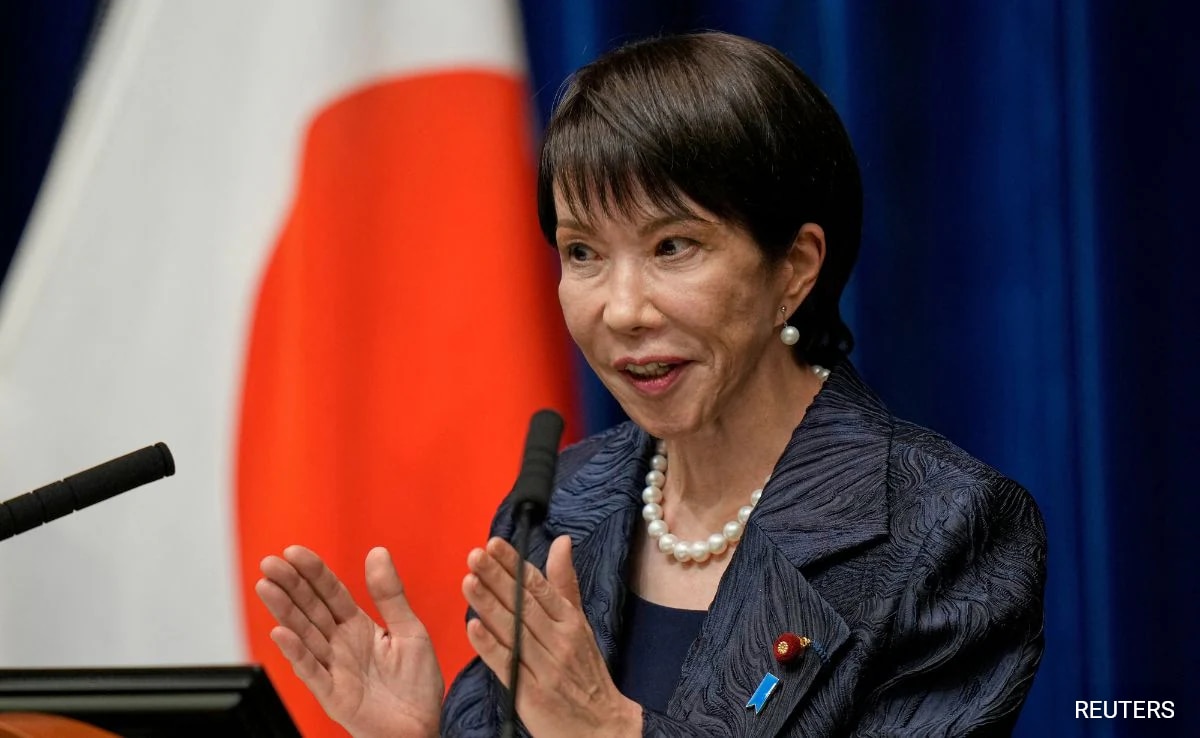
Takaichi's ascension to Japan's highest office has not positioned her as a champion for women's rights.
Tokyo:
Sanae Takaichi made history on Tuesday when she took office as Japan's first female prime minister, yet her cabinet appointments and conservative policy stances have left many women feeling uncertain in a nation that continues to struggle with gender equality issues.
Despite previously indicating she would ensure female representation in top positions at levels comparable to Nordic countries, Takaichi appointed just two women to her 19-member cabinet, maintaining the same gender ratio as her predecessor.
University of Tokyo professor Tohko Tanaka, who specializes in media and gender studies, expressed significant disappointment: "The line-up she announced betrayed that promise from the outset. This offers no hope for women's empowerment."
When questioned about this gender imbalance, Takaichi defended her selections during a Tuesday press conference, stating she "prioritised equal opportunity" and "assigned the right people to the right positions."
Her selection pool was constrained by the fact that women represent only 13% of lawmakers in her Liberal Democratic Party (LDP). The party has set a target to increase this percentage to 30% by 2033.
Female representation in Japanese cabinets has historically never exceeded 30%, standing in stark contrast to Nordic nations where women comprise between 36% (Denmark) and 61% (Finland) of cabinet positions.
Japan currently ranks 118th among 148 countries in the World Economic Forum's Global Gender Gap Report—the lowest position among G7 nations and trailing behind most Asian neighbors including China, South Korea, and the Philippines.
This poor ranking reflects both limited female presence in legislative bodies and a substantial wage gap, while Nordic countries consistently lead in political gender equality metrics.
Though Takaichi's reference to Nordic-level representation proved to be merely campaign rhetoric, Tiina Airaksinen, a senior lecturer in Asian studies at the University of Helsinki, notes that breaking the glass ceiling—alongside Finance Minister Satsuki Katayama—remains symbolically significant.
"It has taken us more than 120 years to come into this situation," Airaksinen remarked, noting that Finland achieved women's suffrage in the early 1900s, while Japan only reached this milestone after World War Two.
"She can't change everything in Japanese society immediately, but she can start the change."
Similar to Italy's first female prime minister Giorgia Meloni, Takaichi is not viewed as a champion for women's rights, having closely aligned herself with the LDP's socially conservative platform. Recent polling indicates she enjoys greater popularity among male voters than female ones.
"She is a woman who has advocated the LDP's patriarchal model, in which men are supposed to overwork at the centre of society and women should support them through unpaid care work," explained Doshisha University professor Yayo Okano, who specializes in feminist political theory.
Okano highlighted Takaichi's defense of legal requirements that force married couples to share a single surname as an illustrative example of her conservative stance.
Under current Japanese law, wives adopt their husbands' surnames in over 90% of marriages. Critics—including business organizations and some liberal-leaning LDP members—argue this disproportionately impacts women's professional careers, while conservatives maintain these requirements are essential for family unity.
To secure her premiership, Takaichi's LDP formed a partnership on Monday with the right-wing Japan Innovation Party (Ishin), which advocates for smaller government.
According to Ritsumeikan University professor Yoko Otsuka, who specializes in welfare policy and gender studies, their social security policies—particularly stricter ability-to-pay principles—could reduce support for vulnerable populations including single parents and low-income individuals, many of whom are women.
The parties have also agreed to promote male-only succession for Japan's imperial family, which Otsuka characterized as "simply sexist" without rational justification.
Source: https://www.ndtv.com/world-news/sanae-takaichi-japan-politics-with-sanae-takaichi-becoming-japans-1st-female-pm-what-changes-for-women-9495845