
Mexico's Security Industry Booms Ahead of 2026 World Cup Amid Ongoing Cartel Violence
- Date & Time:
- |
- Views: 48
- |
- From: India News Bull
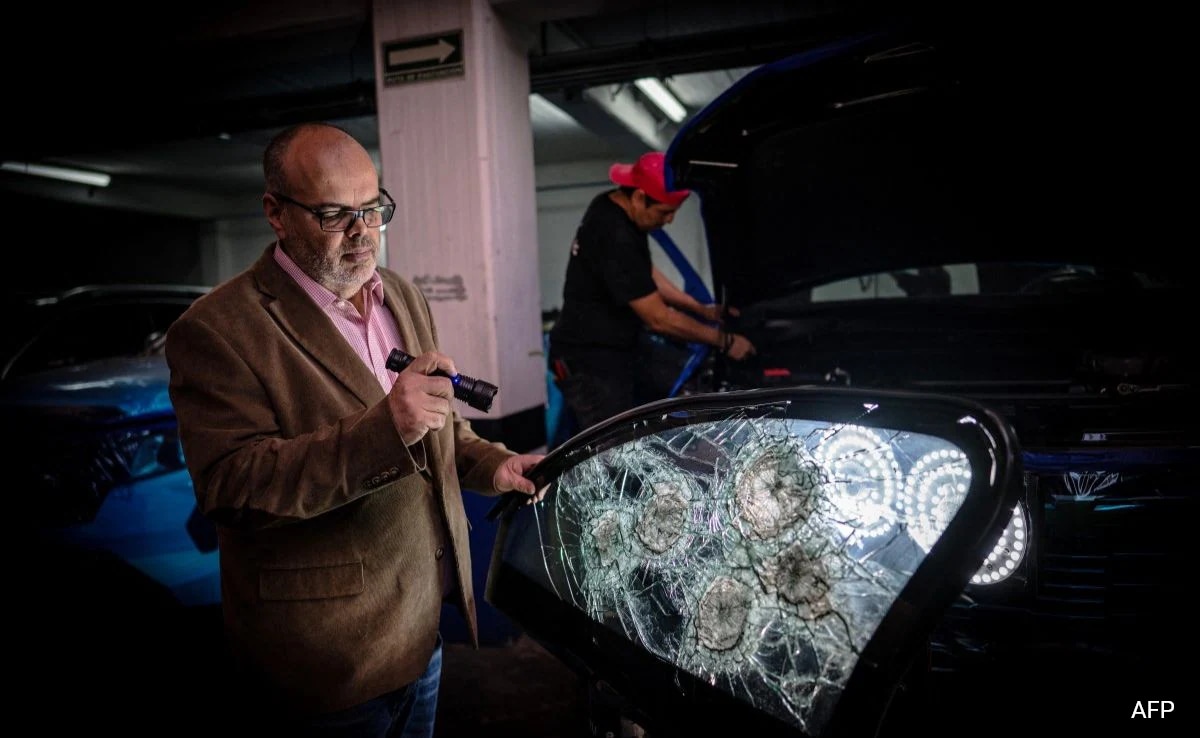
Leopoldo Cerdeira from Ruhe Security demonstrates an example of a bulletproof car windowpane in a Mexico City warehouse, firing a handgun at a car door to showcase the quality of his armored vehicles.
The demonstration reveals how bullets are effectively blocked by the synthetic protective layer that covers his entire fleet of 70 vehicles, which he plans to rent to affluent foreign visitors attending the 2026 World Cup.
As Mexico prepares to co-host the prestigious tournament alongside the United States and Canada from June 11 to July 19 next year, Cerdeira's security firm is positioning itself to serve concerned international guests.
"Our bookings are for tourists, people who have money, who come to see the matches but are afraid because they have heard bad things about Mexico," explained Cerdeira at his company headquarters.
His luxury fleet recently transported FIFA officials during their visit to Mexico and is already reserved for the upcoming Mexican Formula 1 Grand Prix. For the World Cup, he plans to expand his fleet to 80 vehicles.
The security industry in Mexico extends far beyond armored transportation. Services include drivers, armed escorts, bomb protection, bulletproof vests, and armored briefcases—offerings that have flourished amid Mexico's ongoing criminal violence, which claims approximately 30,000 lives annually, largely due to drug cartel activity.
"The country's insecurity has led to the growth of our industry," acknowledged Gabriel Hernandez, who leads Armoring Group, supplying bulletproof vehicles and protective clothing across Mexico, Spain, and the United States.
The tournament will bring matches to three Mexican cities—Mexico City, Monterrey, and Guadalajara—with millions of visitors expected. In preparation, Mexico City has installed 40,000 additional CCTV cameras, and drone usage will be restricted in all host cities.
While authorities assert they're taking every precaution to ensure safety during the World Cup, security concerns vary across locations. The capital, which previously hosted World Cup finals in 1970 and 1986, generally experiences fewer cartel-related incidents than the other host cities.
Guadalajara presents particular challenges as the operational base for the Jalisco Nueva Generacion Cartel (CJNG), designated as terrorists by the US government, which has offered $12 million for the capture of its leader, Nemesio Oseguera, known as El Mencho.
Beyond standard armor plating, security firms offer sophisticated defensive features: electric-shock door handles, pepper spray-releasing wheels, and puncture-resistant tires that remain functional for 80 kilometers after damage.
Daily rental prices for Cerdeira's armored vehicles range from $800 to $1,100, with an additional $500 for driver and escort services. Discreet bulletproof vests are available for $1,500.
The cartels themselves have developed parallel security operations, creating heavily-armored "monster" vehicles. CJNG has publicly displayed these homemade armored transports with heavily-armed "sicarios" (hitmen) in propaganda videos.
Earlier this year, authorities discovered and dismantled a clandestine armor workshop in Sinaloa state, a stronghold of another major cartel.
Security companies face additional challenges as cartels attempt to recruit their skilled workers. Cerdeira recalled losing two employees to criminal groups eight years ago, lured by salaries three times higher than he could offer. Both were later found dead in Sinaloa.
Despite these ongoing security concerns, security consultant David Saucedo, who works with embassies and local authorities, believes cartels pose no direct threat to the World Cup.
"They themselves have a social base that will benefit from the matches," he explained, suggesting cartels have economic interests in successful tournament operations.
Saucedo even speculates about a possible unofficial agreement between authorities and criminal organizations: limited anti-cartel operations during the tournament in exchange for restraint from activities that could damage Mexico's international image.
"It would be a kind of World Cup truce," he concluded.
Source: https://www.ndtv.com/world-news/fifa-world-cup-2026-mexico-drug-war-amid-drug-violence-in-mexico-security-firms-on-alert-for-world-cup-2026-9495868