
100 Days Later, US Federal Workers Navigate Wreckage From Musk's DOGE
Roughly 100 days after Elon Musk's dramatic departure from the Trump White House, federal workers are still grappling with the lasting damage from his Department of Government Efficiency (DOGE).
- Date & Time:
- |
- Views: 79
- |
- From: India News Bull
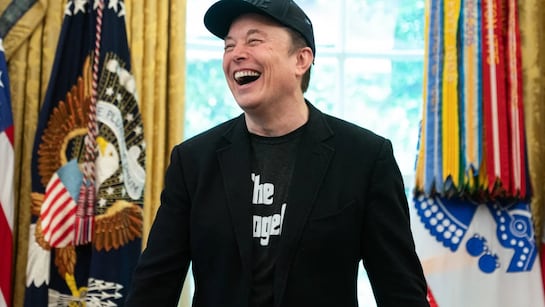
After Musk's public breakup with President Trump earlier this spring, DOGE has essentially been taken apart.
United States:
Approximately 100 days since Elon Musk dramatically exited the Trump administration, federal employees continue struggling with the enduring impact of his Department of Government Efficiency (DOGE).
This unprecedented attack on federal bureaucracy is projected to have repercussions for years to come.
Operating from a modest office in the executive building next to the White House, Musk led an aggressive campaign targeting major government divisions.
His approach was precise yet destructive: deploying small teams of technology specialists to methodically disrupt and dismantle the nation's civil service workforce of over 2 million.
The aggressive campaign succeeded tremendously.
The Partnership for Public Service, a non-partisan Washington NGO, reports nearly 200,000 civil servants have abandoned the federal workforce thus far.
Many of these employees -- including numerous military veterans -- experienced severe trauma, with careers spanning decades suddenly terminated and their professional contributions dismissed as worthless expenditure.
After Musk's highly visible conflict with President Trump this spring, DOGE has largely been dismantled.
"Not much" persists from the original initiative, according to Max Stier, president and CEO of the Partnership for Public Service.
"It's a little bit like Godzilla having flattened the city and left," Stier explained to AFP. "Godzilla is gone, but there's still a flattened city."
'Unfixable'
Musk now declares the US government "basically unfixable," concluding that legislators from both political parties will resist budget cuts that might alienate constituents and financial supporters.
Most of DOGE's leadership departed following Musk's exit, including Steve Davis, Musk's trusted deputy who directed teams infiltrating government offices and computer systems to implement spending reductions.
Nevertheless, some operatives remain embedded throughout federal agencies, working as regular employees while continuing to wield influence: making their activities more difficult to track.
"Don't misunderstand the lack of the loud face that was Elon Musk to think they have disappeared," cautioned one Pentagon employee, speaking anonymously to prevent retaliation. "DOGE is still alive and causing a ruckus."
Several prominent Musk allies retain significant positions.
Joe Gebbia, Airbnb co-founder and Tesla board member, currently oversees government website redesign efforts.
Aram Moghaddassi serves as chief information officer at the Social Security Administration, though a whistleblower has alleged his team uploaded a critical database to a vulnerable cloud server, potentially exposing hundreds of millions of Americans' personal data to hackers.
Brad Smith, a health startup investor, initially departed DOGE after implementing extensive cuts at the Department of Health and Human Services (now headed by Robert F. Kennedy Jr.), but has returned to manage global health initiatives at the State Department.
Scott Kupor, former managing partner at venture capital powerhouse Andreessen Horowitz, now directs the US Office of Personnel Management -- the federal government's extensive human resources operation. His former employer, Marc Andreessen, maintains substantial influence within the White House.
Other Musk loyalists hold more junior positions throughout the government.
In an unusual development, Edward Coristine -- who gained media attention under the nickname "Big Balls" -- accepted a regular government position and helped trigger Trump's decision to deploy the National Guard to patrol Washington's streets after Coristine was attacked in the capital.
Who is DOGE?
These shifts have complicated DOGE's very definition. "The question of, how do you define DOGE? Who is DOGE? has gotten a lot more complicated," noted Faith Williams, director of the effective and accountable government program at the Project on Government Oversight.
Officially, Amy Gleeson, a health technology sector veteran, now heads the department as acting chief, but her White House influence is minimal. Federal workers report that DOGE's mission has effectively transferred to Russell Vought, a strong government opponent who now controls the powerful Office of Management and Budget.
For civil liberties advocate Cindy Cohn, executive director of the Electronic Frontier Foundation, these developments are "extremely worrisome" because DOGE's work now operates "behind a curtain" away from public examination.
This concealed operation includes incidents of incompetence and questionable decision-making, as reported by whistleblowers and disillusioned employees who have left government to expose misconduct.
"My bet is that for every whistleblower you see, there's some very large multiple of bad things that have happened, which we don't know about," Stier warned.
The federal workforce meanwhile must continue navigating this transformed landscape, operating with reduced staff and knowledge gaps while what remains of DOGE functions largely outside public view.