
UN Security Council Rejects Russia and China's Bid to Delay Iran Nuclear Sanctions Reimposition
- Date & Time:
- |
- Views: 71
- |
- From: India News Bull
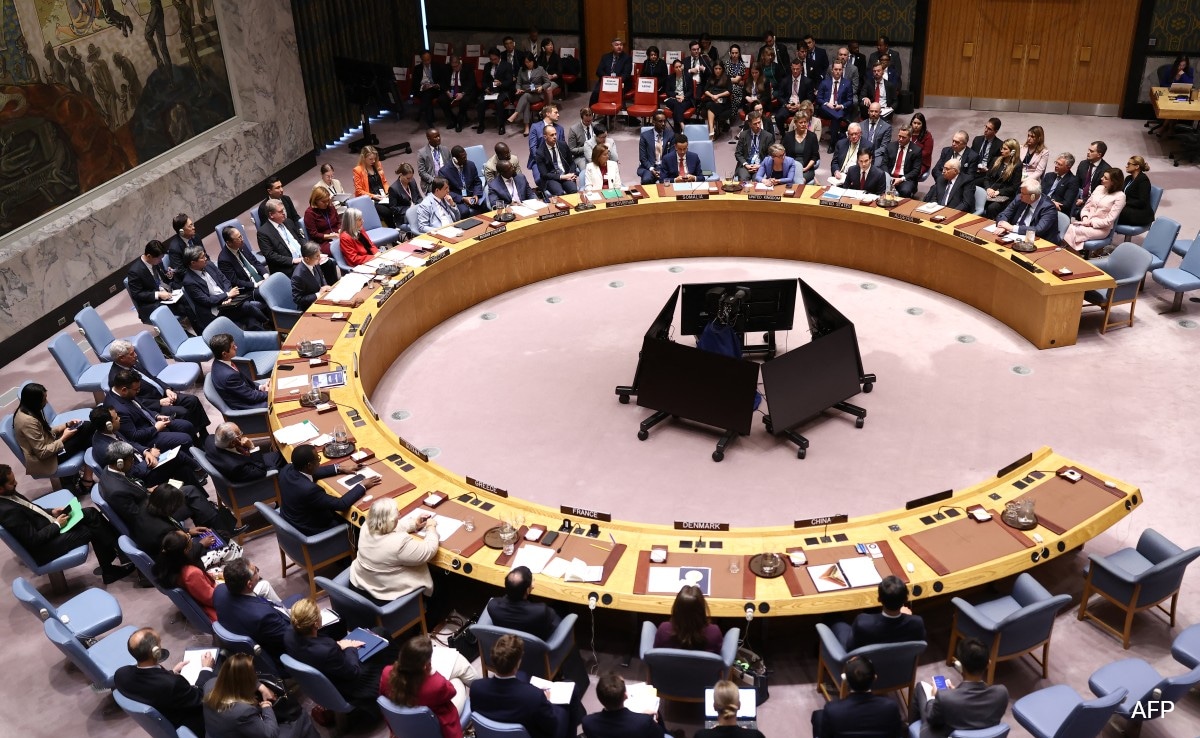
The UN Security Council on Friday rejected a final attempt by Russia and China to postpone the reimposition of sanctions on Iran.
United Nations:
On Friday, the UN Security Council dismissed another last-minute effort to delay reinstating sanctions on Iran regarding its nuclear program. This decision came just one day before the deadline, after Western nations stated that weeks of negotiations failed to produce any "concrete" agreement.
The resolution proposed by Russia and China—Iran's strongest and closest allies on the 15-member council—failed to secure support from the nine countries needed to prevent the series of UN sanctions from taking effect on Saturday, as specified in Iran's 2015 nuclear agreement with world powers.
"We had hoped European colleagues and the U.S. would reconsider, choosing diplomacy and dialogue instead of clumsy blackmail that only escalates regional tensions," stated Dmitry Polyanskiy, Russia's deputy ambassador to the UN, during the meeting.
Unless a last-minute deal emerges, the sanctions—triggered by Britain, France, and Germany—will once again freeze Iranian assets abroad, stop arms deals with Tehran, and penalize development of Iran's ballistic missile program, among other measures. This will further strain Iran's struggling economy. In an interview Friday afternoon, Iranian President Masoud Pezeshkian called the decision "unfair, unjust and illegal."
The move is expected to intensify already heightened tensions between Iran and the West. However, despite previous threats to withdraw from the Nuclear Nonproliferation Treaty, Pezeshkian told reporters that Iran currently has no intention to do so. North Korea, which left the treaty in 2003, subsequently developed nuclear weapons.
Four countries—China, Russia, Pakistan, and Algeria—again supported giving Iran more time to negotiate with the European countries, known as the E3, and the United States, which unilaterally withdrew from the accord in 2018.
"The U.S. has betrayed diplomacy, but it is the E3 which have buried it," Iranian Foreign Minister Abbas Araghchi said following the vote. "This sordid mess did not develop overnight. Both the E3 and the U.S. have consistently misrepresented Iran's peaceful nuclear program."
European leaders activated the "snapback" mechanism last month after accusing Tehran of failing to comply with the agreement's conditions and when weeks of high-level negotiations failed to reach a diplomatic solution.
Since the 30-day countdown began, Araghchi has been meeting with his French, British, and German counterparts to reach a last-minute agreement, leading up to this week's UN General Assembly. However, these talks appeared unsuccessful, with a European diplomat telling the Associated Press on Wednesday that they "did not produce any new developments, any new results."
Consequently, European sources "expect that the snapback procedure will continue as planned."
Pezeshkian, however, presented a different account of the meetings, claiming that Europeans and Americans refused to make a deal during the high-level week. In an extensive interview on the UN sidelines, the president said that one night this week, U.S. delegation members were supposed to meet with Iranian and European counterparts but never appeared.
"The Americans never showed up, what are we supposed to do?" Pezeshkian said. He added that when Americans did participate during six weeks of earlier negotiations this year, their words were difficult to trust, and President Donald Trump's envoy, Steve Witkoff, had reversed positions on previously agreed issues.
"The distrust at this moment between us and the U.S. is so large," Pezeshkian stated, responding to a question about what would bring Iran back to negotiations.
Even before Araghchi and Pezeshkian arrived in New York on Tuesday for the annual gathering, remarks from Iran's supreme leader, Ayatollah Ali Khamenei, that peace talks with the United States represent "a sheer dead end" limited any last-minute diplomatic efforts.
European nations have indicated willingness to extend the deadline if Iran meets certain conditions. These include resuming direct negotiations with the U.S. over its nuclear program, granting UN nuclear inspectors access to its facilities, and accounting for over 400 kilograms (880 pounds) of highly enriched uranium the UN watchdog claims it possesses.
Among all nations without nuclear weapons programs, Iran is the only one enriching uranium to 60%—just a short technical step from weapons-grade levels.
Earlier this month, the UN nuclear watchdog and Iran signed an Egypt-mediated agreement to resume cooperation, including restarting inspections of Iran's nuclear facilities. However, Iran has threatened to terminate this agreement and end all cooperation with the IAEA if UN sanctions are reimposed.
Iran has been reluctant to grant full inspector access following the 12-day war with Israel in June when both Israeli and American forces bombed Iranian nuclear sites, raising questions about Tehran's stockpile of nearly weapons-grade enriched uranium.
A diplomat close to the IAEA confirmed Friday that inspectors are currently in Iran examining a second undamaged site and will remain in the country despite the expected sanctions reimposition this weekend. IAEA inspectors previously observed a fuel replacement at the Bushehr Nuclear Power Plant on August 27 and 28.
The Europeans have stated this action alone is insufficient to prevent sanctions from taking effect Saturday.
(This story has not been edited by NDTV staff and is auto-generated from a syndicated feed.)
Source: https://www.ndtv.com/world-news/un-security-council-rejects-last-ditch-effort-to-delay-iran-nuclear-sanctions-9352984