
Ivory Coast Seeks US Surveillance Aircraft to Combat Al Qaeda in the Sahel Region
- Date & Time:
- |
- Views: 55
- |
- From: India News Bull
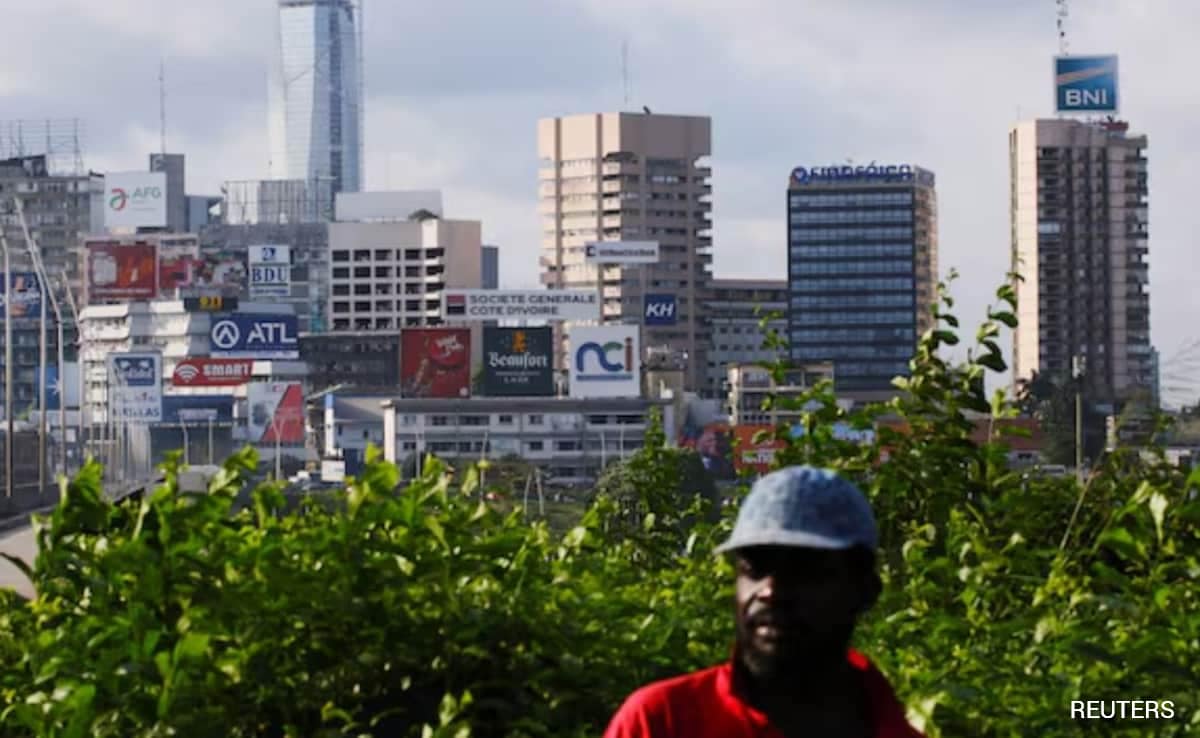
Ivory Coast is seeking assistance from the Trump administration to position American surveillance aircraft in the northern region of the country, specifically to conduct operations against Al Qaeda-affiliated militants destabilizing the Sahel region, according to two high-ranking Ivorian security officials who informed Reuters that a decision from Washington is anticipated next year.
One of the Ivorian sources, a senior counterterrorism official, indicated that both Abidjan and Washington are aligned on regional security requirements, with timing being the only outstanding issue to be resolved.
When approached for comment, the White House did not respond, while the Pentagon stated it currently has no plans for operations in Ivory Coast. The State Department declined to comment directly but emphasized: "We will actively continue to pursue our counterterrorism objectives where there is a nexus to US interests."
Requests for comment from the Ivorian Defense Ministry went unanswered.
The United States lost access to its primary West African base last year when Niger pivoted to Russia for security support and expelled American forces from a $100 million drone facility. This base had provided essential intelligence on groups affiliated with al Qaeda and Islamic State throughout the Sahel, a region where terrorism claimed 3,885 lives last year, accounting for half of the global terrorism-related deaths, according to the Global Terrorism Index.
The October abduction of an American pilot working for an evangelical Christian missionary organization in Niger's capital has highlighted the intelligence vacuum facing the United States in the region.
"We don't have any assets to help with the recovery," explained Cameron Hudson, a former CIA and State Department official who now operates a private consultancy. "How would we do a recovery operation if we don't have ISR (intelligence, surveillance and reconnaissance) helping us to understand where he is or the conditions he's being held in?"
A prominent legislator is advocating for increased American focus on the region. Republican Senator Jim Risch, who chairs the Senate Foreign Relations Committee, stated that the US "cannot overlook a growing danger - ISIS, JNIM and their affiliates tightening their grip across the Sahel and West Africa."
President Donald Trump has recently directed attention to West Africa, threatening military intervention in Nigeria over alleged failures to prevent jihadist attacks against Christians. The leading US diplomat for Africa, Jonathan Pratt, has indicated that Washington is evaluating options to encourage Nigeria to better protect Christian communities. Nigeria maintains that it works to safeguard religious freedom and that the country faces terrorism, not persecution of Christians, describing the security situation as complex.
Following the US expulsion from Niger, the Biden administration temporarily redeployed two BE-350 surveillance aircraft to a base in Ivory Coast, which borders Mali and Burkina Faso, to gather intelligence in the region, according to Ivorian officials and a former senior US official speaking anonymously due to the sensitive nature of the matter.
The aircraft were withdrawn around January when Biden left office, according to three former US officials. Two officials explained that this was partly because Mali, Niger, and Burkina Faso refused to permit US overflights for intelligence gathering, leaving the aircraft largely inactive.
However, there are indications that US relations with some of these countries may be improving as their strategy of distancing themselves from Western allies and turning to Russia for military support appears to be failing.
Between 2020 and 2023, military forces in Mali, Burkina Faso, and Niger staged coups, blaming their leaders, who were supported by former colonial power France and Western allies, for allowing Islamist militants to gain ground. However, violence stemming from a decade-long conflict with Islamist groups linked to Al Qaeda and Islamic State has since intensified.
Trump administration officials have begun testing increased cooperation with Mali, which is fighting the Al Qaeda-affiliated Jama'at Nusrat al-Islam wal-Muslimin (JNIM). This group has kidnapped foreigners for ransom to fund its operations, and Reuters reported in October that an agreement was reached to release two United Arab Emirates citizens for approximately $50 million.
White House counterterrorism official Rudolph Atallah visited Bamako, Mali's capital, in July, expressing to local media that the US was interested in expanding business and security cooperation.
"That's the beginnings of rebuilding a relationship," said Peter Pham, a former US envoy to the Sahel during Trump's first administration. "We have capabilities that, quite frankly, there were no substitutes to. These countries are learning that."
Following the July visit, the US provided intelligence that assisted Mali in targeting an insurgent leader, according to a US official and two former US officials.
Source: https://www.ndtv.com/world-news/this-country-wants-us-spy-planes-not-for-espionage-but-to-hunt-al-qaeda-9793760