
Supreme Court Clarifies Limits on Article 142 Powers: Implications for Tamil Nadu's Legislative Standoff with Governor
- Date & Time:
- |
- Views: 40
- |
- From: India News Bull
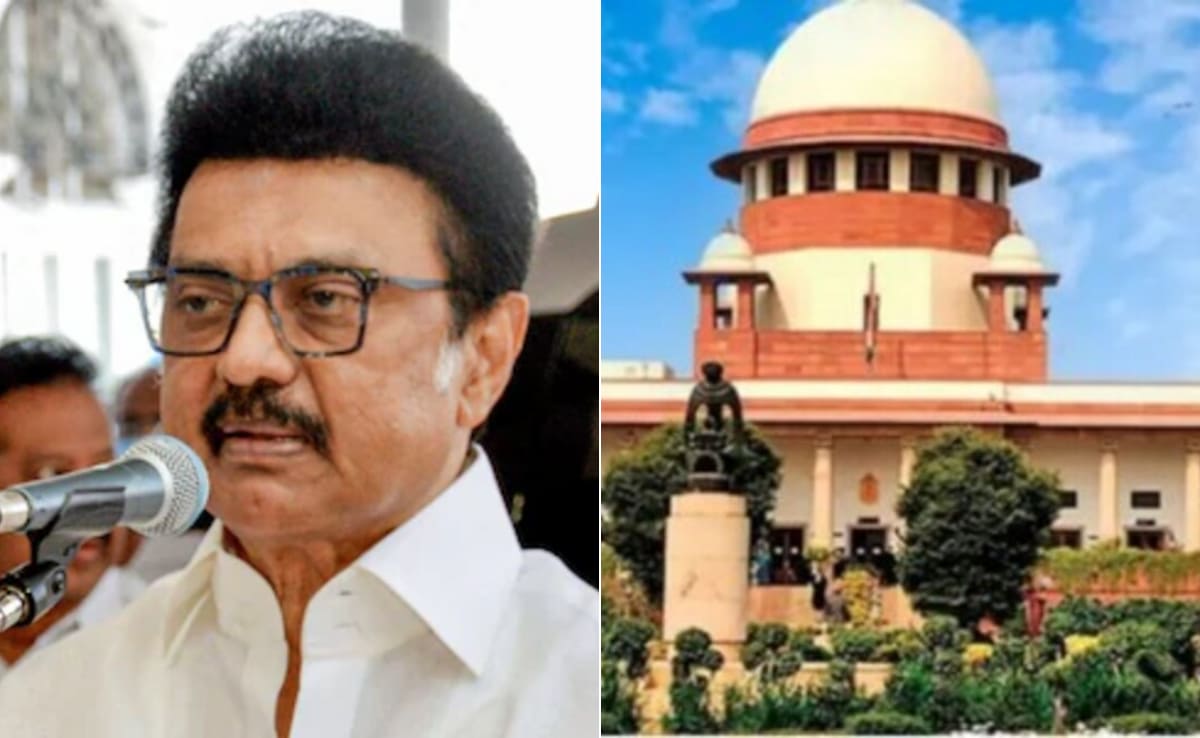
Tamil Nadu Chief Minister MK Stalin (L) and the Supreme Court (File).
New Delhi:
The Supreme Court's Thursday clarification stating it cannot utilize Article 142 special powers to declare bills as 'deemed to have passed' represents a significant setback for Tamil Nadu's government, which has been seeking to implement 10 bills that were cleared through this mechanism in April.
Following the Supreme Court's decision in May that deemed these bills passed, the Madras High Court imposed an interim stay on their implementation. The Tamil Nadu government subsequently returned to the Supreme Court in June to address this issue.
The status of these bills has remained uncertain since then. Today's observation—responding to a Presidential Reference questioning the validity of the Supreme Court's April ruling—suggests this uncertainty will persist until either the High Court delivers its final decision or Governor RN Ravi reconsiders the legislation.
Notably, responsibility now rests with Tamil Nadu Governor RN Ravi, who can reference the Supreme Court's opinion—stating that Presidents and Governors are not bound by timelines when approving state-passed laws—to bring these bills back under his consideration.
He may also cite the Chief Justice BR Gavai-led bench's statement affirming that Governors have discretionary authority, meaning they are not obligated to follow the Council of Ministers' advice when assenting to or returning bills.
While the central government has not yet issued a response, the Tamil Nadu government has. The ruling Dravida Munnetra Kazhagam's spokesperson, TKS Elangovan, told NDTV that the 10 bills—each approved twice by the DMK administration—could return to Governor Ravi's desk. However, he noted that the "timeline is different," suggesting that "Governors will dispose off bills immediately... if they believe in democracy." Elangovan maintained that this clarification does not constitute a setback.
Should the central government decide to challenge the April verdict, it could ignite significant political controversy in the southern state, particularly with Assembly elections scheduled by April next year.
In April 2025, the Tamil Nadu government petitioned the Supreme Court seeking directives for Governor Ravi to approve 10 bills that had been passed by the state Assembly. This occurred amid similar controversies in other non-BJP-ruled states, including AAP-governed Punjab and Left-ruled Kerala.
Most of these Tamil Nadu bills had actually been passed by the previous government, the All India Anna Dravida Munnetra Kazhagam, which is currently aligned with the Bharatiya Janata Party.
A bench consisting of Justice JB Pardiwala and Justice R Mahadevan ruled in favor of the government, declaring the Governor's actions "illegal" and "arbitrary," and utilized its special powers to approve the bills.
The court stated at that time: "We are in no way undermining the office of the Governor. All we say is the Governor must act with deference to settled conventions of parliamentary democracy; respecting will of the people expressed through the legislature, as well as elected government responsible to the people."
The bench also established timelines for Presidential and Gubernatorial bill clearance, triggering intense criticism with some observers labeling it as "judicial overreach."
In May, President Droupadi Murmu submitted a reference seeking guidance on the verdict's correctness. Crucially, she questioned whether timelines could be imposed on the President and Governors, and if a Governor's constitutional discretionary powers are subject to judicial review.
In response, the Tamil Nadu government urged the court to declare the presidential reference "not maintainable," arguing it constituted a disguised appeal intended to overturn a Supreme Court verdict.
The Chief Justice-led bench began hearing the reference in August but clarified it would serve only in an advisory capacity, as Presidential references do not directly challenge previous judgments.
Source: https://www.ndtv.com/india-news/supreme-court-news-supreme-court-on-presidential-reference-tamil-nadu-governor-rn-ravi-withheld-assent-10-bills-9669252