
Understanding India's AQI Cap at 500: Delhi's Air Quality Measurement Explained
- Date & Time:
- |
- Views: 71
- |
- From: India News Bull
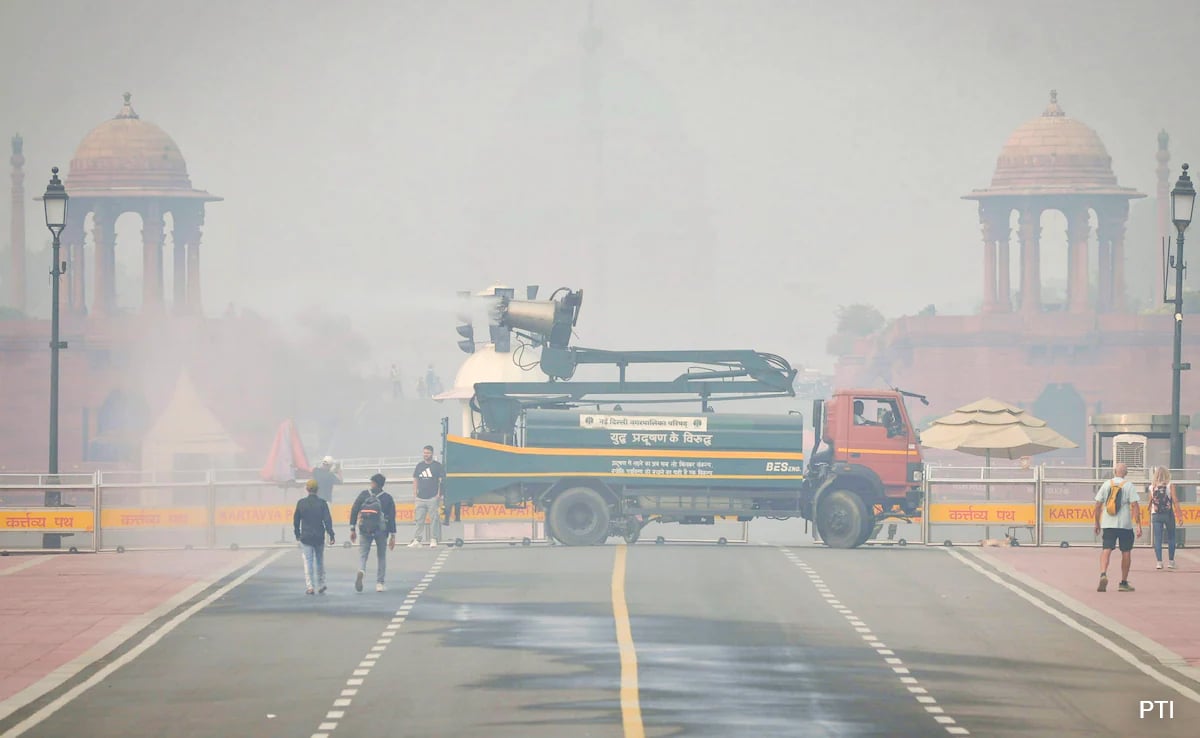
An anti-smog gun operates in New Delhi, spraying water droplets to combat air pollution levels.
In Delhi's popular winter picnic spots, concerned citizens have gathered at Jantar Mantar, a major tourist attraction, protesting for their fundamental right to breathe clean air.
One mother among the protesters voices her frustration: "Why am I forced to choose between my son's education and health daily? I've had to normalize mask-wearing for my child."
On Wednesday morning, Swiss company IQAir recorded Delhi's air quality index (AQI) at an alarming 506, while India's Central Pollution Control Board (CPCB) reported a lower 399, categorized as "very poor." This discrepancy raises questions about which measurements citizens should trust.
Interestingly, both readings are technically correct, though they reflect different approaches to air quality monitoring.
AQI serves as a public health communication tool that simplifies air pollution levels for general understanding. The CPCB considers eight key pollutants when calculating AQI: particulate matter (PM10 and PM2.5), Ozone, Sulphur dioxide, nitrogen dioxide, carbon monoxide, lead, and ammonia.
"AQI provides color-coded ranges to help citizens understand whether air quality is good, satisfactory, or very poor, and what precautions they should take," explains Mohan George, Consultant at the Centre for Science and Environment and former Additional Director at Delhi Pollution Control Committee.
For context, an AQI between 401-500, classified as 'severe,' indicates conditions hazardous even for healthy individuals, warranting avoidance of outdoor activities.
Air quality monitoring stations measure concentration values of various pollutants. George clarifies how AQI is calculated: "AQI is computed using the previous 24 hours of air quality data. We average each pollutant's concentrations, calculate their sub-indices, and the highest sub-index becomes the overall AQI."
To determine India's AQI, measurements of at least three pollutants are required, including at least one particulate matter measurement.
"In India and across Asia, dust is a significant factor, making particulate matter (PM2.5 or PM10) the dominant pollutant throughout North India most times," George adds.
The CPCB considers 60 micrograms per cubic meter of PM2.5 safe for a 24-hour average, while the World Health Organization sets a stricter limit of 15 micrograms. These concentration values differ from AQI numbers released by government agencies.
An anti-smog gun disperses water droplets in New Delhi to help reduce airborne pollution.
India's AQI scale has an upper limit of 500. Any readings exceeding this threshold are simply classified as "severe," indicating a public health emergency.
The CPCB divides AQI into six categories: 0-50 ('good'), 51-100 ('satisfactory'), 101-200 ('moderate'), 201-300 ('poor'), 301-400 ('very poor'), and 401-500 ('severe').
Professor Dr. Gufran Beig from the National Institute of Advanced Studies explains: "AQI above 400 is hazardous. The health impacts are considered similar whether the AQI is 500 or 900, so displaying higher numbers might unnecessarily alarm the public."
However, Sunil Dahiya, Founder of Envirocatalysts, argues there's no scientific justification for capping AQI at 500 when higher values could be calculated.
"While lower-level long-term exposure has significant impacts, extremely high pollution levels pose immediate dangers, leading to hospitalizations and medical emergencies for cardiac and respiratory patients during peak pollution events like stubble burning or Diwali," Dahiya notes.
The measurement differences also stem from data collection methods. CPCB relies on calibrated reference-grade monitors, whereas IQAir aggregates data from both government stations and various low-cost sensors installed by companies and individuals.
Experts recommend focusing on AQI classifications like "severe" or "hazardous" and the actual pollutant concentrations when determining appropriate health precautions.
As George concludes, "Breathing air at an AQI of 500 is hazardous; if it rises to 900, it remains hazardous. It's like consuming something dangerous – whether one spoonful or two, it's still dangerous."
Source: https://www.ndtv.com/india-news/delhi-air-pollution-protests-delhi-aqi-today-why-doesnt-india-report-air-quality-aqi-measure-beyond-500-9669223