
Supreme Court Invalidates Key Provisions of Tribunals Reforms Act and Mandates National Commission
- Date & Time:
- |
- Views: 49
- |
- From: India News Bull
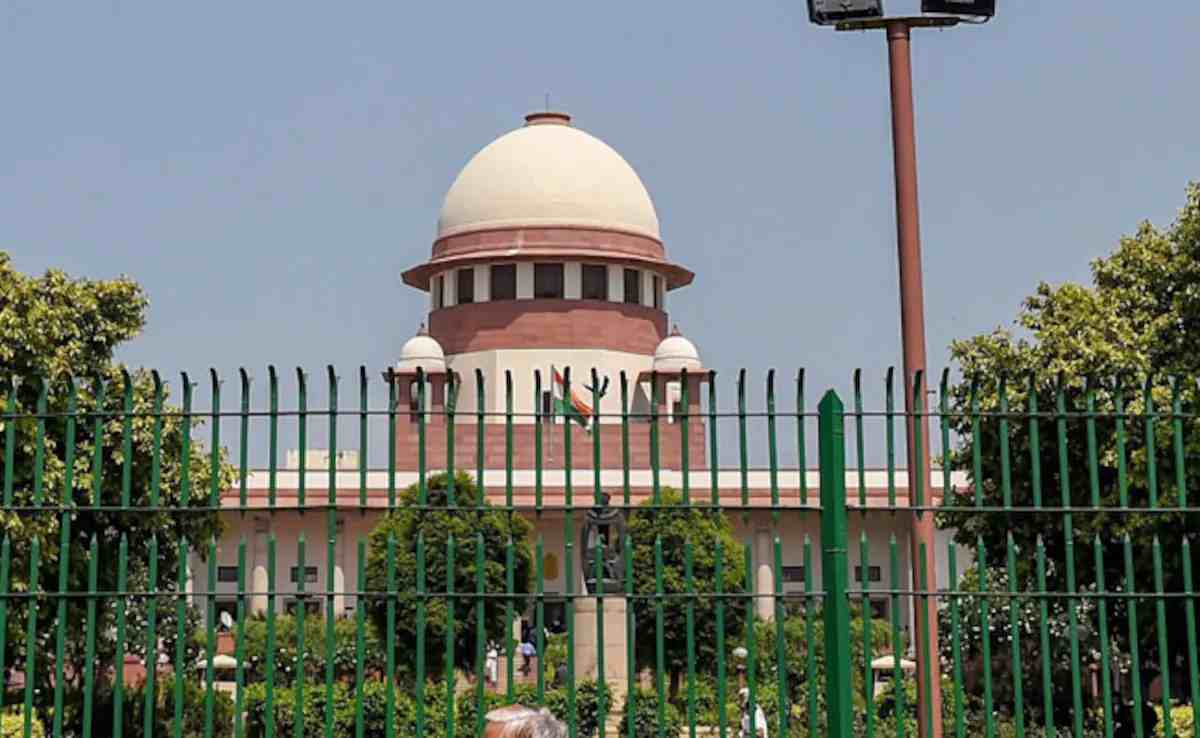
The Supreme Court on Wednesday invalidated several critical provisions of the 2021 Tribunals Reforms law while directing the Central Government to establish a National Tribunals Commission within four months.
A bench led by Chief Justice B R Gavai and Justice K Vinod Chandran expressed significant concerns regarding excessive executive influence over tribunals. The court proceeded to allow petitions challenging specific provisions of the Tribunals Reforms (Rationalisation and Conditions of Service) Act, 2021, legislation that had comprehensively restructured the operation, framework, and service conditions of tribunals throughout India.
"We grant the Union of India a period of four months from the date of this judgement to establish a National Tribunals Commission," the bench declared in its ruling.
The judgment emphasized that "The creation of such a commission is an essential structural safeguard designed to ensure independence, transparency, and uniformity in the appointment, administration, and functioning of tribunals across the country."
The legal challenges focused on Sections 3 to 7 and 33 of the Act, alongside numerous amendments made to over twelve central statutes.
Chief Justice Gavai, who authored the comprehensive 137-page judgment, specifically struck down several provisions. Among these was Section 3, which required individuals to be at least 50 years old for appointment as chairperson or member of a tribunal.
The verdict determined that this age restriction unfairly excluded capable younger advocates and experts. Additionally, the Court set aside Section 5 of the Act, which limited the tenure of tribunal chairpersons and members to four years.
Under the challenged Section 5, chairpersons were granted a four-year tenure or service until age 70, whichever came first. Members could serve for four years or until reaching 67 years of age.
The Act had overridden previous judicial decisions that prescribed longer tenures, though it included a transitional provision: appointees between May 26, 2017, and the officially notified date maintained the longer tenure specified in their appointment orders, with a maximum limit of five years.
The Supreme Court's verdict reinstated the five-year tenure rule to safeguard security of service and institutional independence.
Furthermore, the Court invalidated the selection procedure for tribunal appointments under Section 3, which required the Search-cum-Selection Committee (SCSC) to recommend two candidates for each vacancy.
For most tribunals, the SCSC is headed by the Chief Justice of India or a Supreme Court judge nominated by the CJI.
The committee also includes two Union secretaries and one additional member, typically the outgoing or current chairperson of the tribunal. In cases where a sitting chairperson seeks reappointment, a retired Supreme Court judge or retired High Court Chief Justice nominated by the CJI must serve as the additional member.
The bench ruled that the SCSC should recommend only one candidate per position to limit excessive executive discretion in appointments. The Court also rejected Section 7 of the Act concerning service conditions.
This provision had equated the allowances and service conditions of tribunal members with those of civil servants.
Section 6 permits reappointment of chairpersons and members, with consideration given to services already rendered. Such reappointments must follow the same SCSC-based procedure as initial appointments.
Source: https://www.ndtv.com/india-news/supreme-court-strikes-down-key-provisions-of-tribunal-reforms-law-9665291