
Nitish Kumar's Cabinet Formation: 5 Critical Factors Balancing Caste, Region and Political Strategy in Bihar
- Date & Time:
- |
- Views: 46
- |
- From: India News Bull
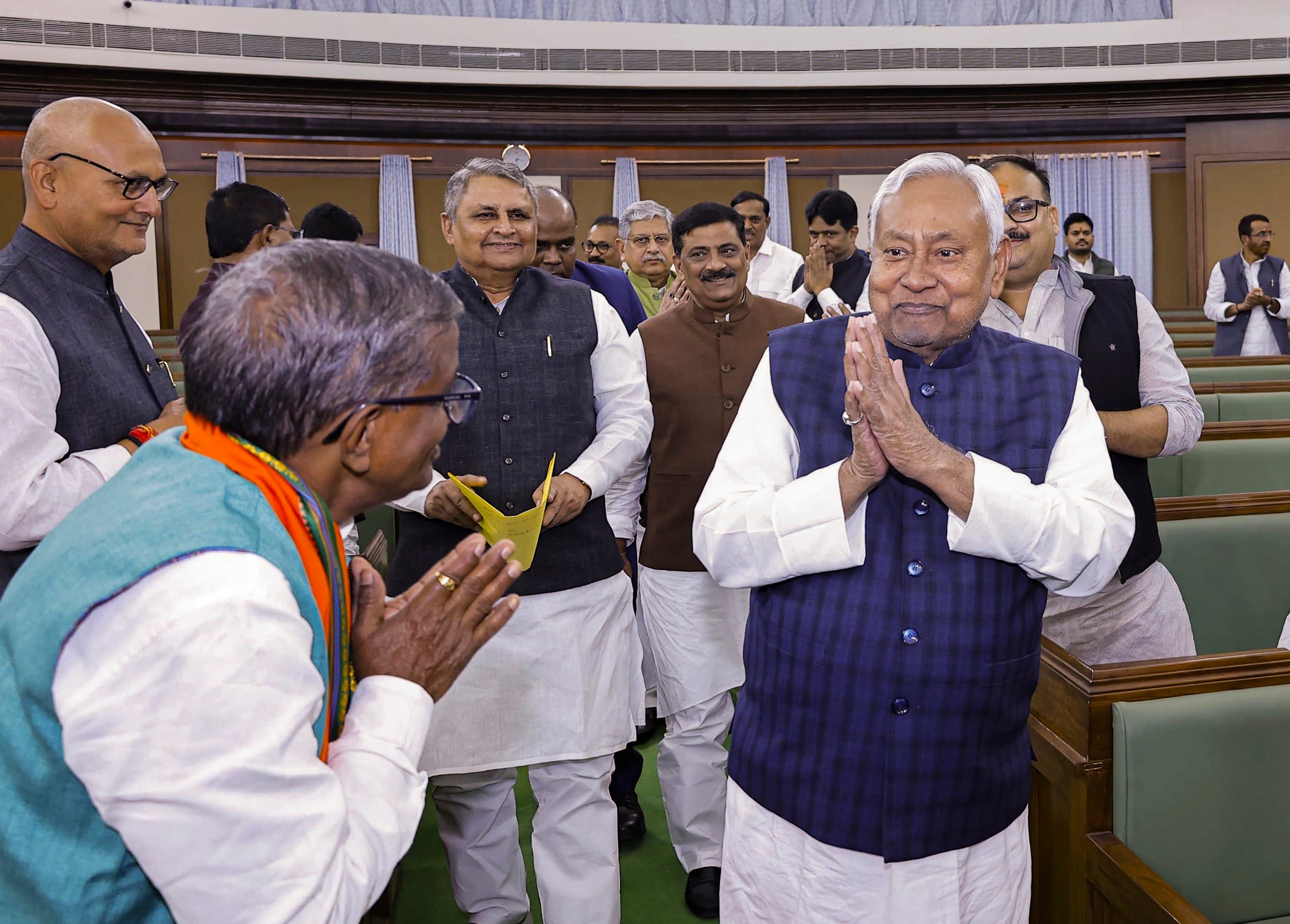
Caste continues to be the fundamental element of Bihar's political landscape.
Following the NDA's decisive victory in Bihar, attention has shifted to the composition of Nitish Kumar's new cabinet. The seasoned politician will be sworn in as Chief Minister for the tenth time on November 20th, with the state permitted to have a maximum of 36 ministers in addition to the Chief Minister.
Questions abound regarding the cabinet structure: Will there again be two Deputy Chief Ministers, or will this number increase as the Lok Janshakti Party (LJP) asserts its claim? Will Nitish immediately fill all positions or reserve some for future strategic adjustments? These considerations highlight the intricate challenge that lies ahead.
For Nitish Kumar, cabinet formation transcends the mere establishment of government—it involves managing coalition partners, ensuring caste equilibrium, and indicating future political directions. Each selection will convey a significant message both within Bihar and beyond. The cabinet formation process will be guided by five primary considerations for Nitish Kumar and the NDA leadership.
First, representation proportional to caste population remains essential. As caste continues to be the foundation of Bihar politics, the cabinet is expected to mirror the state's demographic composition. Ideally, each caste group should receive cabinet representation proportionate to its population percentage. This approach would demonstrate to all major social groups that their governmental participation is secured.
Following this principle, the cabinet should comprise approximately 11% upper castes, 14% Yadavs, 11% non-Yadav OBCs, 25% Extremely Backward Classes (EBCs), 20% Dalits, 1% Tribals, and 18% Muslims. However, a notable challenge exists as the NDA has only one Muslim MLA.
Second, balancing the caste distribution among NDA's elected MLAs will be crucial. The allocation of ministerial positions will partly reflect the caste composition of successful NDA candidates. This ensures that no caste group within the coalition feels overlooked.
Among NDA's elected representatives, 36% belong to upper castes, 6% are Yadavs, 21% are non-Yadav OBCs, 19% are EBCs, 17% are from Dalit-Tribal communities, and there are no Muslim representatives. Despite their critical contribution to the NDA's victory, EBCs received fewer tickets than their population share would suggest. Nevertheless, the overwhelming mandate could not have been achieved without their support, indicating that a strictly proportional approach has limitations.
Third, rewarding social groups for their electoral support will be an important consideration. Communities that demonstrated strong backing for the NDA may receive cabinet positions as recognition. This strategy helps maintain these groups' trust and ensures their continued mobilization for future electoral contests.
VoteVibe exit polls indicate that approximately 64% of upper castes, 60% of Dalit-Tribal communities, and 57.5% of non-Yadav OBC and EBC communities strongly supported the NDA, establishing them as the coalition's core constituency. Additionally, 19% of Yadavs and 12% of Muslims also extended their support according to these polls. While cabinet formation could reflect these voting patterns, the limited Muslim representation in the NDA presents a continuing challenge.
Fourth, geographic balance must be maintained. North Bihar represents 58% of constituencies, while South Bihar accounts for 42%. The NDA's elected representatives are distributed 56% from North Bihar and 44% from South Bihar.
Key regions include: North Bihar's Tirhut (22%), Darbhanga (13%), Saran (10%), Kosi (5%), and Purnea (7%); and South Bihar's Magadh (10%), Bhojpur (9%), Patna (9%), Munger (9%), and Bhagalpur (6%). Nitish must ensure balanced regional representation to prevent any area from feeling marginalized.
Fifth, the cabinet formation must consider future electoral implications. This cabinet will influence the 2027 Uttar Pradesh Assembly elections and the 2029 Lok Sabha elections. While the BJP will aim to strengthen vote banks significant at the national level, Nitish will seek to enhance his own political leverage.
Women's representation presents another challenge. Despite the ideal of having 50% female ministers, only 12% of MLAs are women, creating practical difficulties in achieving gender parity.
In conclusion, Nitish Kumar's cabinet formation represents a complex balancing act integrating considerations of caste, regional representation, party dynamics, and future strategic positioning. Whether he opts for immediately filling all positions or retains vacancies for later adjustments, each decision will be subject to close scrutiny.
Source: https://www.ndtv.com/india-news/nitish-cabinet-formation-5-key-factors-that-will-shape-the-new-team-9665166