
Hidden In A Corner Of Ranchi, A 'Student' Makes Bombs For ISIS Terrorists
- Date & Time:
- |
- Views: 44
- |
- From: India News Bull
Hidden In A Corner Of Ranchi, A 'Student' Makes Bombs For ISIS Terrorists
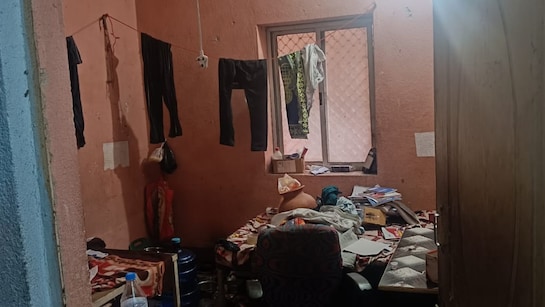
Danish's room at the Tabarak Lodge, where he reportedly manufactured explosive devices for ISIS.
New Delhi:
Tucked away in an obscure section of Ranchi's Islamnagar district stands Tabarak Lodge, ostensibly a 'hotel' but in reality a shabby, deteriorating structure offering tiny, confined accommodations.
Inside, visitors encounter an extended, constricted, and poorly illuminated hallway with utter darkness at its terminus. Inexpensive plywood entrances line both sides, with footwear arranged neatly outside each door.
Several steps down, on the left side, is room number 15, distinguished by particularly filthy black residue covering part of its once vibrant yellow door. A pair of slippers waits outside.
This yellow door concealed a lethal secret for numerous months.
Within, Ashhar Danish, a young man supposedly 'preparing' for the competitive SSC examination for government employment, was actually manufacturing explosives for the notorious ISIS terrorist organization.
The yellow door relinquished its secrets last week after Delhi Police's capture and questioning of another terrorist, Aftab Qureshi, prompted operations in various states. Eventually, utilizing information provided by Aftab and obtained during these raids, law enforcement officers from the national capital and Jharkhand's Anti-Terrorism Squad executed a collaborative mission to locate and apprehend Danish and twelve others.
With his detention, sources indicated that a terrorist cell involved in explosive manufacturing, recruitment, and planning attacks against senior leadership from the governing Bharatiya Janata Party was neutralized.
Sources informed NDTV that authorities recovered gunpowder, bombs, substantial quantities of potassium nitrate, and homemade weapons from Danish's quarters. The explosives were manufactured in this room and subsequently tested through detonation in the waters of the Subarnarekha River.
Packages containing potassium nitrate, an accelerant substance, were discovered.
Potassium nitrate, commonly called saltpeter, is a chemical compound also present in fertilizers and utilized in gunpowder production. A white crystalline substance, it can pose health risks if inhaled or consumed.
Explosives of various dimensions and potency were seized from the room, according to sources.
However, room number 15 functioned beyond merely an explosive manufacturing facility. It also served as a recruitment hub. Sources revealed that Danish, who took residence sometime in the previous year, had himself been recruited and radicalized by a Pakistani handler operating via social media, after which he began enlisting others.
Much of this recruitment and radicalization, sources explained, was conducted through the Signal messaging application, one of several offering end-to-end encryption. Multiple groups were established with ordinary names such as 'intern interview' or 'business idea' to disguise their actual purposes.
These and additional groups were also utilized to gather funds for purchasing bomb-making components; knives and chemicals were ordered from Amazon, and Danish's Pakistani handler instructed him in explosive manufacturing, including PETN, or pentaerythritol tetranitrate, bombs.
These and other explosive devices, including those using acetone peroxide - grimly referred to as 'mother of Satan' - as the primary component, were manufactured here, tested, and stockpiled. Weapons were also discovered.
The additional members of this module have been identified as Sufian Khan, Mohammad Huzaif Yaman, and Kamran Qureshi, who allegedly intended to attack religious locations.
NDTV is now available on WhatsApp channels. Click on the link to access all the latest updates from NDTV in your chat.