
Protecting Big Cats: India's Minister Highlights Crucial Link Between Wildlife Conservation and Climate Action at COP30
- Date & Time:
- |
- Views: 56
- |
- From: India News Bull
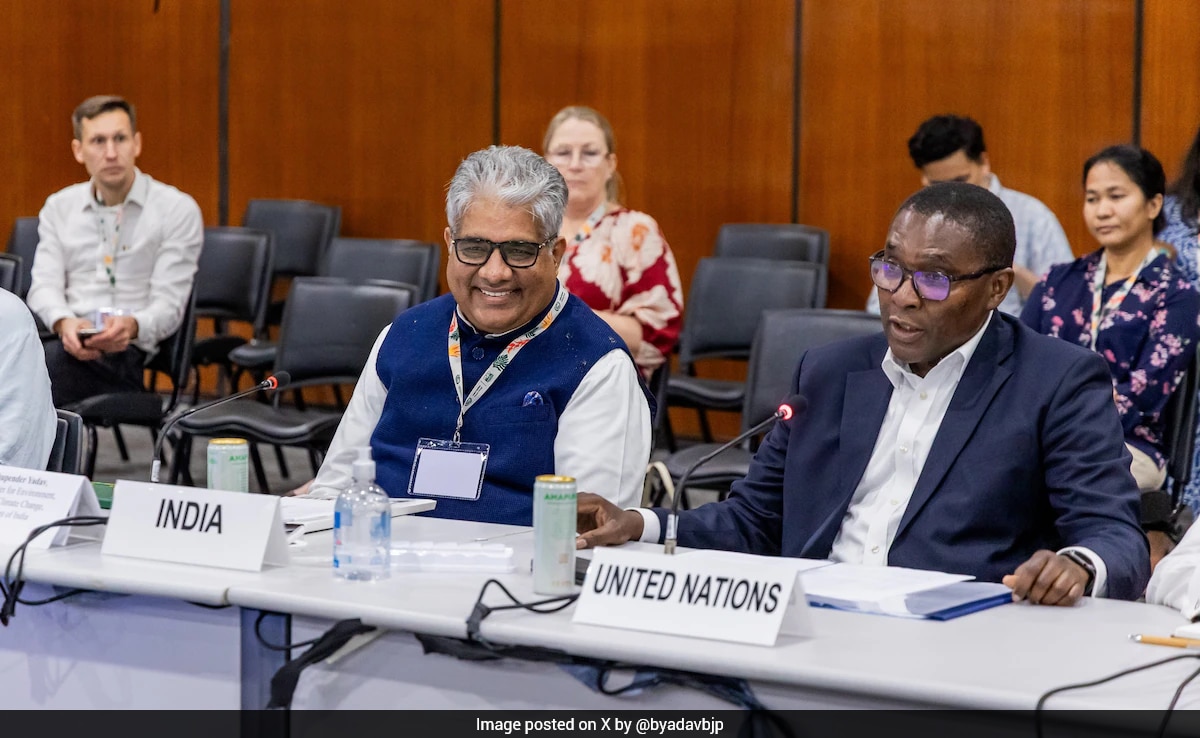
Bhupender Yadav delivered a compelling address at the high-level Ministerial Segment on the International Big Cat Alliance during the UNFCCC COP30 Summit.
Belem (Brazil):
India has called upon global leaders to intensify conservation efforts for big cats, emphasizing that safeguarding these apex predators is essential for humanity's sustainable future.
Speaking at the high-level Ministerial Segment on the International Big Cat Alliance (IBCA) during the UNFCCC COP30 Summit in Belem on Monday, Environment Minister Bhupender Yadav cautioned that diminishing big cat populations would destabilize crucial ecological systems.
The India-led IBCA initiative focuses on conserving seven major big cat species: tigers, lions, leopards, snow leopards, cheetahs, jaguars, and pumas. This alliance seeks to enhance collaboration among member nations to combat illegal wildlife trafficking, preserve habitats, and secure resources for conservation initiatives.
"Healthy big cat populations indicate thriving forests, regenerating grasslands, functioning water systems, and efficient carbon storage within living landscapes," Yadav stated.
He advocated for strengthened international cooperation to protect big cat species and their habitats as an integral component of comprehensive climate and biodiversity action.
"Today's ecological challenges are intricately connected and require integrated solutions. As apex predators, big cats regulate ecological balance and serve as indicators of ecosystem health," Yadav observed.
The minister further highlighted that declining big cat numbers result in ecosystem instability, reduced climate change resilience, and diminished natural carbon sequestration capacity.
"What we commonly refer to as wildlife conservation represents climate action in its most natural form," he emphasized.
Yadav elaborated on how preserving big cat habitats directly enhances carbon sequestration, watershed protection, disaster risk reduction, climate adaptation, and sustainable livelihood opportunities.
He outlined IBCA's capacity to support participating countries through technical assistance, standardized methodologies, capability enhancement, south-south cooperation, and mobilization of blended finance and biodiversity-carbon credit mechanisms.
Noting India's status as home to five of the world's seven big cat species, Yadav highlighted the country's significant conservation achievements.
"India achieved its goal of doubling the tiger population ahead of schedule, while our Asiatic lion population continues to show positive growth," he stated.
The minister emphasized India's development of one of the world's most comprehensive wildlife databases through nationwide assessments of tigers, lions, leopards, and snow leopards, alongside expanding protected areas, securing wildlife corridors, and engaging local communities in conservation and eco-based livelihood initiatives.
He announced that 17 countries have officially joined IBCA, with over 30 additional nations expressing interest in participation.
Yadav underscored India's vision to incorporate all big cat range countries and nations committed to biodiversity and climate security into the Alliance.
Revealing plans for a 'Global Big Cats Summit' to be hosted in New Delhi in 2026, he extended invitations to all countries to share conservation experiences, strategies, and strengthen collaborative partnerships.
Advocating for enhanced global cooperation, the minister emphasized that humanity currently faces a critical period of ecological realignment requiring unity and collaboration.
"We must prioritize collaboration over competition. Our strength lies not in isolation but in solidarity. Protecting big cats means protecting our shared planet. Protecting big cats means securing our future," Yadav concluded.
Source: https://www.ndtv.com/india-news/protecting-big-cats-is-protecting-planet-environment-minister-bhupender-yadav-at-cop30-9654086