
India's Eye Care Crisis: AIIMS Survey Reveals Private Sector Dominance with Only 15% Government-Run Centers
- Date & Time:
- |
- Views: 51
- |
- From: India News Bull
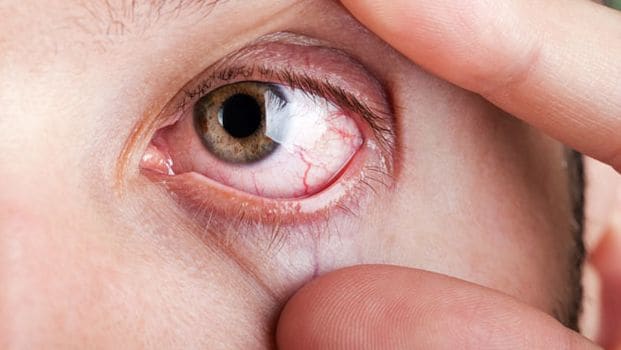
The findings emerge as India faces an enormous burden of vision impairment affecting millions of citizens.
New Delhi:
A groundbreaking national survey led by the All India Institute of Medical Sciences (AIIMS) has revealed that India's eye-care system is heavily dominated by the private sector, with only 15 percent of eye centers operated by the government and over 70 percent run by private institutions.
The research warns that this overwhelming private ownership has created significant gaps in affordable and comprehensive eye care access for large segments of the population.
Conducted during 2020-21 under the leadership of Dr. Praveen Vashist, Professor and Head of Community Ophthalmology at AIIMS, the Human Resources and Infrastructure for Ophthalmic Services in India survey was a collaborative effort with the Union Health Ministry, the All India Ophthalmological Society (AIOS), and Vision 2020 India. Published in the Indian Journal of Ophthalmology in November 2025, the study examined nearly 9,000 eye-care facilities, establishing the most comprehensive national database on ophthalmic resources to date.
The survey specifically found that 70.6 percent of India's eye-care institutions operate under private management, while government facilities account for just 15.6 percent, and non-governmental organizations (NGOs) run the remaining 13.8 percent.
Private facilities handle approximately 60 percent of cataract surgeries and an overwhelming 90 percent of refractive-error corrections nationwide, according to the research. Government hospitals manage only 40 percent and 10 percent of these procedures respectively. Researchers observed that private centers predominantly focus on profitable services like refractive surgeries and vision correction, while public-oriented services such as eye banking remain concentrated within the government sector.
The survey highlighted critical infrastructure gaps, with only 5.7 percent of all centers maintaining eye banks and less than one-third (28.3 percent) offering low-vision rehabilitation services. Furthermore, just 40.5 percent of institutes provide round-the-clock emergency eye services. Though 87 percent have functional operation theaters, essential facilities remain unevenly distributed across the country.
Refractive surgery was available at merely 20.9 percent of institutions. The most commonly offered specialties were cataract treatment (91.5 percent), glaucoma (71.5 percent), squint (42 percent), oculoplasty (37.3 percent) and vitreo-retina (33.6 percent). Advanced procedures such as neuro-ophthalmology (25.4 percent) and keratoplasty (14.4 percent) were primarily limited to tertiary care hospitals.
The study revealed that India has approximately 20,944 ophthalmologists, equating to roughly one for every 65,000 citizens, and 17,856 optometrists or ophthalmic technicians – both figures falling significantly below global standards and national targets. On average, the country has 15 ophthalmologists and 74 eye beds per million population. At secondary-level eye-care centers and above, there are only three ophthalmologists and two optometrists per institution.
Dr. Vivek Gupta, Additional Professor of Community Ophthalmology at AIIMS, emphasized that the disparity extends beyond numbers to regional distribution. "Eye care remains heavily concentrated in a few regions, leaving millions underserved," he noted. The geographic imbalance is stark: Leh-Ladakh has just two ophthalmologists per million residents, while Chandigarh boasts 94. Delhi provides one ophthalmologist for every 18,000 people, compared to one for every 8,000 in Pondicherry. Dr. Gupta stressed that "every district hospital should have at least one ophthalmologist."
Regional disparities across India are profound. Puducherry reported the highest concentration with 127 ophthalmologists per million population, while Ladakh registered only two. States like Delhi, Maharashtra, Goa, and Tamil Nadu meet or exceed recommended staffing levels for eye-care professionals, whereas Uttar Pradesh, Bihar, Madhya Pradesh, Assam, and West Bengal face severe shortages. Uttar Pradesh alone needs an additional 2,464 ophthalmologists to meet current demand.
Dr. Gupta noted that even relatively well-served areas like Delhi require stronger primary-level infrastructure: "Most government dispensaries have medical officers but no ophthalmic technicians. Ideally every dispensary should have one."
The RP Centre at AIIMS currently operates 27 primary eye-care or 'vision centres' – 25 of them across Delhi. Officials indicated plans to expand this network to 250 centers. A recent meeting with state and district program officers discussed scaling up primary eye-care coverage and implementing the World Health Organization's Refractive Error Situation Analysis Tool (RESAT) throughout India. "Tests are underway in Delhi to strengthen local eye-care programs," Dr. Gupta reported.
These findings are particularly concerning given India's substantial burden of vision impairment. The National Blindness Survey of India (2015-19) estimated that the country has five million blind and 34 million visually impaired individuals. The Longitudinal Ageing Study of India further revealed that 33.8 percent of adults aged 45 years and above suffer from distance vision impairment or blindness.
Dr. Rohit Saxena, Professor and In-charge of Paediatric Ophthalmology at the RP Centre, AIIMS, emphasized the urgent need for more trained eye specialists to detect and address children's vision problems early.
The report, which has been submitted to the central government, calls for increased investment in public eye health. "India has made huge progress in cataract surgery," Dr. Saxena acknowledged. "But to achieve universal eye care, we need to strengthen the public system and expand primary-vision centres so that quality care reaches everyone, not just those who can afford it."
Dr. Saxena observed that while tertiary-level eye care in India is well established, primary and secondary levels remain inadequate. "We lack trained ophthalmologists, proper equipment, anaesthesia support and expertise to treat children," he noted.
Nationally, only about 25 percent of hospitals offer pediatric eye-care services, with most being privately operated, and just six percent of ophthalmologists possess training in pediatric care.
Dr. Saxena also warned that delayed detection of conditions like myopia and refractive errors significantly reduces treatment success rates. "Early screening at the primary level is essential," he emphasized.
The AIIMS-led survey researchers highlighted how financially lucrative services are prioritized by the private sector while charitable services remain primarily within the public domain. They called for immediate policy attention to expand training opportunities, improve infrastructure, and ensure equitable access to eye care. The researchers stressed that India must substantially increase its ophthalmologist and optometrist workforce to achieve universal eye health coverage.
"We must build capacity at the primary level so that vision problems, especially in children, are detected early," Dr. Gupta urged. He also emphasized the need for current data on eye-care infrastructure, noting that the previous comprehensive study was conducted five years ago.
Public-private partnerships, such as those implemented under the Ayushman Bharat scheme – which offers over 40 eye-care packages – are, according to Dr. Gupta, "critical in improving access and moving towards universal eye health."
The AIIMS survey has contributed to the creation of a dedicated page on the India Vision Atlas, a public web portal connecting the national eye-care database with an interactive map. "It allows patients, planners and policymakers to check the availability of eye-care facilities and workforce in any state or district and locate nearby institutions offering specific services," Dr. Gupta explained.
Source: https://www.ndtv.com/india-news/aiims-survey-finds-private-sector-dominates-indias-eye-care-only-15-centres-government-run-9608801