
Fourth Khangri Glacier Expedition: Scientists Study Climate Change Impact on Eastern Himalayan Glaciers in Arunachal Pradesh
- Date & Time:
- |
- Views: 65
- |
- From: India News Bull
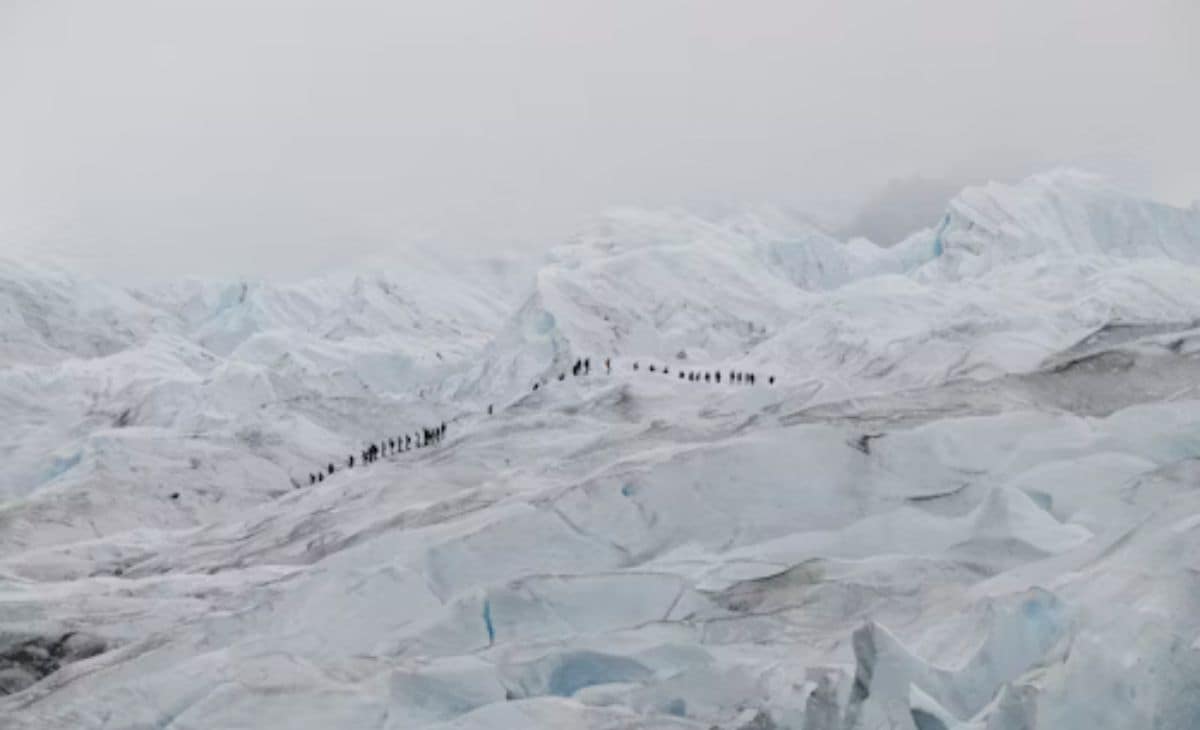
The expedition brings together a multidisciplinary team of scientists and engineers. (Representative)
Itanagar:
The fourth Khangri glacier expedition, a major scientific mission to study the response of Himalayan glaciers to climate change, commenced on Saturday in the Mago Chu basin under the towering Gorichen Mountain in Arunachal Pradesh's Tawang district, an official said.
The week-long expedition, scheduled to continue until November 15, is jointly organized by the Centre for Earth Sciences & Himalayan Studies (CESHS) and the National Centre for Polar & Ocean Research (NCPOR), he said.
Led by scientist Dr. Parmanand Sharma, one of India's leading glaciologists, the expedition assembles a multidisciplinary team of scientists and engineers from CESHS, NCPOR, Nagaland University, and North East Regional Institute of Science and Technology (NERIST), CESHS director Tana Tage said.
Despite the extensive glaciated areas in the Arunachal Himalayas, scientists note that very few glaciers in this region have been studied comprehensively, making it one of the least explored 'white spots' in the Indian cryosphere.
While the state houses 161 glaciers covering approximately 223 square kilometers across four major basins - Manas, Subansiri, Kameng, and Dibang - none has undergone long-term field-based monitoring to evaluate their mass balance or glacial dynamics, the official said.
The expedition's primary goal is to conduct systematic studies on glacier mass balance and movement to understand their various responses to the changing climate, he said.
Researchers will also investigate the formation and evolution of glacial lakes in the region and assess potential risks of Glacial Lake Outburst Floods (GLOFs), which present serious threats to downstream communities and infrastructure.
These glaciated basins hold critical hydrological importance as they constitute the headwaters of the Brahmaputra river system, a vital water source for millions across northeastern India.
Scientists believe that findings from this expedition will play a key role in understanding the complex relationships between climate, cryosphere, and hydrology in the Eastern Himalayas, Tage said.
By providing insights into one of the least understood glacial systems in the Indian Himalayas, the expedition is expected to make a significant contribution to understanding climate change impacts and to the long-term water security of the region, he added.
(This story has not been edited by NDTV staff and is auto-generated from a syndicated feed.)
Source: https://www.ndtv.com/india-news/expedition-to-study-climate-change-impact-on-glaciers-begins-in-arunachal-9599810