
The 2008 Mumbai Bus Hostage Crisis: How Rahul Raj's Attack Preceded 26/11 Terror Attacks
- Date & Time:
- |
- Views: 50
- |
- From: India News Bull
2008 can be considered India's most violent year. Major cities including Jaipur, Bangalore, Ahmedabad, New Delhi, and Guwahati experienced devastating serial bombings that resulted in hundreds of deaths and thousands of injuries. Mumbai, however, remained relatively peaceful. Following the July 2006 train explosions, Mumbai had not witnessed any terrorism-related incidents. Despite the Indian Mujahideen, who claimed responsibility for numerous bombings across the nation, having connections in Mumbai, the city somehow escaped their destructive plans.
The popular Bollywood song 'Ye Bambai shehar haadson ka shehar hai' characterizes Mumbai as a city of tragedies. Living up to this reputation, Mumbai's peace was short-lived. After several quiet months at the beginning of the year, a wave of fear and anxiety swept through the city's residents.
On October 27, 2008, around 10:30 am, reports emerged that double-decker BEST bus number 332 had been hijacked in Kurla. Initial information indicated that 12 passengers were being held hostage and one person had been shot. My immediate concern was that the Indian Mujahideen, after carrying out attacks across India, had now targeted Mumbai. I received a call from a local police source informing me that the hijacker wanted to communicate with the media. I quickly headed to the location, which was 14 kilometers away. My colleague Umesh Kumawat, who was covering another story, also rushed to the scene.
I was excited by the prospect of serving as a hostage negotiator. I mentally prepared how I would persuade the hijacker to free the hostages and surrender. I thought it would be an invaluable learning experience. However, by the time I navigated through traffic to reach Kurla, everything had concluded. The hostages were safe, the area surrounding the bus was secured, the hijacker had been killed, and his body was being transported to the hospital. I observed ACP Mohammed Javed standing near the bus, still holding his emptied service revolver. It was Javed who had fired first at the hijacker and led the police team into the bus.
'When I entered the bus, I saw him holding a passenger and pointing the gun towards him. I told him to surrender, but he didn't. What should have I done to save that passenger's life? I had to fire,' Javed explained to me. Javed and his team discharged over a dozen bullets at the hijacker, three of which struck his head and one penetrated his heart.
The hijacker was identified as 25-year-old Kundan Singh, also known as Rahul Raj, from Patna, Bihar. He was motivated by the anti-North Indian campaign initiated by MNS leader Raj Thackeray. That year, following Raj Thackeray's arrest for delivering inflammatory speeches, his party members attacked North Indians. Several individuals were killed by violent mobs. Young North Indians who traveled to Mumbai for railway recruitment exams were assaulted.
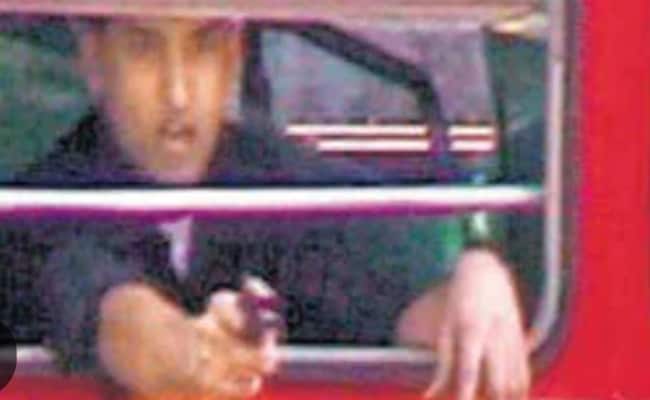
An infuriated Rahul Raj traveled to Mumbai with a homemade pistol and boarded the BEST bus at Sakinaka. When the bus reached Kurla, he seized control by brandishing his weapon, proceeded to the upper deck, and held several passengers hostage. Upon seeing police approach, he began firing randomly, with one bullet striking a passenger. Bystanders heard him shouting from the window that he had no intention of harming the passengers but wanted to kill Raj Thackeray.
The incident sparked controversy, leading to heated exchanges between politicians from Bihar and Maharashtra. Bihar politicians across party lines condemned the encounter, alleging that Mumbai Police made no effort to capture Rahul Raj alive. The Maharashtra government defended the police actions as appropriate under the circumstances. In addition to a chief secretary-level investigation announced by the Maharashtra government, petitioners also approached the Supreme Court and Patna High Court.
While the bus hijacking incident instilled fear among Mumbai residents, particularly those using public transportation, it was minor compared to what the city had previously endured. At that time, Mumbaikars were unaware that exactly one month later, their city would experience an event that would shock the entire world.
This is an excerpt from Jitendra Dixit's 2022 book "Bombay After Ayodhya: A City in Flux," published by HarperCollins India. Only subheadings and paragraph breaks have been added for readers' convenience. These are the personal views of the author.
Disclaimer: The author and publisher of the book are solely responsible for the contents of the book or any excerpt derived therefrom. NDTV shall not be responsible or liable for any claims arising from the contents of the book, including any claims of defamation, infringement of intellectual property rights or any other right of any third party or of law.
Source: https://www.ndtv.com/book-excerpts/recalling-mumbais-last-hostage-situation-from-2008-when-a-gunman-took-over-a-bus-9549186