
Understanding Cyclone Movement: Why Tropical Storms Form at Sea but Target Coastal Areas
- Date & Time:
- |
- Views: 50
- |
- From: India News Bull
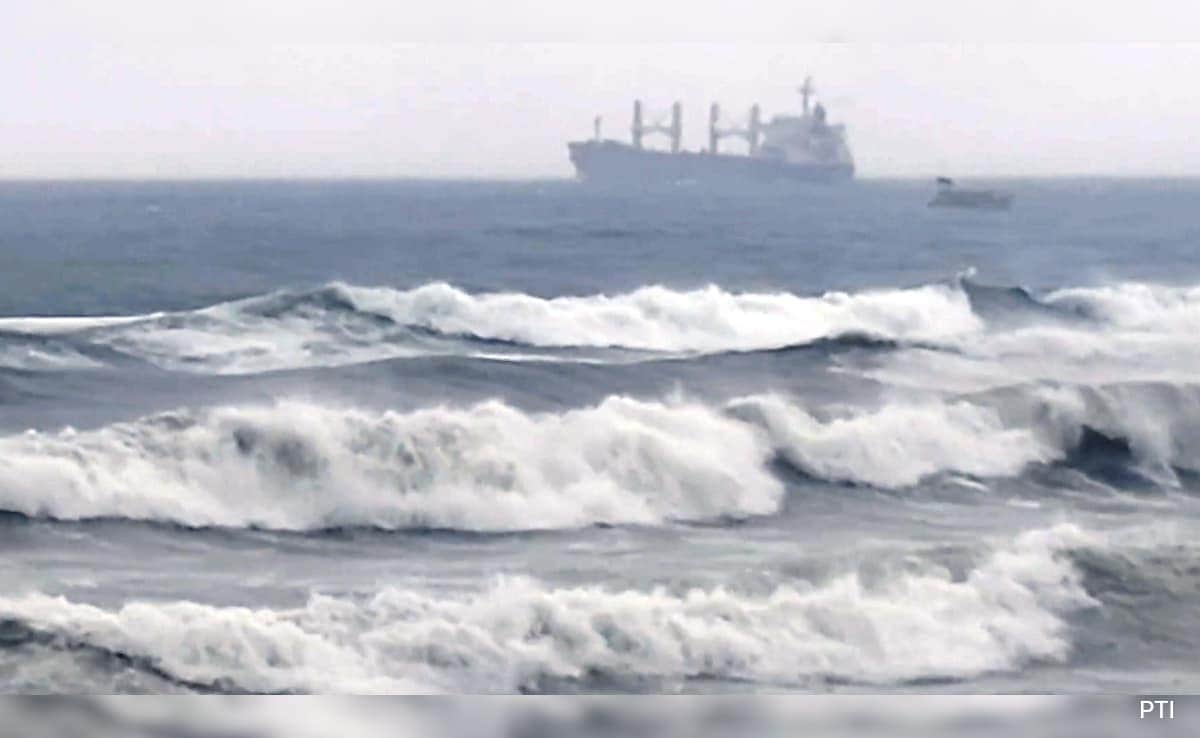
Cyclones typically develop between 5 and 20 degrees latitude on both sides of the equator.
On Tuesday, Cyclone Montha made landfall on Andhra Pradesh's coast, bringing heavy rainfall and powerful winds that affected multiple districts. In Konaseema's Makanagudem village, a woman lost her life when an uprooted tree fell on her, according to police reports.
Authorities evacuated approximately 76,000 people as the state established medical facilities and provided fodder for animals. The cyclone damaged crops across about 38,000 hectares and affected horticultural produce throughout 1.38 lakh hectares. Odisha also experienced the storm's effects, with 15 districts reporting damage to infrastructure and agricultural lands.
As recovery efforts proceed, it's worth examining why cyclones tend to move toward land rather than remaining over the ocean.
Cyclones develop over warm ocean waters where temperatures exceed 26 degrees Celsius. The ocean's heat and moisture provide these storms with their energy. Once formed, cyclones travel with the prevailing wind patterns, similar to how a leaf moves with a river's current.
Most cyclonic formations occur between 5 and 20 degrees latitude on either side of the equator. In these regions, trade winds move from east to west as part of the global Hadley circulation. This system involves warm air rising near the equator, flowing toward the poles, cooling, descending, and returning toward the equator. Earth's rotation deflects these winds westward, driving cyclones across oceanic expanses.
Due to these trade wind patterns, storms forming in the Bay of Bengal typically move westward toward India's eastern shoreline. This explains why most cyclones developing near Myanmar or the Andaman Sea eventually strike Andhra Pradesh, Odisha, or West Bengal.
Cyclones gain strength over warm waters but quickly weaken after reaching land because they lose their energy source. Nevertheless, surrounding wind patterns often continue to push them inland.
In the Bay of Bengal, east-to-west trade winds carry storms toward India's eastern coastline.
The Arabian Sea experiences changing wind directions with monsoon seasons. From June to September, during the southwest monsoon, winds flow from southwest to northeast, pushing storms toward India's western coast. From October to March, the northeast monsoon reverses this flow, directing storms toward Africa and away from India.
The Indian Ocean's unique characteristic is its seasonally changing wind direction. During the southwest monsoon, winds move from southwest to northeast, directing Arabian Sea cyclones toward India's western regions, particularly Gujarat, Maharashtra, and sometimes Kerala.
During the northeast monsoon, winds blow from India toward the equator and Africa, pushing storms westward toward the Arabian Peninsula or Somalia. Winter cyclones are uncommon because sea temperatures are lower and wind shear is stronger.
When steering winds are weak, cyclones may slow down or remain stationary for extended periods. If global wind patterns flowed in the opposite direction, cyclones would drift seaward rather than landward, significantly reducing the frequency and impact of storms on coastal regions.
Source: https://www.ndtv.com/india-news/cyclone-montha-explained-why-cyclones-form-at-sea-but-move-towards-land-9537366