
'Brain-Eating Amoeba' Kills 19 In Kerala. How It Spreads, How To Stay Safe
Kerala health authorities are on alert after a spike in cases of Primary Amoebic Meningoencephalitis (PAM), a brain infection with a high fatality rate. This infection is caused by Naegleria fowleri, commonly known as the 'brain-eating amoeba'
- Date & Time:
- |
- Views: 61
- |
- From: India News Bull
Kerala's Alarming Rise in 'Brain-Eating Amoeba' Infections Claims 19 Lives This Year
New Delhi:
Health officials in Kerala have raised concerns following an increase in Primary Amoebic Meningoencephalitis (PAM) cases, a highly fatal brain infection. The culprit behind these infections is Naegleria fowleri, commonly referred to as the 'brain-eating amoeba'. In 2023, Kerala has documented 61 confirmed PAM cases resulting in 19 fatalities, with numerous deaths reported within recent weeks.
Kerala's Health Minister Veena George has described the situation as a significant public health issue. Initially concentrated in districts like Kozhikode and Malappuram, infections are now appearing randomly throughout the state. The age range of patients spans from a three-month-old baby to a 91-year-old elder. "We're now seeing isolated cases rather than clusters linked to specific water sources as observed last year, making our epidemiological investigations more challenging," she explained.
Understanding PAM and Its Transmission
According to official Kerala government documentation, PAM targets the central nervous system. "This infection destroys brain tissue, causing severe brain swelling and death in most cases. PAM is rare and usually occurs in otherwise healthy children, teens and young adults," the document states.
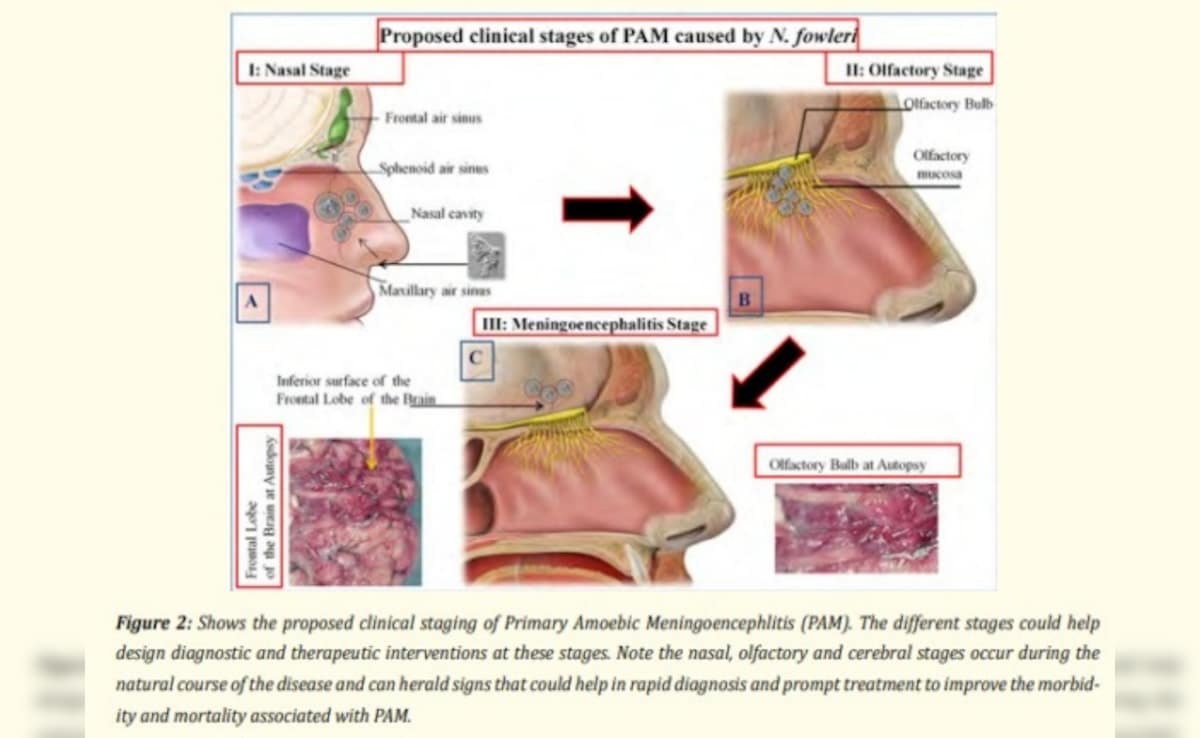
The government identifies "warm, especially stagnant, fresh water" as a carrier of this dangerous amoeba. "The portal of entry by the amoebae is through the olfactory mucosa and the cribriform plate," it notes, clarifying that drinking contaminated water does not typically "associated with symptomatic disease".
Individuals who swim, dive, or bathe in water bodies containing this amoeba face heightened infection risk.
The document also highlights climate change as an exacerbating factor. "Climate change raising the water temperature and the heat driving more people to recreational water use is likely to increase the encounters with this pathogen," it warns.
Importantly, PAM cannot spread through person-to-person contact.
Recognizing PAM Symptoms
PAM carries an extremely high mortality rate, primarily because diagnosis is challenging. Its symptoms mirror bacterial meningitis – headache, fever, nausea, and vomiting. "By the time other more common causes of meningitis are ruled out and the diagnosis of PAM is considered, it is often too late to save the patient from the cerebral edema that quickly develops and causes death," the document explains, adding, "Most patients present to medical care with signs or symptoms indicative of central nervous system involvement".
PAM occurs more frequently during warmer months among individuals who have recently swum, dived, or bathed in warm, typically stagnant freshwater. Symptoms may manifest between one and nine days after exposure, with rapid onset occurring over hours to 1-2 days. "The neuro-olfactory route provides N.fowleri quick access to the brain and results in impaired adaptive immune response, causing a very rapid disease course," it explains.
PAM Treatment Approaches
Nearly all PAM survivors over the past six decades received diagnosis at a pre-cerebral stage. "This shows that early diagnosis of PAM and timely initiation of an antimicrobial cocktail might be lifesaving," the document states. Minister George emphasizes that "early detection is key".
"The rarity of the disease, delay in diagnosis, fulminant clinical course, and the difficulties in making a rapid diagnosis have hampered the evaluation of drug regimens," according to the document.
"In theory, the best drug regimen should include an amebicidal drug (or a combination of drugs) with good in vitro activity that is capable of crossing the blood-brain barrier," it notes.
Kerala authorities urge people to seek immediate medical care if they experience PAM-like symptoms after contact with stagnant water.
READ: Surge In Deadly Brain-Eating Amoeba Cases In Kerala: Why And How It Spreads
PAM's History in Kerala
Kerala identified its first PAM case in 2016, with only eight confirmed cases documented through 2023. However, a significant increase occurred last year with 36 cases and nine deaths. This year has already seen 69 cases and 19 deaths – representing almost a 100 percent increase.
As authorities work to prevent further infections, public advisories recommend avoiding swimming or bathing in untreated or stagnant freshwater sources such as ponds and lakes. Swimmers are encouraged to use nose clips when entering freshwater, while proper cleaning and chlorination are recommended for wells and water tanks.
Kerala's health department, working alongside the National Centre for Disease Control, is conducting environmental sampling to identify potential contamination sources.