
How AI Chatbots Are Transforming India's Call Center Industry and Threatening Millions of Jobs
- Date & Time:
- |
- Views: 60
- |
- From: India News Bull
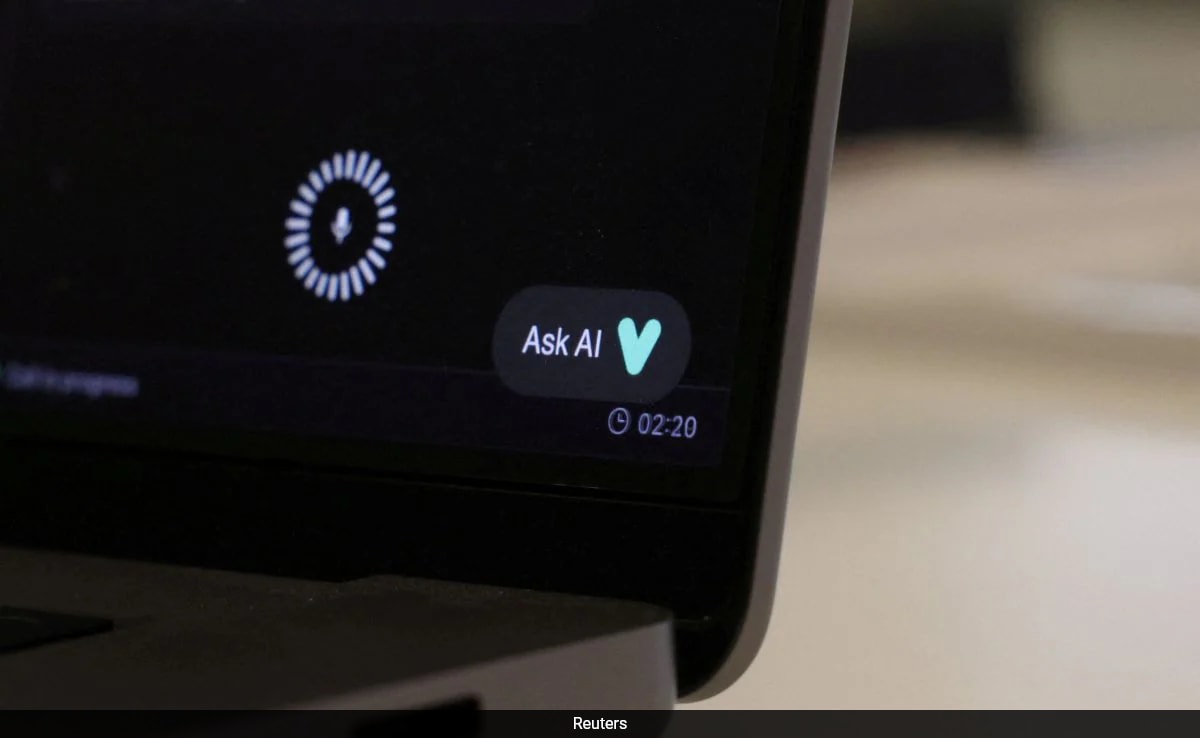
LimeChat's AI technology enables clients to reduce customer service workforces by 80% when handling 10,000 monthly inquiries.
In Bengaluru, developers are perfecting artificial intelligence chatbots that communicate indistinguishably from humans through text and voice.
LimeChat, an ambitious startup, aims to make traditional customer service positions nearly obsolete. Their generative AI solutions allow businesses to dramatically reduce staffing requirements for customer inquiries.
"When you employ a LimeChat agent, there's no need to hire additional staff ever again," explained 28-year-old co-founder Nikhil Gupta in a Reuters interview.
India established itself as the world's customer service hub thanks to affordable labor costs and widespread English proficiency. Now, AI-powered systems are taking over roles traditionally performed by college-educated workers in technical support, customer care, and data management, creating an urgent need for adaptation.
This transition is creating opportunities for AI startups that help organizations reduce personnel expenses while scaling operations, despite consumer preferences often favoring human interaction.
This examination of the transformative changes in India's $283 billion IT sector is based on conversations with 30 individuals, including industry executives, recruiters, workers, and government officials. Reuters also conducted site visits to AI startups and tested voice and text chatbots capable of handling complex customer interactions with remarkable human-like qualities.
Rather than slowing the adoption of technologies that threaten routine jobs, India is accelerating implementation, betting that this approach will generate sufficient new opportunities for displaced workers. The outcome of this strategy has global implications as a test case for whether embracing AI disruption can elevate developing economies.
The global conversational AI market is expanding at 24% annually and is projected to reach $41 billion by 2030, according to Grand View Research.
India, which derives 7.5% of its GDP from information technology, is fully embracing this transformation. Prime Minister Narendra Modi stated in February: "Work doesn't disappear because of technology. Its nature evolves and new types of employment emerge."
Not everyone shares Modi's optimism about India's readiness. Santosh Mehrotra, formerly with the Indian government and currently a visiting professor at the University of Bath's Centre for Development Studies, criticized authorities for lacking urgency in evaluating AI's impact on India's young workforce. "There's no strategic plan," he remarked.
Business process management employs 1.65 million workers across call centers, payroll operations, and data processing in India. Hiring has declined significantly due to increased automation despite growing demand for AI coordinators and process analysts, according to Neeti Sharma, CEO of TeamLease Digital.
Net employment growth in this segment, representing one-fifth of IT output, has fallen below 17,000 workers annually in recent years, compared to 130,000 in 2022-2023 and 177,000 in 2021-2022, according to TeamLease Digital data.
Reuters interviewed three current and five former customer service employees who described increasing job insecurity and AI integration, including tools that suggest responses and bots that autonomously handle routine inquiries.
Megha S., 32, earned $10,000 annually at a Bengaluru software solutions provider before being laid off last month as the company implemented AI tools for sales call quality assessment.
"They told me I was the first person replaced by AI," said Megha, speaking on condition that her full name and former employer remain confidential. "I haven't informed my parents yet."
Sumita Dawra, who oversaw an Indian government taskforce on AI's workforce impact before retiring in March, acknowledged that while technology offered productivity improvements leading to new jobs, India might consider stronger social security measures like unemployment benefits to assist those displaced during the transition.
However, a senior Indian official told Reuters the government believes AI will ultimately have minimal impact on overall employment. India's IT and labor ministries, and Modi's office, did not respond to comment requests.
Beyond AI, factors affecting India's IT sector include US tariffs, a proposed 25% tax on foreign outsourcing services by a US lawmaker, and President Trump's $100,000 fee for new H-1B visas commonly used by tech companies employing Indian workers.
Investment bank Jefferies predicted in September that India's call centers would face 50% revenue reductions from AI adoption over the next five years, with other back-office functions seeing approximately 35% declines.
This forecasts near-term job losses in India, which represents 52% of the global outsourcing market.
"The greatest impact will affect recent college graduates," said Pramod Bhasin, who established India's first call centers for GE Capital in the 1990s with just 18 employees in workspaces divided by saris hanging from the ceiling.
Long-term, India could transition from "back office" to "AI factory" by capitalizing on demand for AI engineers and automation implementation, according to Bhasin, who later founded IT services company Genpact.
LimeChat, which Reuters visited in August, is benefiting from this demand. Co-founder Gupta said his team has helped automate 5,000 positions across India. The company's bots handle 70% of customer complaints for clients, with plans to reach 90-95% within a year.
"A monthly investment of 100,000 rupees with us automates the work of at least 15 agents," Gupta explained. At approximately $1,130, the service costs roughly the same as three customer-care staff.
LimeChat's revenue increased to $1.5 million in 2024 from $79,000 two years earlier, according to regulatory disclosures. Last year, the firm began integrating Microsoft's Azure language models in a partnership to launch a new e-commerce chatbot.
Indian ayurvedic products company Kapiva is among Gupta's clients, using a LimeChat bot for WhatsApp customer interactions.
When asked "What kind of diet should I have to reduce weight?", the AI provided a meal-plan creator. A follow-up query in mixed English and Hindi about product differences was also answered, with the chatbot sharing links to Kapiva products with a smiling emoji. Kapiva did not respond to Reuters inquiries.
LimeChat competes with firms like Reliance, the conglomerate led by Mukesh Ambani, which acquired Indian startup Haptik in 2019.
Haptik offers "AI agents that deliver human-like customer experiences" costing $120 that can reduce support expenses by 30%. Its revenue grew dramatically to nearly $18 million last year from less than $1 million in 2020.
In September, Haptik promoted a webinar by asking: "What if you had a full-time employee who never sleeps and costs just 10,000 rupees?"
"We're witnessing a major shift," Haptik product manager Suji Ravi stated in the webinar attended by Reuters. "Companies are reducing investments in human agents in favor of AI agents."
For LimeChat client Mamaearth, an Indian personal-care brand, scalability is the primary advantage of AI chatbots, according to Vipul Maheshwari, head of product and analytics at parent company Honasa Consumer.
"Quality customer support is critical for our success," he said. "But infinitely scaling our human customer support team is impossible."
Mamaearth's chatbot exceeds basic assistance like order tracking, helping users with complex inquiries such as product recommendations during pregnancy and sometimes managing frustrated customers.
The Media Ant exemplifies both the promise and challenges of AI implementation. The Bengaluru advertising agency reduced its workforce by 40% to approximately 100 employees over the past year and consolidated office space to reduce costs, according to founder Samir Chaudhary.
The company eliminated 15 sales positions, replacing them with AI bots that identify leads and contact potential customers. A six-person call center was replaced by a voice agent named Neha that communicates with near-perfect, Indian-accented English.
When a Reuters reporter inquired about YouTube advertising with Neha, she requested details about budget and target markets, noted the requirements, and concluded pleasantly: "I will email you the details... have a great day."
"Ask her for coffee and she'll laugh it off," Chaudhary remarked.
However, AI implementation isn't always straightforward for businesses.
Sweden's Klarna initially used chatbots to eliminate thousands of positions last year, but its CEO told Reuters in September that the company is now "trying to course correct" by using the technology to enhance products rather than merely reduce expenses.
Chatbots have limitations. While LimeChat bots handled most general e-commerce questions posed by Reuters effectively, some queries proved challenging.
When asked to substantiate LimeChat client Knya's claim that a million medical professionals trust its products like stethoscopes, the bot responded: "I am sorry, I don't have enough information to answer your question." Knya did not respond to comment requests.
Customer surveys indicate many still dislike chatbots.
An August 2024 EY survey of 1,000 Indian consumers found 62% made purchases influenced by AI recommendations, compared to 30% globally. Nevertheless, "the desire for a human connection remains strong," EY noted, with 78% preferring platforms offering human support.
LimeChat's Gupta maintains that well-trained AI agents resolve issues faster than humans. Many standard bots transfer conversations to human agents when encountering angry customers: "You need very few people to manage negative experiences."
India's tech boom in the 1990s and 2000s drove rural-to-urban migration. Cities like Bengaluru became outsourcing centers as domestic companies including Tata Consultancy Services, Infosys, and Wipro developed into global leaders.
This growth extended to Ameerpet, a Hyderabad neighborhood where university graduates attend classes to acquire IT skills and certifications for tech employment.
Traditionally, Ameerpet's training centers offered courses in Microsoft Office and programming languages like Java. During an April visit, Reuters observed these centers increasingly focusing on AI training.
Outside one center called Quality Thought, a banner displayed a robot overlooking a globe with "AI" lettering.
The facility offered a nine-month course in AI data science and prompt engineering for approximately $1,360, more than twice the cost of traditional web-development programs.
"Recruiters are seeking candidates with fundamental AI skills," staff member Priyanka Kandulapati explained. "We're planning to further refine our curriculum to meet this demand."
In a recent discussion with startup founders about technological change, venture capitalist Vinod Khosla, co-founder of Sun Microsystems, offered a blunt assessment of India's future.
"All IT services will be replaced within five years," he predicted. "The transition will be extremely disruptive."
Source: https://www.ndtv.com/india-news/ai-indias-call-centre-industry-ai-chatbots-that-talk-like-humans-pose-threat-to-indias-call-centre-workers-9457506