
'States Likely To Lose Rs 1.5 Lakh Crore Due To GST 2.0': Karnataka Minister To NDTV
- Date & Time:
- |
- Views: 62
- |
- From: India News Bull
Karnataka Revenue Minister Krishna Byre Gowda has voiced concerns over the new GST structure implemented on Monday, stating that while he supports the revised tax framework, it could potentially result in revenue losses of Rs 1 to 1.5 lakh crore for states across India.
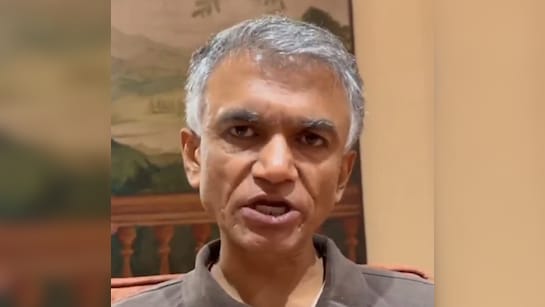
In an interview with NDTV, Mr. Gowda criticized the central government for placing the "entire burden of rate reduction" on state governments. "We have supported rate rationalization and reduction proposals. Our disagreement lies in how the Centre has shifted all the burden onto states," he explained.
The minister warned that these significant revenue losses would undermine states' fiscal stability and increase their dependence on the central government. "This strikes at the core of federalism itself. This isn't cooperative federalism but a one-sided approach that will severely impact states," Mr. Gowda remarked.
He further highlighted the imbalance in the financial implications, suggesting that while states face substantial losses, the Centre might gain an additional Rs 50,000 to 60,000 crore in revenue. "The Centre benefits while states lose, which isn't in the union's best interest," he said.
According to Mr. Gowda, states weren't requesting compensation from the Centre's existing funds. "We merely suggested continuing the erstwhile cesses, which the central government is converting to central taxes, and using those funds to offset state losses. We weren't imposing any additional burden on the Centre," he clarified.
The minister expressed frustration over what he described as a dismissive attitude from the central government toward these concerns. He questioned why the Centre wouldn't provide revenue protection assurances to states, characterizing the central government's approach as "I have my say, you have your way."
"If the economic buoyancy argument is valid, then revenue protection would merely serve as insurance. What would the Centre have to lose by agreeing to this? It wouldn't have cost them anything financially but would have generated goodwill," Mr. Gowda added.
The new GST structure, which represents the most significant overhaul since its 2017 introduction, has simplified the previous four-tier system (5%, 12%, 18%, and 28%) into primarily two rates - 5% and 18%. This restructuring has made numerous household items, vehicles, electronics, and services more affordable.
Under these reforms, daily essentials, insurance policies, automobiles, electronics, beauty and lifestyle services, and machinery will become less expensive. Ultra-luxury items will face a 40% tax rate, while tobacco and related products will remain in the 28% plus cess category.