
90% of Aravalli Hills at Risk: New Definition Threatens India's Ancient Mountain Range
- Date & Time:
- |
- Views: 36
- |
- From: India News Bull
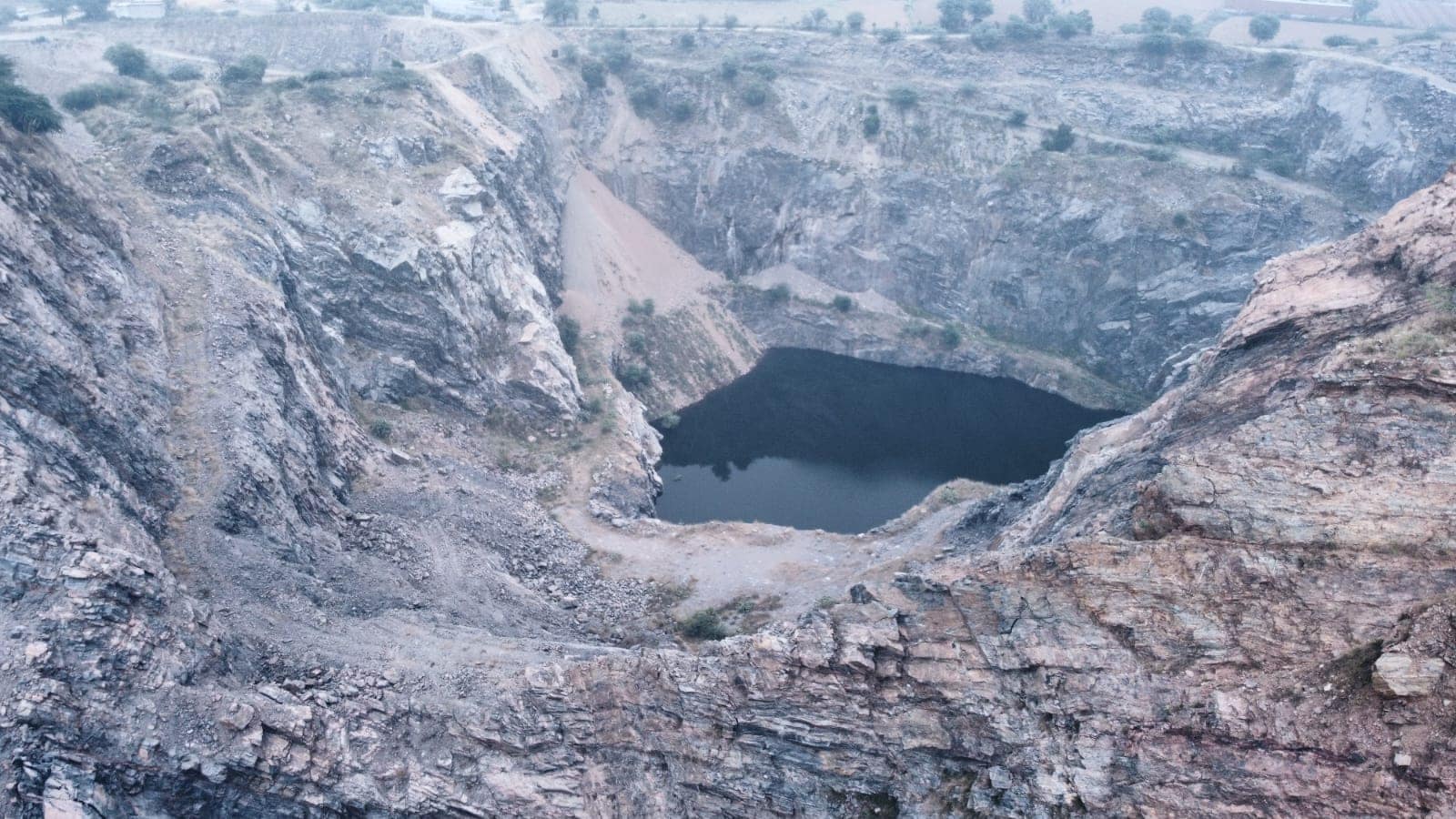
The Aravalli mountain range, one of Earth's oldest mountain systems, spans from Delhi in the north to Gujarat in the south, with approximately two-thirds of its area stretching across 15 districts in Rajasthan. Often referred to as northern India's green lungs, the Aravallis serve a crucial environmental purpose. However, persistent mining activities and encroachments are driving this ancient geological formation toward ecological devastation.
An NDTV investigation into mining operations within the Aravalli hills revealed disturbing evidence of ongoing environmental destruction. The Sariska Tiger Reserve in Alwar district, situated within the Aravalli range, counts among the most severely impacted areas. Beyond its environmental importance, this region holds spiritual significance as the purported meditation location of the Saptarishis. Remarkably, satellite imagery shows that the Aravalli formation resembles the sacred "Om" symbol. Despite this cultural importance, sacred locations including Bhartrihari's tapasthali and areas connected to the Pandavas' exile now suffer extensive degradation due to unregulated mining activities.
In its 2023 ruling, the Supreme Court prohibited mining operations within one kilometer of the Aravalli. According to government data from 2024, 110 mines existed within this restricted zone, with 68 actively operating at that time. While authorities have since claimed to have suspended all activities within the restricted radius, NDTV's field investigation across Sariska, Tehla, and neighboring Alwar regions revealed a contrasting reality. Reporters discovered evidence of secret mining operations continuing undetected. Dormant heavy machinery was found near abandoned pits, and local residents confirmed that illegal extraction persists during nighttime hours. The NDTV team was even pursued after being confronted by unknown individuals near one such mining location.
As illegal mining continues to threaten this delicate ecosystem, a new definition proposed by the Ministry of Environment, Forest and Climate Change has further concerned environmental experts. In a draft submitted to the Supreme Court, the ministry has proposed that only mountains reaching 100 meters or higher should be classified as protected parts of the Aravalli range. This proposal effectively eliminates the existing 2010 Forest Survey of India (FSI) standards, which defined protected Aravalli areas based on a 3-degree slope, 115-meter height, and a 100-meter buffer zone surrounding the hill.
In October 2024, the FSI itself had suggested a more moderate revision—classifying mountains 30 meters tall with a 4.57-degree slope as protected. However, the ministry's latest proposal goes significantly further, drastically narrowing the definition.
According to internal assessments by the FSI, Rajasthan contains 12,081 hills exceeding 20 meters in height across 15 districts. Of these, only 1,048 hills (8.7%) exceed 100 meters in height. This means that under the new criteria, approximately 90% of Aravalli hills would lose their protected status. Data also indicates that 1,594 hills reach 80 meters high, 2,656 stand at 60 meters high, and 5,009 hills measure approximately 40 meters high; around 107,494 are 20 meters high.
Environmental expert L.K. Sharma warned that the ministry's proposed definition requires urgent reconsideration. "Height should be calculated from mean sea level, not from the base of the hill—that's a fundamental error," he stated. "Under this new rule, any hill below 100 meters would become available for mining, triggering large-scale ecological destruction across the Aravalli landscape."
Environmental organizations argue that these new standards, if implemented, could destroy the fragile ecosystem of the Aravalli range. Activists have urged the government to promptly review the draft, warning that if the rule remains unchanged, they are prepared to engage in an extended legal and environmental campaign to protect the Aravallis.
Source: https://www.ndtv.com/india-news/new-rules-threaten-aravalli-range-90-hills-may-lose-protection-9764178