
Kiran Bedi Proposes 5 Institutional Reforms to Combat India's Air Pollution Crisis: From Reactive Measures to Systemic Solutions
- Date & Time:
- |
- Views: 31
- |
- From: India News Bull
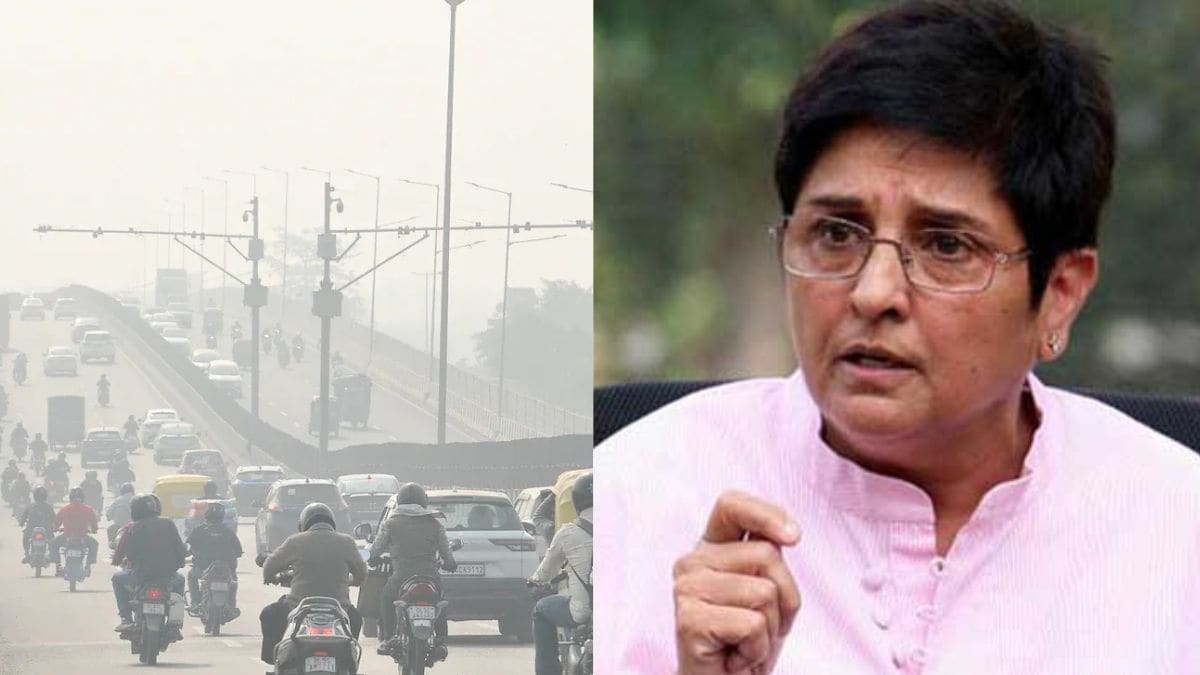
Former IPS officer and Puducherry's ex-Lieutenant Governor Kiran Bedi has proposed fundamental institutional reforms to address India's persistent air pollution crisis, emphasizing that superficial measures will not resolve the issue.
In her comprehensive blog "Five Reforms India Needs for Clean Air," Bedi advocates for a shift from reactive approaches to systemic transformation, asserting that establishing robust institutional frameworks will naturally lead to improved air quality.
According to Bedi, the Commission for Air Quality Management (CAQM) requires leadership with genuine authority. She points out that the commission's current leadership, while experienced, lacks the necessary administrative influence and political authority to effectively coordinate across ministries and impact budgetary decisions.
Bedi recommends appointing a serving secretary-level officer who can effectively collaborate with states, engage with chief secretaries, and accelerate implementation at a pace commensurate with the urgency of the crisis.
She further suggests integrating CAQM directly into the Environment Ministry rather than having it operate as a separate entity. "To have impact, it must become MoEFCC's operational engine, working daily with agriculture, power, transport, industry and urban development," Bedi wrote, emphasizing that clean air initiatives should be central to governance rather than relegated to peripheral reporting functions.
The former police officer proposes establishing a five-year "Clean Air Mission Fund" to ensure consistent financial support for monitoring networks, enforcement teams, district-level clean air initiatives, scientific modeling, and public health communications. She emphasizes that "stable financing is what turns vision into outcomes."
Regarding enforcement, Bedi stresses that CAQM needs its own dedicated enforcement division rather than depending on already overextended state agencies. She recommends a district-level force with authority to inspect facilities, impose penalties, and shut down violators when necessary.
Bedi advocates for creating a "National Council of Environment Ministers" chaired by the Environment Ministry to harmonize standards, coordinate fuel and transportation reforms, address cross-border pollution issues, and ensure shared responsibility across states.
Additionally, she calls for enhanced digital infrastructure through a "National Clean Air Data Centre" utilizing artificial intelligence and real-time data integration from industrial, vehicular, agricultural, meteorological, and satellite sources to enable predictive governance rather than reactive measures.
Delhi-NCR experiences severe air pollution throughout the year, with conditions deteriorating significantly during winter due to unfavorable weather patterns combined with increased vehicular emissions, agricultural stubble burning, fireworks, and other local pollution sources.
On December 1, the Supreme Court directed the central government and CAQM to reevaluate their air pollution action plan for the Delhi-NCR region. The court emphasized that air pollution must be addressed as a persistent rather than seasonal issue and requested an assessment of the effectiveness of measures implemented thus far.
Environmental experts and petitioners have consistently argued that the government's Graded Response Action Plan (GRAP) and other emergency restrictions cannot substitute for comprehensive long-term structural solutions addressing the root causes of Delhi's chronic pollution problems.
Source: https://www.ndtv.com/india-news/kiran-bedi-lists-5-reforms-to-tack-air-pollution-fix-system-clean-air-will-follow-9741006