
Operation Sindoor: A Model of Civil-Military Integration According to Defence Minister Rajnath Singh
- Date & Time:
- |
- Views: 34
- |
- From: India News Bull
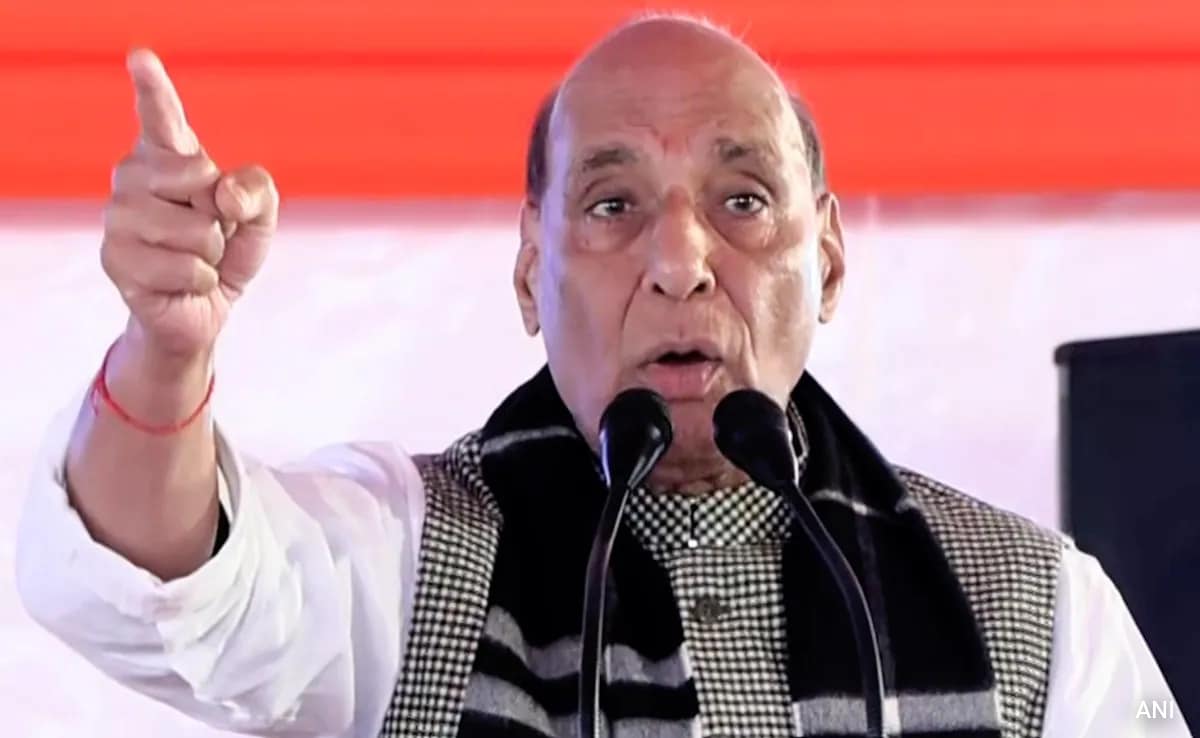
Defence Minister Rajnath Singh has described Operation Sindoor as a "brilliant example" of civil-military fusion, highlighting how administrative machinery collaborated seamlessly with armed forces to share critical information and build public confidence.
Speaking at the valedictory ceremony of the 100th Common Foundation Course at the Lal Bahadur Shastri National Academy of Administration (LBSNAA) in Mussoorie, Uttarakhand, Singh emphasized the importance of this coordination during national security operations.
Singh urged young civil servants to recognize their vital role in protecting national interests, encouraging them to maintain readiness for critical situations just as soldiers do.
"Operation Sindoor exemplifies civil-military fusion where administrative machinery worked flawlessly alongside armed forces to communicate essential information and foster public trust," he stated.
The Defence Minister explained that during Operation Sindoor, India's armed forces demolished terror camps in Pakistan and Pakistan-occupied Kashmir in a "balanced and non-escalatory response," noting that "the neighboring country's misbehaviour prevented border conditions from normalizing."
While praising military personnel for their courage, Singh also acknowledged administrative officers who conveyed crucial information and ensured successful nationwide mock drills.
He stressed the need for enhanced coordination between governance and national security to achieve the vision of 'Viksit Bharat' (Developed India) by 2047.
Highlighting Prime Minister Narendra Modi's principles of 'minimum government, maximum governance' and 'reform, perform and transform,' Singh underscored that civil servants play a crucial role in accelerating India's journey toward self-reliance and development.
"When our government took office in 2014, India ranked 11th in economic size. In just 9-10 years, we've advanced to fourth place. Even prestigious financial institutions like Morgan Stanley predict India will become the third largest economy within the next two-three years," Singh remarked.
"You aren't platonic guardians but servants of the people. You're not merely providers, but facilitators of empowerment. Your character must be beyond corruption. Your conduct must demonstrate complete integrity. You should foster an environment where honesty isn't exceptional, but routine," he advised, urging them to work with responsibility and public accountability.
Singh called on young civil servants to embrace innovation in this technology-driven era and develop solutions to citizens' problems.
"Leverage technology to enhance public outreach, accessibility, and transparency. Utilize technology to promote welfare and increase inclusivity," he suggested.
Singh emphasized that civil servants must approach every citizen with empathy and understanding.
"When officers interact with disadvantaged or vulnerable community members, they must recognize that people's struggles are shaped not only by individual efforts but by broader social and economic circumstances. This perspective makes an administrator truly people-centered and compassionate," he explained.
Singh acknowledged women's growing presence in civil services, noting that in the latest UPSC examination, a woman achieved the top rank, with three of the five highest positions filled by women.
He expressed confidence that by 2047, numerous women will advance to Cabinet Secretary positions and lead India's development journey.
Singh described the Foundation Course as more than a training module—it represents a commitment to building an efficient, capable, and sensitive governance system.
He commended LBSNAA for its comprehensive training ecosystem, which he characterized as a complete institution strengthening the nation's administrative capabilities.
With UPSC approaching its centenary, Singh highlighted how the partnership between UPSC and LBSNAA has molded generations of administrators and will continue reinforcing India's governance architecture.
During his visit, Singh also paid floral tributes at statues of former Prime Minister Lal Bahadur Shastri and Sardar Vallabhbhai Patel, known as the 'Iron Man of India.' Additionally, he inaugurated an ODOP Pavilion on the academy premises.
Source: https://www.ndtv.com/india-news/operation-sindoor-brilliant-example-of-civil-military-fusion-rajnath-singh-9721337