
Ancient Climate Change: How Severe Droughts Led to the Collapse of the Indus Valley Civilization
- Date & Time:
- |
- Views: 39
- |
- From: India News Bull
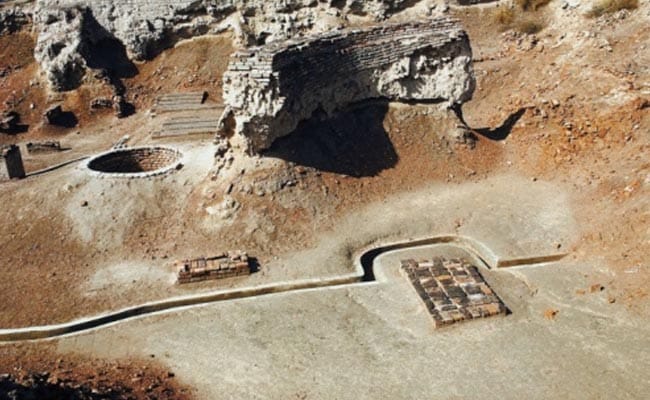
The Indus River served as the vital artery of the civilization.
New Delhi:
One of India's greatest historical enigmas concerns the disappearance of the thriving Indus Valley Civilization. Researchers from IIT Gandhinagar have now proposed that a series of prolonged droughts compelled inhabitants to abandon major urban centers including Harappa, Mohenjo-Daro, Rakhigarhi, and Lothal.
The Indus Valley Civilization (IVC), alternatively known as the Sindhu-Saraswati civilization, flourished between 5,000 and 3,500 years ago across what constitutes modern-day northwest India and Pakistan, ranking among the world's earliest urban societies. This civilization achieved remarkable advancements, featuring sophisticated drainage systems and exceptional metalworking skills that produced masterpieces like the 'Dancing Girl' created 5,000 years ago.
Distinguished for its progressive cities, water management expertise, and extensive trade networks, the decline of the IVC has long been a subject of scholarly debate. Recent research conducted by Vimal Mishra of IIT Gandhinagar and colleagues presents substantial evidence that consecutive severe droughts played a fundamental role in the civilization's gradual demise. An eleven-page study published in 'Communications Earth and Environment' indicates that water scarcity ultimately led to the downfall of this flourishing civilization.
The Indus River was crucial to the civilization, supporting agriculture, commerce, and everyday life. However, historical climate records and simulations reveal that the region experienced considerable hydro-climatic variability, influenced by changes in both summer and winter monsoon patterns. Using sophisticated climate models and geological indicators (including cave stalactites and lake sediments), scientists reconstructed rainfall and river flow patterns spanning thousands of years.
Their research identifies a consistent drying trend, with average annual precipitation decreasing by 10-20 percent and temperatures rising approximately 0.5 degrees Celsius during the civilization's existence. Four major droughts, each lasting over 85 years, occurred between 4,450 and 3,400 years ago. The most severe drought persisted for 164 years and affected more than 91 percent of the Indus Valley region. These droughts represented not isolated incidents but components of a broader pattern of diminishing water availability.
Initially, IVC settlements concentrated in areas with plentiful rainfall. As droughts became more frequent and intense, communities migrated closer to the Indus River, seeking reliable water sources. Hydrological simulations demonstrate that river flow anomalies coincided with these droughts, resulting in water scarcity even along riverbanks. Archaeological botanical evidence suggests farmers adapted by switching from wheat and barley to drought-resistant millets, though these measures proved insufficient against extended periods of aridity.
Lake level records and cave data corroborate the climate models, showing declines in water bodies and precipitation during key drought periods. The final, century-long drought (3,531-3,418 years ago) corresponds with archaeological evidence of widespread de-urbanization—major cities were abandoned as populations dispersed into smaller, rural communities.
The research emphasizes how global climate phenomena, such as El Niño events and cooling in the North Atlantic, contributed to the weakening of the Indian monsoon. Warmer Pacific and Indian Ocean temperatures reduced the land-sea thermal gradient, suppressing monsoon rainfall. These changes were intensified by shifts in atmospheric circulation, further limiting moisture transport into South Asia.
Contrary to earlier theories suggesting abrupt collapse, evidence indicates a gradual, complex process of decline. The IVC's disappearance resulted from a combination of climatic, social, and economic pressures. While extended droughts were a significant factor, communities adapted through migration, crop diversification, and trade. The civilization fragmented into smaller units, representing transformation rather than complete extinction.
The Indus Valley Civilization narrative offers a cautionary lesson about the vulnerability of complex societies to environmental stress. It highlights the importance of water management and climate adaptation—lessons that remain relevant as contemporary societies confront increasing risks from climate change and water scarcity. The encouraging aspect for the current 21st-century Indian Monsoon is that paleoclimate researchers believe global warming may actually increase Indian monsoon rainfall.
Source: https://www.ndtv.com/india-news/why-did-indus-valley-civilisation-disappear-iit-scientists-explain-9721395