
Opinion | The 'Inner Circle' That Runs America, And Why India Needs To Court It
Though Trump, with his laser focus on tariffs, has put almost every US relationship under strain, countries like Israel, China, and even Pakistan have weathered the storm. How?
- Date & Time:
- |
- Views: 238
- |
- From: India News Bull
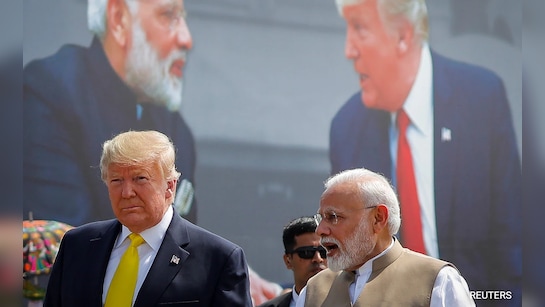
President Trump has significantly disrupted the carefully constructed US-India relationship that had been developing since the Cold War ended. Despite fluctuations over the years, both nations had established a strategic partnership that is now experiencing considerable strain. This turbulence highlights the dangers of depending too heavily on government-level engagement alone. While Trump's focus on tariffs has strained nearly all US international relationships, countries such as Israel, China, and even Pakistan have successfully navigated these challenges.
India must reconsider its approach to build a more durable relationship. The previous UPA administration relied heavily on academic and think tank connections, while the current government appears to have placed excessive faith in diaspora influence and official channels. Neither strategy has provided meaningful leverage during diplomatic challenges. Understanding why requires examining the unique structure of America's political system.
The Decision-Making EliteThe American political system differs fundamentally from Westminster-style democracies. While career bureaucrats exist, they primarily serve as administrative intermediaries. The true power resides with individuals who move between private industry, academia, and government positions. Policy decisions rest with secretaries and undersecretaries who typically serve brief 18-36 month terms before returning to their private sector roles, often cycling back into future administrations. These individuals shape American domestic and foreign policy, making them the critical targets for engagement by any nation seeking to strengthen its relationship with the United States against unexpected disruptions.
Also Read | India Has "Walked Away" From US Trade Talks Due To Tariffs: Ex-Top Official
Effective engagement requires continuous interaction with industry leaders, especially during their time outside government. Decision-makers typically form their perspectives before taking office, after which their positions become more rigid. Early influence is possible; late engagement faces resistance. This outreach must be comprehensive, utilizing both governmental channels and private sector connections.
Strategic LobbyingIndustry associations serve as crucial conduits in this framework. They unite companies to advocate for favorable policies and encompass the complete influence spectrum: specialized experts, policy professionals, corporate executives, and business owners. A sustained engagement program led by Indian industry associations, supported by the government, could generate significant political capital. Investing in relationships with key American figures will ultimately translate into meaningful influence.
Each nation possesses fundamental strengths within the American system. The longevity of any Washington relationship depends on effectively leveraging those strengths. Overreliance on diaspora connections and second-generation ethnic groups will prove counterproductive if not integrated into a strategic framework built around a country's inherent advantages.
Successful ModelsIsrael and China exemplify successful approaches. Israel has perfected this strategy. Beyond historical connections, Israel has methodically cultivated influence. Operating under the American Israel Public Affairs Committee (AIPAC), it has engaged with every major US industry sector. In finance, insurance, and real estate (FIRE), Israel's influence is so profound that Israeli donors provide nearly half the funding for pro-Israel super PACs.
Also Read | SCO, And Why Trump Must Know The World Doesn't Really Dance To His Tunes
China similarly leverages its economic strengths. Wall Street serves as Beijing's powerful American ally, receiving preferential treatment in Shanghai and Beijing. These relationships run so deep that China modified regulations to grant Goldman Sachs complete ownership of its joint venture. The supportive rhetoric of figures like Mike Bloomberg and JP Morgan's Jamie Dimon regarding China is telling. Hollywood is similarly connected through China's control of the world's second-largest film market and Disney's substantial theme park investments in Shanghai and Hong Kong. In technology, companies like Nvidia, Apple, and Tesla advocate for Chinese interests to maintain market access.
Pakistan has also played this game effectively. Their strategic analysts consistently raise nuclear conflict concerns to limit India's crisis response options. Whether honoring CENTCOM's General Kurilla with state awards or advancing Trump family interests through cryptocurrency investments, Pakistan has effectively navigated the influence landscape.
India's Strategic AdvantagesToday's India must recognize and utilize its unique assets. Digital technology and defense manufacturing provide solid foundations for strengthening bilateral ties. American technology companies rank among India's strongest advocates, given the country's massive user base and talent pipeline. Apple's Tim Cook exemplifies this, maintaining iPhone production in India despite Trump's pressures. The American defense industry represents another potential partner for integrating India's private defense manufacturing into global supply chains.
For India, this approach represents the path to "Trump-proofing" its American relationship—anchoring it not merely in diplomacy but in the deeper institutional frameworks of American influence. Only institutionalized, financially-backed lobbying can withstand US political fluctuations and build genuine bipartisan support.
(Ambuj Sahu is a PhD candidate at Indiana University. Shubham Dwivedi is an Affiliate Researcher at Georgetown University.)
Disclaimer: These are the personal opinions of the author