
Crunching Numbers: How Trump's 25% Tariff Will Impact Indian Markets
US President Donald Trump has announced the latest reciprocal tariff rates for trading partners as the August 1 deadline came to an end on Friday.
- Date & Time:
- |
- Views: 59
- |
- From: India News Bull
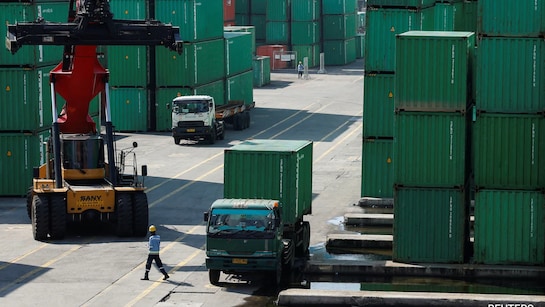
The United States-India trade relationship faces new challenges as India maintained a $41 billion trade surplus with the US in 2024-25.
Washington:
US President Donald Trump has implemented new reciprocal tariff rates for trading partners as the August 1 deadline concluded Friday. The administration confirmed a 25% tariff on Indian goods, while uncertainty remains regarding potential "additional penalties" threatened against New Delhi for its Russian oil and military equipment purchases. If imposed, these penalties could significantly undermine India's export competitiveness.
These import duties will become effective August 7, with the current 10% duty (announced April 2) remaining applicable to all imports until then.
The new tariff structure will remain in place until both nations finalize a trade agreement. With negotiations scheduled to resume mid-August, market analysts anticipate the final rate might be reduced below 25%. However, export-oriented sectors face considerable near-term challenges until the situation clarifies.
Why Trump Tariff Matters To India America remained India's largest trading partner for the fourth straight year in 2024-25, with bilateral trade reaching $186 billion ($86.5 billion exports and $45.3 billion imports). The US represents approximately 18% of India's total exports, 6.22% of imports, and 10.73% of bilateral trade.
India maintained a trade surplus of $41 billion with the US in 2024-25. In services, India exported an estimated $28.7 billion while importing $25.5 billion, generating an additional $3.2 billion surplus.
According to Bloomberg, roughly 10% of India's total exports could be affected from July through September if tariffs exceed 25%, potentially undermining India's position as a 'safe haven' during the global economic slowdown.
Major Products Traded Between India-US In 2024, India primarily exported to the US: drug formulations and biologicals ($8.1 billion), telecom instruments ($6.5 billion), precious and semi-precious stones ($5.3 billion), petroleum products ($4.1 billion), vehicle and auto components ($2.8 billion), gold and other precious metal jewellery ($3.2 billion), ready-made cotton garments including accessories ($2.8 billion), and iron and steel products ($2.7 billion).
US imports to India included: crude oil ($4.5 billion), petroleum products ($3.6 billion), coal and coke ($3.4 billion), cut and polished diamonds ($2.6 billion), electric machinery ($1.4 billion), aircraft, spacecraft and parts ($1.3 billion), and gold ($1.3 billion).
How Tariffs Can Impact Trade Import duties make goods more expensive in importing countries, potentially pricing Indian products out of US markets. The ultimate impact on Indian businesses in specific sectors depends on how these tariffs compare with those imposed on competing nations. For instance, duties on competitor countries like Bangladesh (20%), Vietnam (20%), and Thailand (19%) are lower, making their imports more affordable in US markets and potentially causing American buyers to shift to these alternatives.
View this post on Instagram
A post shared by NDTV (@ndtv)
Exporters indicate that Indian labor-intensive goods including garments, leather and non-leather footwear, gems and jewellery, carpets, and handicrafts may experience the greatest impact from these duties.
Additionally, there's a 50% tariff on steel and aluminium, and 25% on automotive products and parts. These duties apply above existing tariffs on Indian goods. For example, textiles currently face 6-9% tariffs, meaning that with the additional 25%, Indian textile products entering the US after August 1 will incur 31-34% duties. Further penalties could potentially increase this burden.
What Will Be The US Tariff Rates On Key Indian Goods Telecom-- 25 pc Gems And Jewellery -- 30-38.5 pc (5-13.5 pc at present) Food And Agri Goods --29-30 pc (14-15 pc currently) Apparel-- 12 pc plus 25 pc
Key Sectors Impacted Gems and Jewellery: Elevated tariffs could disrupt vital supply chains in the gems sector and endanger thousands of jobs.
According to Bloomberg, the US market accounts for over $10 billion of India's exports from this industry, and a comprehensive tariff will "inflate costs, delay shipments, distort pricing, and place immense pressure on every part of the value chain" from workers to major manufacturers, as stated by India's Gem and Jewellery Export Promotion Council on Wednesday.
Indian Refiners: India sources nearly 37% of its oil imports from Russia. These discounted purchases have been crucial for maintaining gross refining margins. If Russian crude becomes unavailable, import costs will rise and diminish refiners' profitability.
Electronics: India surpassed China as the primary source of smartphones sold in the US after Apple Inc. shifted more iPhone assembly operations to the South Asian nation. This position could be jeopardized following the latest tariff implementation.
According to Bloomberg, a 25% import surcharge would likely force Apple to reconsider this strategy.
Textiles and Apparel: Indian manufacturers of home fabrics, apparel, and footwear supply global chains of major US retailers including The Gap Inc, Pepe Jeans, Walmart Inc, and Costco Wholesale Corp.
The new tariffs present a "stiff challenge" for the sector, according to the Confederation of Indian Textile Industry. "It will seriously test the resolve and resilience of India's textile and apparel exporters as we will not enjoy a significant duty differential advantage."
Pharmaceuticals: With an approximate annual value of $8 billion, India is the largest exporter of non-patented drugs to the US. Overall, medicines from Indian companies provided nearly $220 billion in savings to the US healthcare system in 2022 and a total of $1.3 trillion in the decade through 2022.