
Opinion | No, India Is Not Israel, And Pak Is Not Palestine
India is not Israel. Pakistan is not Palestine. And equating them does justice to neither the complexity of history nor the urgency of peace.
- Date & Time:
- |
- Views: 68
- |
- From: India News Bull
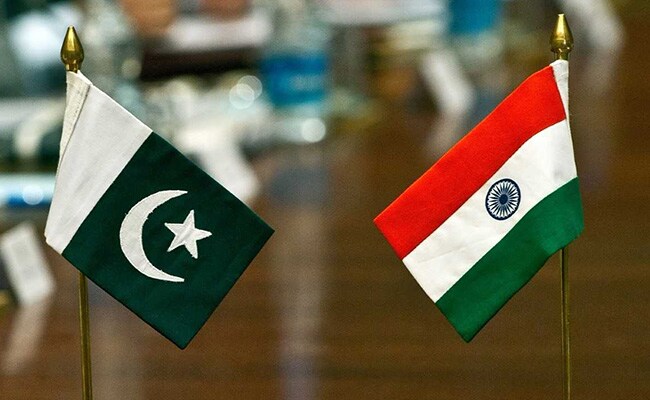
Following the April 2022 Pahalgam terror attack targeting Indian civilians in a region long affected by cross-border militancy, a problematic comparison resurfaced: India being likened to Israel, with Pakistan portrayed as the new 'Palestine'. This analogy, embraced by various commentators from social media influencers to academics, attempts to superimpose Middle Eastern dynamics onto South Asia. However, this comparison is fundamentally flawed on strategic, historical, and ethical grounds.
The Israel-Palestine conflict fundamentally involves a militarily superior state and a stateless population under occupation, characterized by power asymmetry, sovereignty denial, and territorial annexation. Conversely, India and Pakistan emerged as fully sovereign nations through a negotiated partition of British India in 1947, each possessing internationally recognized borders and UN membership. Their bilateral disputes, particularly regarding Kashmir, stem from contested territorial claims rather than denial of statehood. Pakistan's persistent attempts to equate Kashmir with Palestine obscures these critical distinctions while concealing Pakistan's history of supporting terrorism across Indian territories – from Punjab and Jammu & Kashmir to periodic destabilization efforts in India's Northeast.
Comparing Pakistani actions to Palestinian resistance undermines both the moral and strategic legitimacy of the Palestinian cause. Unlike Palestinians under occupation, Pakistan has wielded its sovereign power to sponsor and harbor terrorist groups. This deliberate state involvement, acknowledged by international bodies, positions Pakistan as an aggressor rather than a victim.
Minorities, Democracy, and Statehood
A dangerous oversimplification within this analogy involves misrepresenting minority politics in both regions. While India faces criticism regarding communal tensions, polarized rhetoric, and policies perceived as marginalizing Muslims, equating this with the Palestinian experience under occupation ignores the fundamental difference between a flawed democracy and an apartheid system.
In India, Muslims remain an electorally significant, constitutionally protected community with legal safeguards for their cultural, linguistic, and religious institutions. Their political representation, though currently challenged, remains visible. From Maulana Abul Kalam Azad serving as India's first Education Minister to Dr. APJ Abdul Kalam's presidency, Indian Muslims have established significant historical leadership. Today, figures like Asaduddin Owaisi, a vocal government critic, and Salman Khurshid, a senior opposition leader without constitutional position, both participated in a cross-party delegation briefing international counterparts after Operation Sindoor – demonstrating rare bipartisan consensus on national security matters.
This contrasts sharply with Pakistan, where Ahmadiyyas face constitutional prohibition against identifying as Muslims, and Shias frequently encounter sectarian violence. Pakistani state structures often participate in marginalizing non-Sunni groups, with blasphemy laws weaponized against minorities. These represent systematic exclusions embedded in legal and political frameworks, not merely social prejudices.
Meanwhile, Palestinians in the West Bank and Gaza confront challenges not of minority rights within a sovereign state but of basic human existence under foreign occupation, lacking freedom of movement, due legal process, and political autonomy. Conflating these distinct situations undermines the nuanced approach needed to address each context appropriately.
Terrorism, Occupation, and Policy
India's security doctrine consistently emphasizes that its conflict targets not Pakistani citizens but the military-intelligence establishment and its use of terrorism as statecraft. From Kashmir insurgency and Punjab's Khalistani separatism to weapons flowing into Northeast India during the 1980s-90s, India's internal challenges often trace back to external sponsorship. These represented not the actions of stateless communities seeking dignity but a neighboring state employing irregular warfare to destabilize a regional rival.
Israel, by comparison, has frequently responded to Palestinian armed resistance with disproportionate measures – destroying homes, bombing refugee camps, and implementing collective punishment. These actions have rightfully prompted global human rights concerns. However, attempts to draw parallels with India's counter-terrorism operations misrepresent the scale, nature, and intent behind both countries' military strategies.
The analogy further collapses considering India's longstanding support for the Palestinian cause. Even under Prime Minister Modi's administration, which has strengthened strategic ties with Israel, India consistently reaffirms its commitment to a two-state solution and opposes occupation in UN forums. Rather than mimicking Israeli policies, India maintains a delicate diplomatic balance – developing defense relationships with Israel while upholding principled solidarity with Palestine.
This false equivalence is not only analytically deficient but diplomatically counterproductive, potentially undermining India's credibility among Global South nations, particularly as New Delhi positions itself as a mediator and development partner in multilateral contexts. Moreover, it disrespects the Palestinian struggle by associating it with Pakistan's strategy of employing terrorism and religious nationalism as foreign policy instruments.
Reject Lazy Analogies
Both the Israel-Palestine and India-Pakistan conflicts warrant international attention, but attention should not lead to oversimplification. The Palestinian occupation represents a human rights crisis rooted in land disputes, displacement, and statelessness. The India-Pakistan dynamic, while also involving territorial and identity issues, exists within a distinctly different framework: two sovereign nations, one consistently employing terrorism to internationalize what remains essentially a bilateral matter.
Support for Palestinians should not be co-opted to justify flawed comparisons that absolve state complicity in South Asia. Similarly, India's legitimate counter-terrorism efforts should not be equated with settler-colonial violence. Such false equivalencies weaken both causes – reducing complex histories, diplomatic challenges, and human suffering to simplistic hashtags.
In our polarized era, strategic clarity becomes essential. India is not Israel. Pakistan is not Palestine. Drawing such parallels serves neither historical accuracy nor the urgent pursuit of peace.
(Ashraf Nehal is an author, analyst and columnist, who writes on South Asian geopolitics, climate action and world affairs. He was a former PM Young Writing Fellow)
Disclaimer: These are the personal opinions of the author