
Blog | 'Future At Stake': Why Indian Students In US Aren't Going Home This Summer
"The current visa situation is unpredictable. I can't risk it after putting in three years here," says an undergraduate, referring to the heightened scrutiny at American airports and reports of foreign nationals being barred.
- Date & Time:
- |
- Views: 59
- |
- From: India News Bull
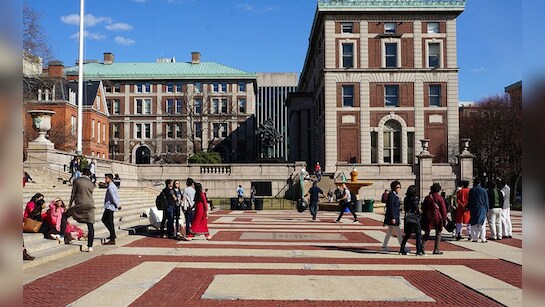
Many Indian students studying in the United States are foregoing summer trips to India or international travel due to concerns about being denied reentry under current immigration policies. An Indian undergraduate at the University of Southern California, despite holding a valid student visa, has opted for a local internship instead of returning home, describing the visa situation as "unpredictable." After investing three years in their education, they cannot risk denial at American airports, where foreign nationals reportedly face heightened scrutiny.
The tension originated from campus protests against Israel's actions in Gaza, which prompted the Trump administration to accuse elite universities of tolerating 'antisemitism.' Subsequently, foreign students experienced arrests, detention, and visa cancellations, while prestigious institutions faced funding threats.
The Crackdown on Elite Universities
The targeting of wealthy institutions such as Brown, Columbia, Cornell, Harvard, Pennsylvania, and Princeton is viewed by critics as an encroachment on academic freedom. Despite Columbia University initially conceding to certain demands, the US government issued another threat on June 4, suggesting the institution could lose its accreditation for allegedly failing to adequately protect Jewish students.
Harvard University, predating the United States itself, faces potential federal cuts of approximately $9 billion. The university has responded by filing lawsuits against the government over funding withdrawal, threats to its tax exemption, and restrictions on foreign student enrollment. While a federal judge blocked these efforts on May 23, allowing Harvard to continue international admissions, the government invoked the Immigration and Nationality Act on June 4 to prevent non-citizens from studying at Harvard for at least six months, claiming the institution is no longer a "trustworthy steward" of international students. Harvard has labeled this action as 'retaliatory' and reassured students of continued protection.
The White House has justified its stance by referencing FBI warnings about "foreign adversaries" exploiting American higher education to "steal information, exploit research and development, and spread false information."
Legal Challenges Mount
In response to the 'America for Americans' campaign, foreign students, researchers, and their universities have initiated robust legal challenges to protect their academic futures. Earlier this year, when international students had their visas unexpectedly revoked mid-semester, hundreds filed lawsuits across multiple states, with Indian nationals comprising the majority. These legal actions compelled the Department of Homeland Security to reinstate their visas and student records. Notably, many affected students had either minor traffic violations (already resolved) or no legal infractions whatsoever, yet received no explanation for their visa cancellations.
A New Jersey-based Indian student expressed relief at being able to continue her practical training but noted that others whose visas were revoked had already departed the US before the lawsuits progressed. "Our careers are at stake here. My friend had a student loan of many lakhs, but they self-deported as per DHS instructions," she explained.
With academic and professional aspirations in jeopardy, federal courts have become a crucial battleground between universities and the administration. Critics suggest that the Republican administration is targeting institutions that predominantly lean toward Democratic politics. Foreign students represent a substantial portion of these student bodies - 27% at Harvard - contributing significant tuition revenue. The approximately 1.1 million international students in the US, including roughly 330,000 Indians, contributed $44 million to the American economy during the 2023-24 academic year.
Potential Consequences for America
If international students feel unwelcome, they will inevitably explore alternatives, potentially diminishing America's academic dominance and economic advantages. An Indian research scholar whose canceled visa was reinstated through legal action is now considering European opportunities: "After studying in the US for eight years, I am facing uncertainty. I have applied and interviewed for two research positions at European universities. They are more inviting."
Beyond brain drain concerns, these tensions may motivate other countries to enhance their academic institutions. On May 29, US Secretary of State Marco Rubio advocated for "aggressively revoking" visas of Chinese students, particularly those in "critical fields" like computer science, mathematics, and science. American technology industry leaders believe this approach could prompt China to further improve its educational quality, affecting America's future talent pool. China already produces 50% of global AI graduates and twice as many STEM doctorates as the United States - concerning statistics given the ongoing US-China technology competition.
For generations, American universities have symbolized opportunity - promising quality education, employment, and potentially permanent residence. These institutions have contributed significantly to the nation's economic success by attracting and developing international talent for high-tech and medical sectors, establishing American leadership in these industries.
The administration's actions against foreign students will likely influence the decisions of prospective Indian students, who may direct their resources elsewhere. As Dr. Rajika Bhandari, an international higher education expert, observes: "There are basically four countries - Canada, the UK, Australia and the US - all anglophone destinations where the largest mass of Indian students keeps circulating. Every few years we see these ebbs and flows for a particular country depending on what happens with immigration policies and world events. We've seen that with the UK, we've seen it with Canada, now maybe it's the turn of the US that some of that flow is going to get redirected elsewhere."
(Savita Patel is a San Francisco Bay Area-based journalist and producer. She reports on the Indian diaspora, India-US ties, geopolitics, technology, public health, and the environment. She tweets at @SsavitaPatel.)
Disclaimer: These are the personal opinions of the author