
How Trump's 'Big, Beautiful Bill' Impacts Funds Transferred To India
In Donald Trump's "One Big Beautiful Bill," recently pushed through the House of Representatives, lies a provision that could change global remittance flows, and India, the world's leading recipient of remittances, could be impacted the most.
- Date & Time:
- |
- Views: 58
- |
- From: India News Bull
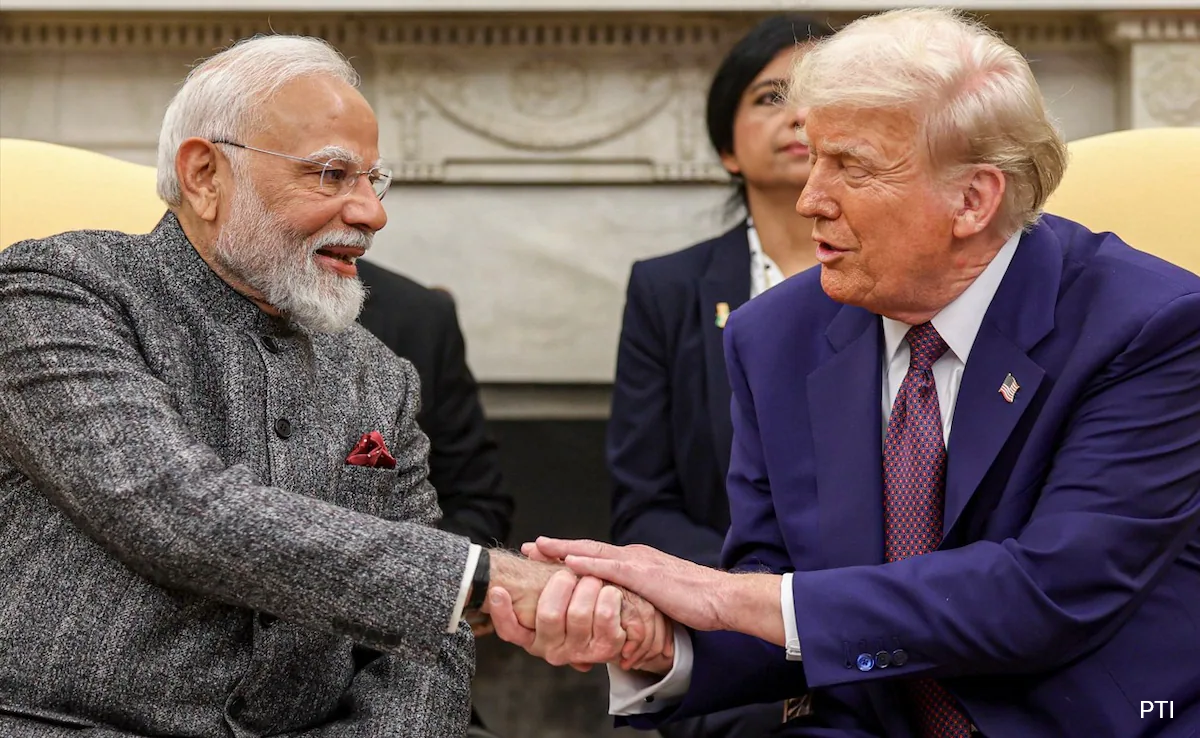
India received roughly $129 billion in remittances during 2024.
New Delhi:
President Donald Trump's "One Big Beautiful Bill," recently passed through the House of Representatives, contains a provision that may significantly alter global remittance patterns, with India, the world's top remittance recipient, potentially facing the greatest consequences.
The US House narrowly approved the bill with a 215-214 vote on May 22, advancing legislation that includes a proposed 3.5% tax on all outgoing remittance transfers. Initially suggested at 5%, the rate was subsequently reduced under pressure. This provision targets money sent from the United States to overseas recipients by foreign workers, including legal residents such as green card holders and temporary visa workers like those on H-1B visas.
Billionaire Elon Musk, who has experienced a significant falling out with the US President, has strongly criticized the proposed bill. "I think a bill can be big or it could be beautiful. But I don't know if it could be both," the CEO of Tesla and SpaceX recently remarked.
Potential Impact on IndiaAccording to data from the World Bank and Reserve Bank of India (RBI), India received approximately $129 billion in remittances in 2024. This amount nearly equals the combined annual budgets of Pakistan ($67 billion) and Bangladesh ($68 billion). The largest share of these funds comes from Indian workers in the United States.
The proposed new tax could potentially reduce the billions that currently support millions of Indian households.
Over the past decade, India's total remittances increased by 57%. Between 2014 and 2024, India has received nearly $1 trillion ($982 billion) solely in remittances.
The tax might disproportionately affect states where remittance flows are essential to household spending. Kerala, Maharashtra, Uttar Pradesh, and Bihar rank among the top recipient states.
Effects on Migrant WorkersIndia's international migrant population has grown from 6.6 million in 1990 to an estimated 18.5 million by 2024. While Gulf countries continue to host most of these migrants, a significant portion now lives in developed economies, especially the United States, where Indian professionals are prominent in high-earning sectors including IT, healthcare, finance, and engineering.
Recent data indicates that nearly 78% of Indian workers in the US are employed in high-income professions, contributing to a marked rise in total remittances from the US, which represented almost 28% of India's total in 2023-24, up from 23.4% in 2020-21.
"The proposed US tax on remittances sent abroad by non-citizens is raising alarm in India, which stands to lose billions in annual foreign currency inflows if the plan becomes law," stated the Global Trade Research Initiative (GTRI), as quoted by news agency PTI.
Political Framework of the BillThe remittance tax represents just one component of the comprehensive legislation supported by President Trump, who has stated that the bill will finance his campaign promises.
Some additional provisions include:
No federal tax on tips and overtime for individuals earning under $160,000 annually, a measure Trump heavily promoted during his 2024 campaign.
Establishment of Trump Savings Accounts with a $1,000 initial deposit for newborns and a $5,000 annual contribution limit.
Elimination of excise taxes on gun silencers and indoor tanning services.
SALT deduction cap increased from $10,000 to $40,000 for joint filers with income under $500,000 - though this provision faces opposition in the Senate;
A reversal of green energy tax credits, including those for electric vehicles and residential solar panel installations.
Significant cuts to student loan programs.