
Trump's Third World Immigration Ban: Understanding the Policy and Its Historical Context
- Date & Time:
- |
- Views: 57
- |
- From: India News Bull
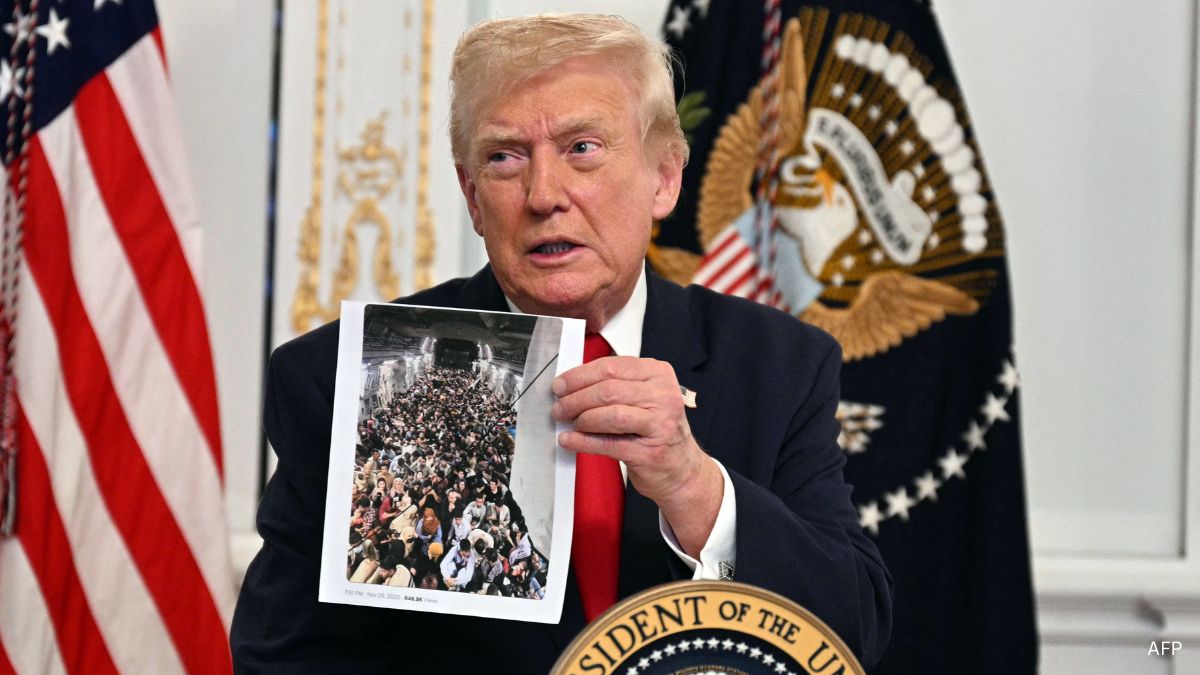
US President Donald Trump has threatened to suspend migration from "third-world countries."
US President Donald Trump is planning to suspend migration from what he described as "third-world countries," following an incident where an Afghan national allegedly shot two National Guard soldiers in Washington.
In a statement posted on Truth Social, Trump expressed that despite America's technological advancements, he believes current immigration policies have "eroded those gains." He called for halting migration from "all Third World Countries" to allow the US system to "fully recover."
Trump further stated his intention to reverse what he termed "millions of Biden illegal admissions" and remove individuals he considers "not a net asset to the United States" or those "incapable of loving our Country."
He also indicated that any foreign national deemed a "public charge, security risk, or non-compatible with Western Civilization" should be deported.
The term "Third World" originated during the Cold War era when the global political landscape was divided between the US-aligned Western Bloc and the communist Eastern Bloc, with neutral nations and others collectively referred to as the Third World. Though commonly used to describe economically disadvantaged or developing countries, the terminology is now widely considered outdated.
Historically, "First World" referred to industrialized democratic nations allied with the United States. "Second World" described communist-socialist states led by workers and peasants, while "Third World" encompassed countries not affiliated with either bloc.
The First World included North America, Western Europe, Japan, South Korea, and Australia. Some African territories were included due to Western connections, such as Western Sahara under Spanish control, apartheid-era South Africa, and South West Africa (now Namibia). Neutral nations like Switzerland, Sweden, Austria, Ireland, and Finland were effectively considered part of the First World.
The Second World comprised Soviet republics and Eastern European nations including Poland, East Germany, Czechoslovakia, and the Balkans, as well as Asian communist countries connected to China, such as Mongolia, North Korea, Vietnam, Laos, and Cambodia.
The Third World encompassed all other nations, predominantly agricultural, underdeveloped states across Africa, Asia, and Latin America.
On November 28, the Trump administration announced a review of the immigration status of every permanent resident or "Green Card" holder from Afghanistan and 18 other countries.
Joseph Edlow, director of the US Citizenship and Immigration Services (USCIS), posted on X: "At the direction of @POTUS, I have directed a full scale, rigorous reexamination of every Green Card for every alien from every country of concern."
When questioned about which countries were included, a USCIS spokesperson informed AFP that the list was defined in Trump's June 2025 executive order, which designates 19 nations as "of Identified Concern."
The order prohibited entry for nearly all nationals from 12 countries, including Afghanistan. Countries subject to the complete travel ban were Afghanistan, Myanmar, Chad, Congo-Brazzaville, Equatorial Guinea, Eritrea, Haiti, Iran, Libya, Somalia, Sudan, and Yemen. Trump also implemented a partial ban on travelers from seven additional countries: Burundi, Cuba, Laos, Sierra Leone, Togo, Turkmenistan, and Venezuela.
Source: https://www.ndtv.com/world-news/what-are-third-world-countries-which-donald-trump-just-threatened-to-halt-migration-9714103