
Taiwan Boosts Defense with $40 Billion Special Budget Amid Rising China Tensions
- Date & Time:
- |
- Views: 57
- |
- From: India News Bull
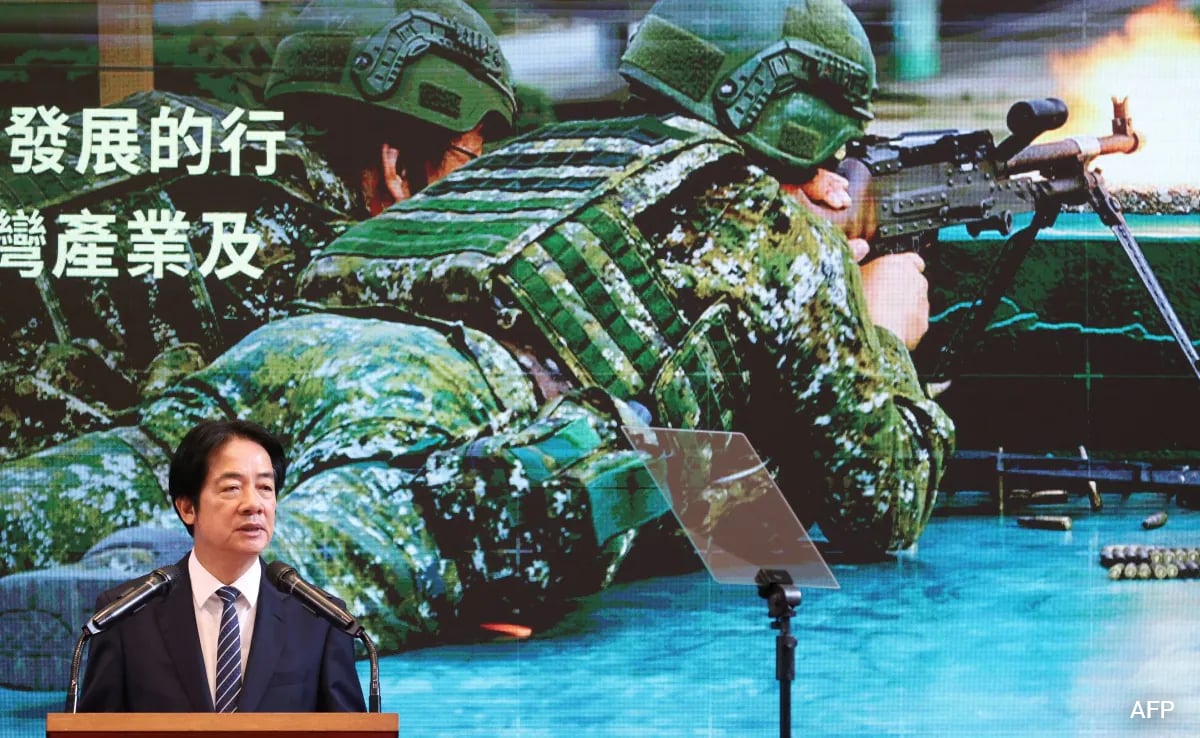
Taiwan's President Lai Ching-te has unveiled a special $40 billion budget dedicated to arms acquisitions, including the development of an advanced air defense system called Taiwan Dome with superior detection and interception capabilities, responding to U.S. pressure to boost defense spending.
The funding will be distributed across eight years, spanning from 2026 to 2033, and follows Lai's previous commitment to increase defense expenditure to 5% of the island's GDP as part of his strategy to counter China's invasion threats.
"China's threats to Taiwan and the Indo-Pacific region are escalating," President Lai stated on Wednesday. "Recently, various types of military intrusions, maritime gray zones and disinformation campaigns have been occurring in Japan, the Philippines and around the Taiwan Strait, causing deep unease and distress to all parties in the region."
"Taiwan, as the most important and most critical part of the first island chain, must demonstrate our determination and take on a greater responsibility in self-defense," he emphasized, referring to the island chain extending from Japan's East China Sea through the Philippines in the Pacific Ocean.
Currently, Taiwan has planned to increase its defense budget to 3.3% of GDP by 2026, allocating 949.5 billion Taiwan dollars ($31.18 billion). U.S. President Donald Trump has called for Taiwan to raise defense spending to as much as 10% of GDP, significantly higher than what the U.S. or its major allies allocate.
The U.S. State Department expressed support for Taiwan's announcement, stating it "welcomes Taiwan's acquisition of critical defense capabilities, commensurate with the threat it faces." The department also acknowledged the Lai administration's commitments to increase defense spending to at least 5% of GDP by 2030, noting that it "demonstrates resolve to strengthen Taiwan's self-defense capabilities."
Taiwan, a self-governed island, is claimed by China, which has been conducting daily military exercises involving warplanes, navy ships, and drones near the island as part of its pressure campaign.
In an op-ed for The Washington Post published Wednesday, Lai had previewed the special budget announcement, indicating it would fund arms purchases from the U.S. However, he later clarified to reporters that the budget is unrelated to tariff negotiations with the United States.
Defense Minister Wellington Koo explained that the $40 billion represents an upper limit for the special budget, which will be used to acquire precision-strike missiles and support joint development and procurement of equipment and systems between Taiwan and the U.S.
Lai also emphasized his government's intention to strengthen defenses against Beijing's "psychological warfare" aimed at "weakening Taiwan's unity." He stated that the government will enhance monitoring and public awareness of China's interference attempts during major events and elections.
Addressing the growing tension between China and Japan, which intensified after Japan's conservative leader suggested potential military involvement if China moves against Taiwan, Lai noted that Japanese Prime Minister Sanae Takaichi's comments appeared focused on regional stability.
"We hope China can understand that each country in the Indo-Pacific region has a responsibility to its peace and stability, and that we especially hope China, as a major power in the region, would also demonstrate the responsibilities of a major power," Lai said. "Instead, it has continued to raise threats and attacks toward neighboring countries. This is not the way a responsible major power acts."
Source: https://www.ndtv.com/world-news/taiwan-announces-40-billion-defence-budget-amid-chinas-invasion-threats-9706624