
Global Gen Z Rebellion: How Youth Movements Toppled Governments Using One Piece Symbol in 2025
- Date & Time:
- |
- Views: 67
- |
- From: India News Bull
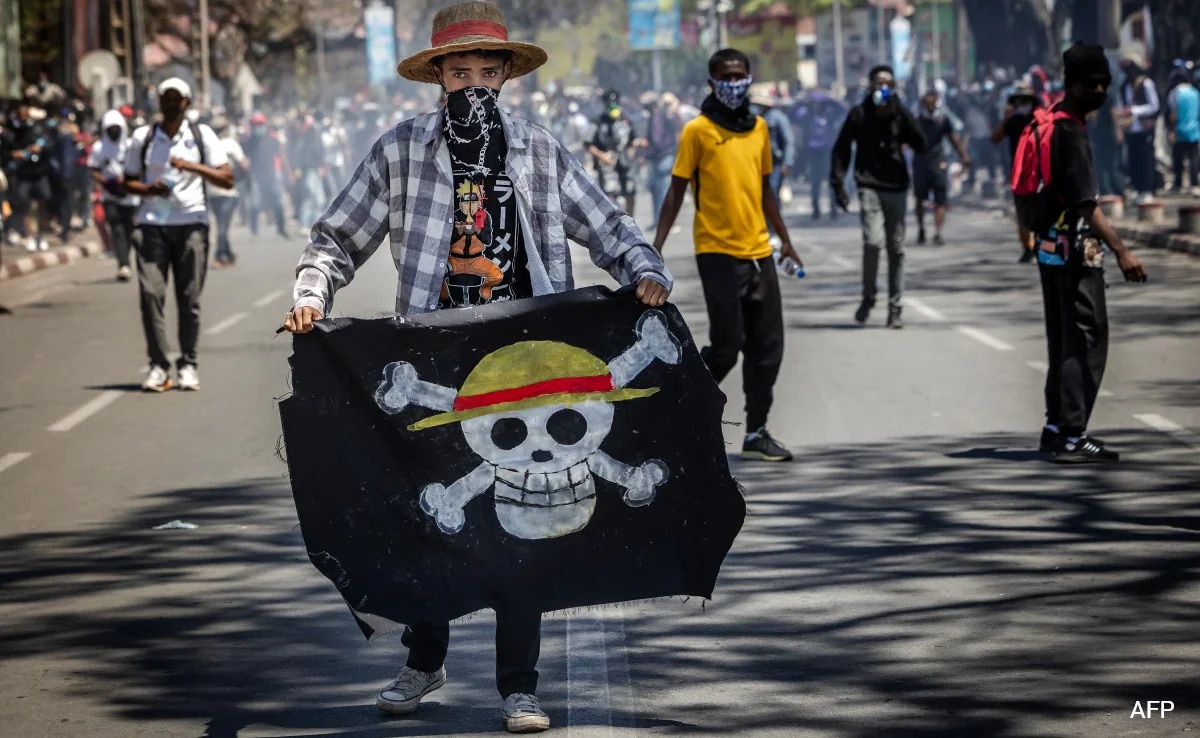
The Gen Z rebellion in Madagascar emerged shortly after comparable demonstrations occurred in Nepal during September.
Across the globe from Nepal to Peru, Morocco and Madagascar, Gen Z protesters adopted the skull and crossbones in a straw hat symbol as they confronted authorities throughout 2025, successfully overthrowing two governments.
The term Gen Z, typically describing individuals born between the late 1990s and late 2000s, became synonymous this year with youth-led rebellions fueled by frustrations over unemployment, poverty, and social inequality.
Young activists demonstrated in the streets and challenged governments across three continents: Latin America, Asia, and Africa, where according to UN statistics, 60 percent of residents are under 25 years old.
AFP journalists documented the pirate-inspired emblem, borrowed from the enormously popular Japanese manga "One Piece," appearing at demonstrations in over a dozen nations.
In two countries—Madagascar and Nepal—these protests resulted in governmental collapse.
"I was raised with 'One Piece,' like most Gen Z individuals, so it naturally became our symbol," explained a 26-year-old Madagascar protester who identified only as Kai.
The symbol had evolved to represent resistance against "oppressive governments," Kai noted.
Previous youth-driven protest movements include the anti-austerity Indignados Movement that began in Spain in 2011 and the Arab Spring uprisings that started in 2010.
However, the Gen Z movement distinguished itself through its strategic use of social media platforms like Discord, Instagram, and TikTok to mobilize constantly-connected young people who subsequently drew in other segments of society, according to University of Montreal sociologist Cecile Van de Velde.
It also moved beyond local grievances, aspiring to become "the new face of a global and generational revolt," explained the professor, who specializes in youth-related issues.
The Madagascar Gen Z uprising followed closely after similar Nepal protests in September 2025.
"Nepal created the blueprint. We witnessed what transpired, the raised flag, the connections with 'One Piece'," stated Elliot Randriamandrato, a Madagascar movement spokesperson.
"And we realized: this is it, enough is enough," he told AFP.
Each country had its own catalyst. Indonesia faced low wages, unemployment, and police brutality; Nepal confronted elite corruption and social media restrictions.
Madagascar's youth initially protested against persistent water and electricity shortages; Morocco's demonstrations targeted educational and healthcare inequalities; in Kenya—where the Gen Z label was already applied to 2024 protests—new taxation sparked outrage.
"At the heart of these protests is young people's determination to advocate for their communities' essential needs, refusing to be deprived of survival basics: healthcare, security, political representation," Van de Velde explained.
"These local demands reflect the common stand against government exploitation and abuses by the controlling economic and political oligarchy," she added.
As demonstrations subsided toward year-end, outcomes varied for the young activists behind them.
In Madagascar, military forces assumed control after the president fled. They installed a government heavily populated with political establishment figures, disappointing Gen Z groups.
Conversely, in Nepal, an interim prime minister was selected through a Discord vote and established a commission to investigate dozens of young protestors' deaths during the unrest.
Morocco's protesters secured promises for social reforms, including healthcare and education improvements, but by late October, approximately 2,400 individuals—including over 1,400 in detention—faced legal prosecution.
While the activist core of various Gen Z movements remains organized, their spontaneous, decentralized structure and leadership absence hasn't translated into political projects beyond initial demands.
Many movements have encountered massive, often violent police suppression.
In Nepal, "we've entered the movement's second phase" leading toward March 2026 elections, stated protester Yujan Rajbhandari.
Still focused on fighting corruption, the updated vision includes increasing voter registration awareness, he noted, adding: "We won't stop."
Source: https://www.ndtv.com/world-news/nepal-to-peru-morocco-and-madagascar-gen-z-a-youth-rebellion-across-globe-9702969