
Pakistan Airstrikes on Afghan Civilian Areas Escalate Tensions as Taliban Warns of Response
- Date & Time:
- |
- Views: 56
- |
- From: India News Bull
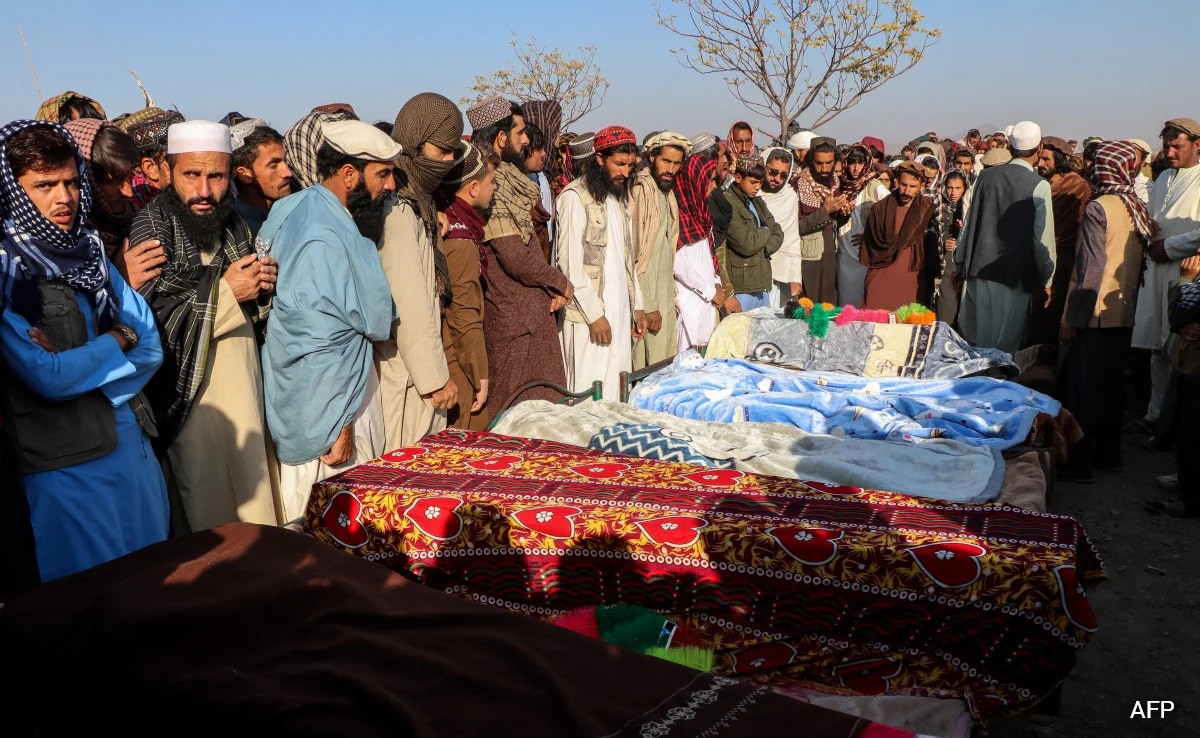
Afghan mourners gather during a burial ceremony for nine children and one woman killed by Pakistani airstrike.
The fragile diplomatic relationship between Pakistan and Afghanistan has dramatically deteriorated this week following Pakistani forces conducting overnight airstrikes within Afghan territory, targeting civilian areas in Paktika, Khost, and Kunar provinces.
Afghan authorities have described these attacks as a "direct assault on sovereignty," with the Taliban-led Islamic Emirate issuing serious warnings that intensify the already tense standoff between the neighboring countries.
These military strikes occurred despite recent ceasefire agreements reached during negotiations in Qatar and Turkey, where both nations had publicly expressed willingness to reduce tensions. Afghan officials now claim that Pakistan's military leadership has "betrayed its commitments" and reverted to what they describe as "habitual duplicity."
Local Afghan sources report that the late-night bombardment resulted in multiple civilian casualties, including women and children. While independent verification remains challenging due to restricted access in the affected districts, Afghan social media platforms have been circulating images reportedly showing the aftermath of these attacks.
Zabihullah Mujahid, spokesperson for the Islamic Emirate of Afghanistan, issued a statement condemning the strikes as violations of international norms and Afghan territorial integrity.
"These hostile actions achieve nothing," Mujahid stated. "They only prove the ongoing failures of Pakistan's military regime. Defending our airspace, territory, and citizens is our legitimate right. A necessary response will be taken at the proper time, God willing."
The Pakistan Army has not yet provided a detailed public explanation for the airstrikes, although officials in Islamabad have recently alleged cross-border hostile activities originating from Afghan territory—claims consistently rejected by Taliban leadership.
Afghan political figures across various factions have denounced the strikes. Former president Hamid Karzai urged Pakistan to "abandon hostile policies," criticizing the bombing of civilian areas as "against all international principles." He called on Islamabad to rebuild relations based on "good neighbourliness and foresight."
Former US envoy Zalmay Khalilzad, who played a significant role in the original US-Taliban negotiations, also condemned the attacks and offered condolences to victims' families, emphasizing that "killing civilians is not a solution to any problem."
With cross-border tensions escalating to a dangerous new level, analysts warn that miscalculations and provocations from the Pakistani military could rapidly develop into an open, unending conflict. Kabul's promise of a "proper response," combined with Pakistan's increasingly provocative security posture, has left both nations in a precarious situation while the region watches with growing concern.
Source: https://www.ndtv.com/world-news/attacks-prove-failure-of-military-regime-taliban-on-pakistan-strikes-on-civilians-9699903