
Escalating Tensions Between Afghanistan and Pakistan: Taliban Vows Retaliation After Alleged Airstrikes
- Date & Time:
- |
- Views: 85
- |
- From: India News Bull
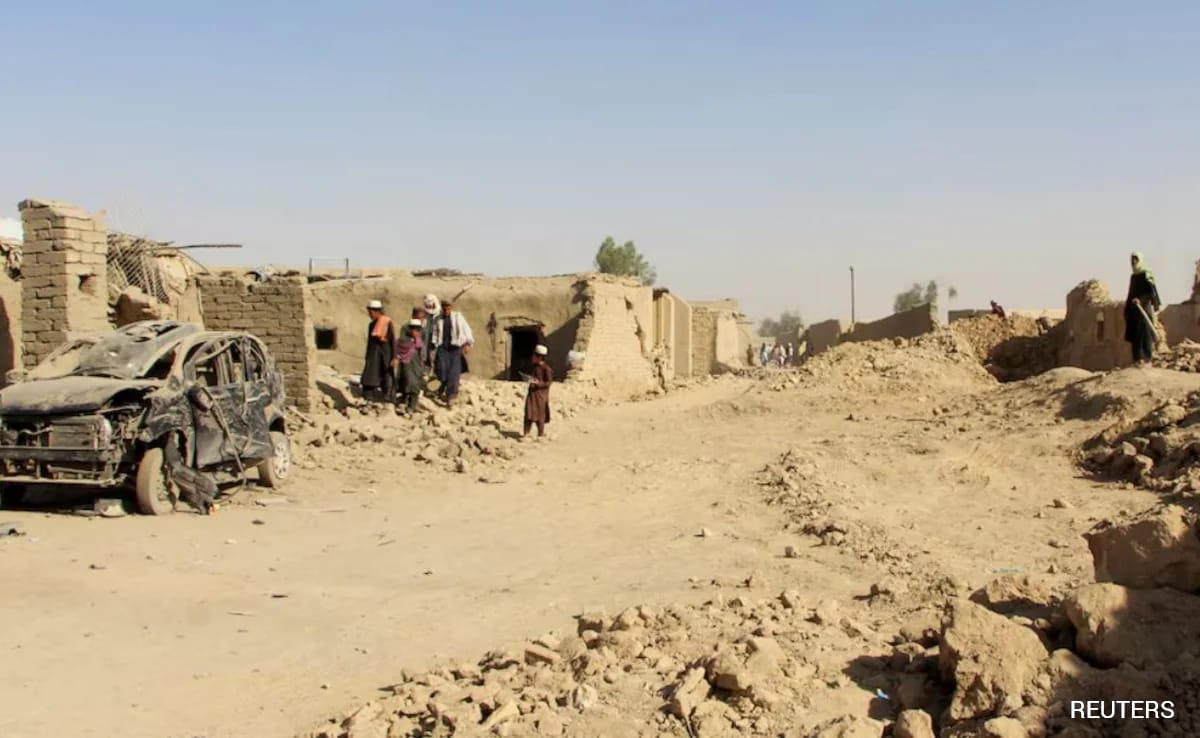
"Our request from the government of Pakistan is this: do not bomb ordinary people," a civilian expressed following recent incidents.
Afghanistan's Taliban government issued a stern warning on Tuesday that they would "respond appropriately" to deadly overnight air strikes which they attribute to Pakistan. Pakistan, however, has categorically denied these allegations, escalating tensions just one day after a suicide bombing occurred in a Pakistani city.
According to Taliban spokesman Zabihullah Mujahid's post on X, an air raid on Khost province resulted in the deaths of nine children and one woman. Mujahid pointed to Pakistani forces as responsible, claiming that "the house of a local civilian resident" was the target.
An AFP correspondent observed residents near the Pakistan frontier searching through debris of a destroyed house and preparing burial sites for victims.
Sajidulrahman, a resident of the Jige Mughalgai area, pleaded: "Our request from the government of Pakistan is this: do not bomb ordinary people. Civilians have done nothing wrong."
Mustaghfir Gurbuz, speaking for the governor of Khost, stated that the strikes were executed by aircraft including drones.
Mujahid further reported that neighboring border regions of Kunar and Paktika were also targeted, with at least four people wounded.
"The Islamic Emirate strongly condemns this violation and reiterates that defending its airspace, territory, and people is its legitimate right, and it will respond appropriately at the right time," Mujahid declared in a separate statement.
Pakistan firmly denied conducting any attack. According to state broadcaster PTV, military spokesman Lieutenant General Ahmed Sharif Chaudhry stated: "Pakistan has not attacked Afghanistan."
He elaborated, "Whenever we conduct a strike, it is announced openly and properly. Pakistan never attacks civilian populations. The allegations of the interim Afghan government are baseless."
The alleged bombardment followed a suicide attack on Monday that killed three officers and injured 11 others at the headquarters of Pakistan's paramilitary Federal Constabulary force in Peshawar.
While no group has claimed responsibility for this attack, state broadcaster PTV reported that the perpetrators were Afghan nationals.
President Asif Zardari attributed the attack to "foreign-backed Fitna al-Khawarij" – Islamabad's term for Tehreek-e-Taliban Pakistan (TTP), which Pakistan accuses of operating from Afghan territory.
Earlier this month, another suicide blast claimed by a faction of the Pakistani Taliban killed 12 people outside a court in the Pakistani capital. The Pakistani Taliban shares ideological foundations with the Afghan Taliban.
Islamabad has claimed that the cell responsible for the capital attack was "guided at every step by the... high command based in Afghanistan."
Pakistan's Information Minister Attaullah Tarar told reporters on Tuesday that there exists "clear-cut evidence" connecting the Afghan Taliban to the Islamabad bombing.
He presented an alleged video confession from one of four suspects in custody, declaring: "Afghanistan is fully involved... and their soil is also involved. The people being sheltered there are also involved."
Relations between Islamabad and Kabul have been strained since the Taliban's return to power in Kabul in 2021 and deteriorated further after October border clashes that resulted in approximately 70 casualties on both sides.
Though that conflict ended with a Qatar and Turkey-brokered ceasefire, multiple rounds of negotiations in Doha and Istanbul failed to produce a lasting agreement.
Security concerns remain contentious, particularly Pakistan's demand that Kabul control TTP fighters.
Islamabad accuses the Taliban of harboring individuals behind increased attacks, especially the TTP, which has conducted a violent campaign against Pakistan for years.
Kabul denies these accusations and counters that Pakistan shelters groups hostile to Afghanistan while disregarding its sovereignty.
For more than six weeks following the October clashes, the border between the two nations has remained closed, halting bilateral trade.
The Pakistan-Afghanistan Joint Chamber of Commerce and Industry has warned that thousands of containers remain stranded at the border, with each incurring daily charges of $150–$200, describing the economic impact as "unbearable."
Source: https://www.ndtv.com/world-news/pakistan-denies-strike-on-afghanistan-after-taliban-vows-retaliation-9698374