
COP30: The Struggle to Maintain Climate Diplomacy and Fossil Fuel Transition Commitments
- Date & Time:
- |
- Views: 45
- |
- From: India News Bull
In previous climate summits, the United States typically intervened to mediate compromises.
After two weeks of intense climate change negotiations, the final sticking point emerged: advancing the transition away from fossil fuels.
The European Union, United Kingdom, and allies established a firm boundary during the penultimate day of Brazil's COP30, threatening to abandon talks rather than accept language that weakened the historic commitment to move away from oil, gas, and coal secured at Dubai's COP28. That earlier agreement had marked a milestone—the first inclusion of "fossil fuels" in a final text throughout three decades of United Nations climate conferences.
A substantial coalition of nations, encouraged by Brazilian President Luiz Inacio Lula da Silva as the host, pressed for stronger fossil fuel language, making it a critical test for climate cooperation and multilateralism in an increasingly divided world. However, Brazilian diplomats leading the summit faced resistance from Arab states and Russia, hesitating to embrace the proposal.
Just as this standoff threatened to derail the final agreement, a fire erupted at the Belem rainforest venue, forcing participants to evacuate for several hours.
Eventually, the dissenting nations found sufficient reason to support a deal—largely to demonstrate that countries could still unite behind climate action. "There was a determination to ensure this agreement didn't collapse," said Ed Miliband, the UK's energy secretary. "Nobody in that room wanted to be responsible for its failure." Instead, he noted, "there was genuine commitment to maintaining progress."
The EU, UK and their supporters achieved a modest victory embedded in diplomatic terminology: an acknowledgment that nations should implement carbon-reduction plans "taking into account the decisions" from previous climate talks, including the fossil fuel transition pledge made in Dubai.
And so the process continues. The annual UN Conference of Parties climate diplomacy machinery avoided complete breakdown. Following a two-week summit near the Amazon's mouth characterized by extreme heat and daily downpours, the grand ambitions from the decade after the 2015 Paris Agreement—when nearly 200 nations committed to limiting global warming to 1.5C—have faded.
What remains is an effort to implement existing climate commitments as the 1.5C target becomes increasingly unattainable. This well-intentioned push can easily transform into a mandate to preserve multilateralism—even at the expense of ambition.
"We recognized this COP would operate in challenging political conditions," Simon Stiell, the UN climate change executive secretary, stated at the conclusion. "COP30 demonstrated that climate cooperation remains resilient."
From the beginning, this year's conference was expected to be more routine, following several landmark summit agreements: the 2022 decision to establish a fund addressing climate change damages, the 2023 fossil fuels commitment, and last year's agreement to triple funding for developing countries. The structured cycles established by the Paris Agreement hadn't scheduled any major breakthroughs on this summit's agenda.
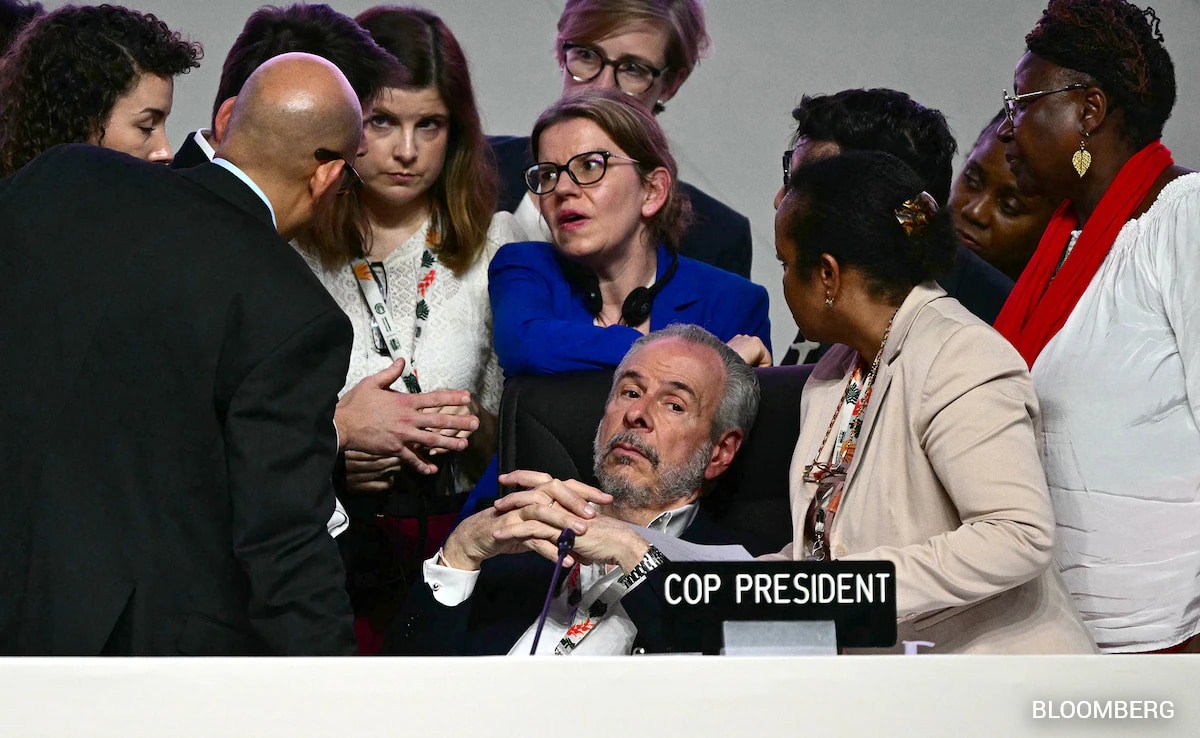
Perhaps that's why the primary objective sometimes appeared to be simply affirming multilateralism. The final COP30 agreement was even called the "Global Mutirão," referencing a Brazilian concept of collective action. COP30 President André Corrêa do Lago outlined the stakes before delegates arrived in Belém, telling a Bloomberg Green event: "We must convince people that continuing negotiations remains worthwhile."
Then came President Lula's bold declaration that countries should prepare transition pathways away from fossil fuels. Addressing world leaders just before COP30 commenced, the Brazilian president warned that "the climate regime isn't immune to the zero-sum mentality dominating international relations." He called for "road maps to justly and strategically reverse deforestation, overcome dependence on fossil fuels and mobilize necessary resources for these goals."
Lula's road maps concept became a rallying cry—and defining conflict—throughout the next two weeks. "Perhaps now we'll actually have something meaningful to negotiate," remarked one delegate. Another experienced negotiator admitted never giving such "poor advice" as telling his superior there wouldn't be any drama in Belem.
Some delegates embraced the concept as essential guidance on implementing fossil fuel reduction. The climate summit could address challenging questions: Should eliminating coal receive priority? Where does natural gas fit? How long should the transition take?
The proposal gained traction, particularly among ambitious countries frustrated by sluggish climate mitigation progress and those seeking increased financial support for climate impacts.
It also energized the tens of thousands of Indigenous peoples, religious leaders, and activists who demonstrated through Belem on November 15, marking the first host-country-permitted protests alongside climate talks in three years.
While diplomats inside deliberated precise language for measuring global progress, protesters outside demanded "more solutions" and "less diplomacy"—a message prominently displayed on Franciscan friar Vicente Imhof's banner.
"We continuously hear proposals, but concrete actions matter most," he stated. "Excessive diplomacy avoiding confrontation with power structures hasn't worked since Jesus Christ's time."
Marina Silva, Brazil's environment minister, reinforced Lula's appeal with her own impassioned advocacy. Yet she often appeared as the only other Brazilian government voice supporting the initiative.
"We must establish pathways and secure financial resources and technical support to reduce heavy dependence on these fuels," she told delegates, highlighting developing countries' particular challenges.
Lula's proposal had "captured people's imagination," and Silva's plea "inspired further," noted Rachel Kyte, the UK's special climate representative. "This represents one of those momentum-gathering developments."
The demand for concrete fossil fuel exit strategies culminated in a packed November 18 news conference. With security managing crowds and senior officials from nearly 20 nations present, a representative from the highly vulnerable Marshall Islands articulated the stakes.
"Transitioning away from fossil fuels is crucial for preserving the 1.5C possibility," Tina Stege said. "Let's support the fossil fuels road map concept, collaborate, and develop a strategy."
Approximately 80 nations united behind this initiative—significant, but short of the supermajority that secured the landmark fossil fuel transition pledge in Dubai two years earlier.
They encountered determined opposition from Saudi Arabia and Russia. Corrêa do Lago, who had outlined four areas for high-level consultations, acknowledged substantial resistance and subsequently omitted the plan from draft texts circulated during the summit's final days. The fire that engulfed pavilion tents forced negotiations into scattered city hotels, evoking the destructive wildfires intensified by rising temperatures.
Previously, the United States might have facilitated compromise. American diplomats collaborating with Chinese and European counterparts had shaped earlier agreements, including the Paris breakthrough. However, President Trump's absence after dismissing climate change as a "scam" created a power vacuum in Belem. Chinese officials maintained a low profile in negotiations. Visitors flocked to China's impressive pavilion for panda souvenirs, but Chinese representatives emphasized their opposition to climate-related tariffs and trade policies threatening green technology exports—while avoiding contentious fossil fuel debates.
Discussions extended into early Saturday after the EU, UK and others presented their non-negotiable demands. The dawn compromise included written acknowledgment of Dubai's fossil fuel commitment. Corrêa do Lago also developed a separate initiative addressing the issue. This side agreement commits the COP30 presidency to considering fossil fuel transition road maps and deforestation strategies over the coming year. However, this initiative exists outside the Paris Agreement's formal structures, lacking international legal backing.
"I understand some expected more," Corrêa do Lago told delegates. "I'll strive not to disappoint you."
The uninspiring final agreement—which also included a call to triple climate adaptation financing by 2035—reflects a process constrained by decades-old rich-poor classifications and consensus requirements. The additional pressure to uphold multilateralism further diluted language to secure approval.
Advocates maintain that despite flaws, the annual UN climate summit remains an essential venue for vulnerable nations to hold wealthier countries accountable. They argue that some countries' demands for stronger emissions reduction language demonstrates that less powerful nations can still influence outcomes. A crucial test awaits next year when Turkey and Australia—nations with few commonalities—share COP31 responsibilities.
"Achieving global climate goals requires collective action," said Rachel Cleetus, senior policy director with the Union of Concerned Scientists. "How could a small island nation independently influence the EU? Multilateralism provides the only platform for those with less geopolitical influence."
Source: https://www.ndtv.com/world-news/cop30-a-decade-after-paris-climate-diplomacy-is-about-saving-itself-9689922