
Musharraf's Fury: How CIA Uncovered Pakistan's Nuclear Scientist AQ Khan's Global Proliferation Network
- Date & Time:
- |
- Views: 47
- |
- From: India News Bull
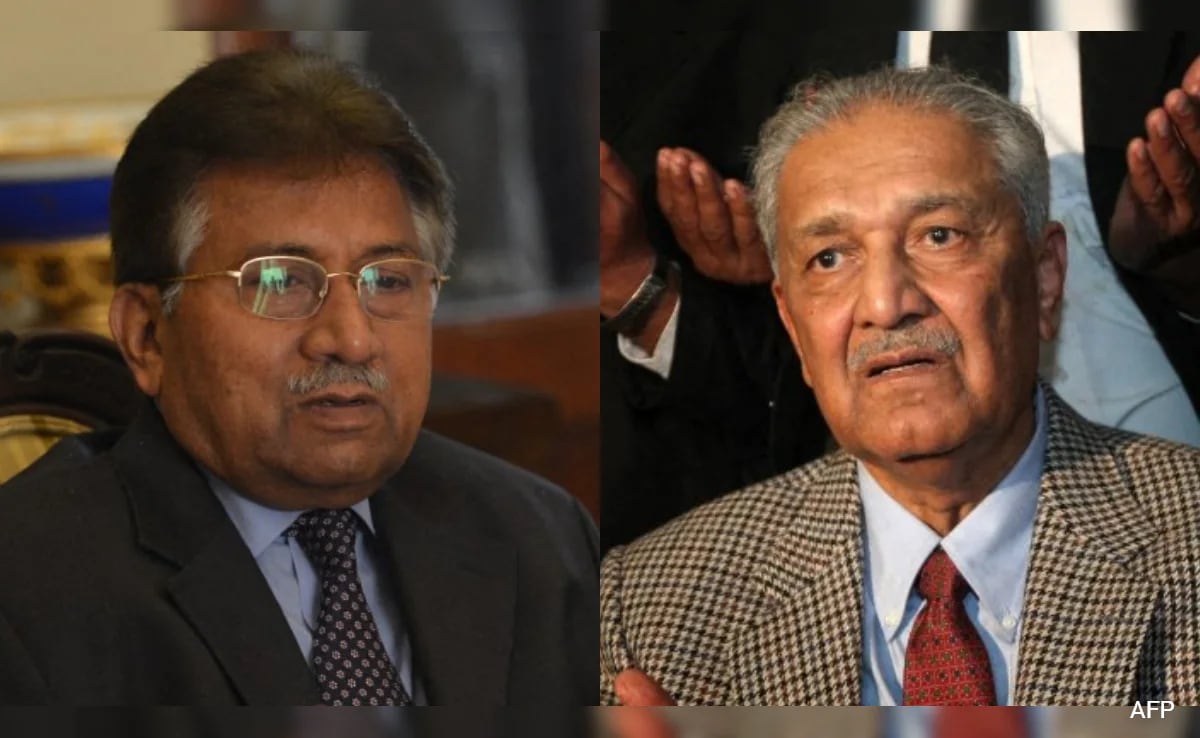
Lawler revealed he designated AQ Khan as the "Merchant of Death" due to his proliferation activities.
A former CIA operations chief has disclosed that Pakistan's then-president Pervez Musharraf expressed extreme anger when presented with evidence that nuclear physicist Abdul Qadeer Khan was selling Pakistan's nuclear secrets internationally. James Lawler, who previously led the CIA's Counter-Proliferation Division, explained that this confrontation was a crucial moment in dismantling one of the world's most dangerous nuclear proliferation networks, resulting in Khan being placed under house arrest for several years.
In an interview with ANI, Lawler revealed that CIA Director George Tenet personally briefed Musharraf with "absolutely incontrovertible evidence" demonstrating that Khan had leaked sensitive Pakistani nuclear technology to countries including Libya.
"Director George Tenet met with President Musharraf and informed him that Dr. Khan was betraying Pakistan's nuclear secrets to the Libyans and possibly others. Musharraf's immediate response was, 'I'm going to kill that son of a bitch,'" the former intelligence officer recounted, revealing the Pakistani leadership's dramatic reaction to learning about this betrayal.
Following this revelation, Musharraf placed Khan, a key figure in Pakistan's nuclear weapons program who is considered the "father of Pakistan's nuclear bomb," under house arrest for several years. This action marked a decisive step in containing the network that had been involved in a black market of nuclear technology and expertise for decades.
Lawler explained that he nicknamed AQ Khan the "Merchant of Death" due to his extensive networking capabilities over three decades, during which Khan transitioned from acquiring technology for Pakistan to trafficking it to other nations.
"We were slow to recognize the threat. We understood it was serious that he was supplying Pakistan with nuclear weapons capability, but we didn't anticipate he would become an outward proliferator. It turned out he was supplying a whole host of countries," Lawler noted.
The former CIA official further detailed how they confirmed that Khan's operation was supplying multiple foreign programs, with "Pakistani generals and leaders on his payroll" assisting his efforts. However, Lawler emphasized that these officials were involved with Khan through individual complicity, while the official Pakistani leadership remained unaware of these activities.
Describing his investigative approach, Lawler said he drew inspiration from Felix Dzerzhinsky's "Trust" operation and established covert overseas entities that appeared to supply nuclear-related technology. "To defeat proliferation and proliferators, I needed to become a proliferator," he explained.
These entities were utilized in sting operations to deliver compromised materials designed to hinder illicit nuclear activities. "We took the reverse of the Hippocratic oath. We always did harm," he stated.
This strategy aligned with how AQ Khan's network evolved over time. The network expanded significantly, transitioning from procurement to full-scale trafficking. "Instead of being a consumer of this technology, they became a purveyor," Lawler observed, highlighting Khan's substantial influence and popularity in Pakistan.
The former spy attributed the United States' initially slow response to limited resources and competing geopolitical crises during the 1970s and 1980s, including the Soviet invasion of Afghanistan and conflicts in Latin America. He dismissed claims that Saudi pressure influenced US inaction, noting that counter-proliferation only became a priority in the 1990s.
A pivotal moment arrived when analysts presented evidence confirming outward proliferation. The CIA subsequently expanded contacts and infiltrated the network across multiple jurisdictions with a small team. No more than 10 officers at headquarters focused exclusively on this operation, supported by personnel overseas.
After the 9/11 attacks, concerns about Libya, then designated as a state sponsor of terrorism, increased the urgency of the mission. Lawler highlighted the CIA's interception of the BBC China freighter, which was carrying "hundreds of thousands of nuclear components."
When US negotiators confronted Libyan officials with the seized material, "You could have heard a pin drop," he recalled. Libya subsequently dismantled its nuclear program, and Lawler remembered "dancing a little happy jig" beside the recovered containers, noting that this intervention likely prevented Gaddafi from using such weapons years later.
The broader proliferation situation also involved Iran. Lawler described how Iran's program utilized designs originally stolen from URENCO, using the same P1 and P2 centrifuge models supplied through Khan's network. Khan also provided ballistic missile technology and a Chinese atomic bomb blueprint to Iran. "I think they got all of it," he remarked.
This led to his warning that an Iranian nuclear weapon could trigger a "nuclear pandemic," prompting regional powers to seek their own deterrents and significantly increasing the risk of nuclear conflict in the Middle East.
Lawler also addressed why the United States tolerated Pakistan's nuclear development while opposing Iran's, suggesting that policymakers may have turned "a blind eye" because of Pakistan's strategic role in Afghanistan, while acknowledging that many decisions had long-term consequences.
His account included the close monitoring of Pakistan's nuclear assets following 9/11. CIA Director George Tenet and the Counterterrorist Centre ensured that AQ Khan was not providing nuclear material to al-Qaeda, which ultimately led to Tenet confronting Musharraf with evidence of Khan's proliferation activities.
Source: https://www.ndtv.com/world-news/pervez-musharraf-reaction-when-cia-told-him-pakistani-scientist-aq-khan-was-leaking-nuke-secrets-son-of-a-bi-h-9689092