
Emmanuel Macron Takes Risk With Palestinian Statehood Recognition
- Date & Time:
- |
- Views: 73
- |
- From: India News Bull
French President Emmanuel Macron has made a significant diplomatic move by announcing his intention to recognize a Palestinian state, though analysts and sources suggest this decision could trigger harsh retaliation from Israel while offering limited concrete benefits to Palestinians.
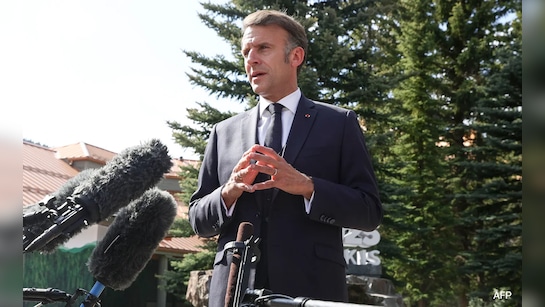
Macron's declaration has sent shockwaves through international diplomatic circles. During a speech at a UN General Assembly side conference in New York on Monday, he confirmed France's recognition plans, which will be accompanied by similar actions from nine other nations including Australia, Belgium, Canada, and the United Kingdom, according to the Elysee Palace.
This recognition reflects growing international frustration with Israel over its military operations in Gaza and aid blockades following the October 7, 2023 Hamas attack on Israel. The move carries historic significance as France and the UK will become the first permanent UN Security Council members and, alongside Canada, the first G7 countries to recognize Palestinian statehood.
French foreign ministry spokesman Pascal Confavreux emphasized that "this recognition is not merely symbolic nor the conclusion of our diplomatic efforts. It forms part of a broader and tangible action," referencing the accompanying French-Saudi roadmap.
In a recent defense of his decision on Israeli television, Macron claimed the recognition represents the "best way to isolate Hamas."
Diplomatic sources speaking anonymously anticipate retaliatory measures from Israel, though these are not expected to extend to severing diplomatic ties with France. Potential responses could include closing France's Jerusalem consulate, which serves many Palestinians, or annexing portions of the West Bank where Israel has expanded settlements despite international condemnation.
"There will be significant diplomatic turbulence," one diplomat noted on condition of anonymity.
Agnes Levallois, deputy president of the Paris-based Institute for Research and Study of the Mediterranean and Middle East, observed that "Israel is prepared for any scenario, while France's response options may be limited," adding that "ultimately, Palestinians have the most at stake in this crisis." She stressed that the recognition would need to be followed by sanctions against Israel to have meaningful impact.
A French presidential official warned that "annexation of the West Bank constitutes a clear red line" and would represent "the most serious violation of UN resolutions."
The United States strongly opposes France's decision, with US Ambassador to Paris Charles Kushner expressing disapproval through multiple posts on X, criticizing what he termed "unmet French conditions" for recognition.
Israel's ambassador to France, Joshua Zarka, told AFP that "France's unconditional recognition of a Palestinian state would complicate the situation rather than advance peace," arguing France should have demanded the release of all Israeli hostages held by Hamas before taking such action.
However, Palestinian representative in France Hala Abou Hassira urged France to implement "concrete sanctions, including an arms embargo on Israel and termination of the EU-Israel association agreement."
Sources close to Macron reveal his decision crystallized during an April flight from Egypt's El-Arish border crossing, where he met wounded Palestinians and witnessed the humanitarian impact of the blockade firsthand.
For the politically challenged president, who recently appointed his seventh prime minister and has struggled to end Russia's war on Ukraine despite significant efforts, this recognition offers an opportunity to cement a meaningful foreign policy achievement in his legacy.
A source in Macron's circle suggested he views the recognition "as diplomatic leverage to pressure Netanyahu."
Former ambassador Michel Duclos, now a fellow at the Montaigne Institute, believes "this could become a diplomatic success for France," drawing parallels to President Jacques Chirac's opposition to the 2003 US invasion of Iraq.