
Trump's Immigration Policies Leave 200,000 Ukrainian Refugees in Legal Limbo: Work Permits Lost and Deportation Fears Rise
- Date & Time:
- |
- Views: 45
- |
- From: India News Bull
Kateryna Golizdra has survived six months in legal limbo. She believes she can endure another six months while awaiting the Trump administration's decision on a humanitarian program that allowed approximately 260,000 Ukrainian war refugees to live and work in the United States.
When her legal status expired in May, Golizdra, 35, immediately became deportable. She lost her work authorization and had to leave her position as a manager at the Ritz-Carlton in Fort Lauderdale, where she earned over $50,000 annually. She also lost health insurance coverage for her liver condition check-ups and can no longer send financial support to her displaced mother in Germany.
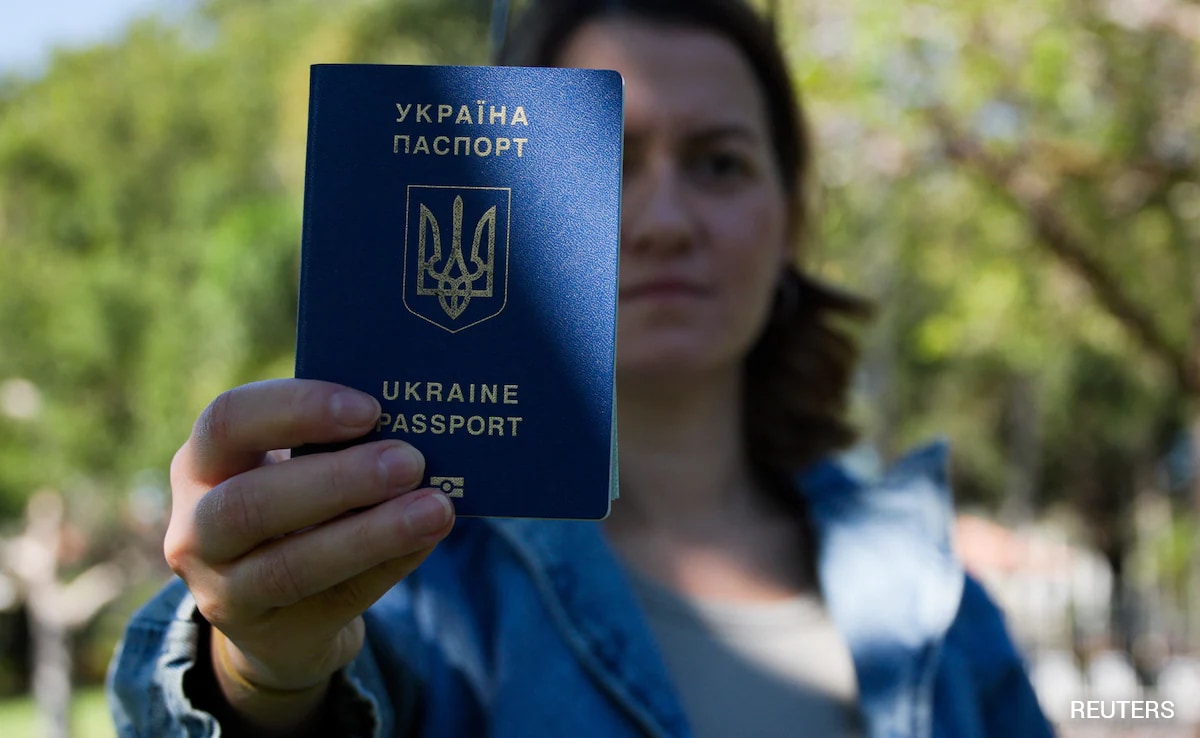
According to internal U.S. government data reviewed by Reuters, the Trump administration's processing delays for the Ukrainian humanitarian program initiated by former President Biden put nearly 200,000 individuals at risk of losing legal status as of March 31. This significant impact on Ukrainians has not been previously disclosed.
The humanitarian program, established in April 2022, admitted nearly 260,000 Ukrainians to the U.S. for an initial two-year period. This represents only a small portion of the 5.9 million Ukrainian refugees worldwide, with 5.3 million residing in Europe, according to United Nations refugee figures.
Golizdra has no indication when—or if—her permission to remain in the United States might be renewed, threatening her brief sense of security in America. While awaiting a decision on her application, she potentially faces arrest by federal immigration authorities, according to three former immigration officials.
The past six months have felt like being on a "hamster wheel," Golizdra said. "It's a constant stress, anxiety. If I will need to leave the States, then I will have to build something again."
Reuters interviewed two dozen Ukrainians who lost their work permits—and subsequently their jobs—due to renewal processing delays. These included tech workers, a preschool teacher, a financial planner, an interior designer, and a college student. They described depleting savings, seeking community assistance, and incurring debt while awaiting decisions on their status.
Some interviewees expressed fear of arrest by U.S. immigration authorities. Others reported staying indoors or relocating to Canada, Europe, or South America. Returning to Ukraine remains impossible for many. Golizdra's home in Bucha, a Kyiv suburb, was destroyed in March 2022 during the Russian invasion. After Ukrainian forces recaptured the town, they discovered hundreds of bodies, including civilians who were victims of extrajudicial killings.
The Trump administration suspended processing applications and renewals for the Ukrainian humanitarian program in January, citing security concerns. Following a tense Oval Office meeting with Ukrainian President Volodymyr Zelenskiy, Trump indicated in March that he was considering completely revoking Ukrainians' legal status—a plan first reported by Reuters.
Although Trump ultimately preserved the program, and a federal judge ordered officials to resume processing renewals in May, U.S. immigration officials have processed only 1,900 renewal applications for Ukrainians and other nationalities since then. This represents a fraction of those with expiring status, according to U.S. government data released through a lawsuit.
Additionally, a spending package Trump signed into law in July added a $1,000 fee to such humanitarian applications—on top of an existing $1,325 fee per individual.
When asked about the Ukrainian humanitarian program, the White House referred questions to the U.S. Department of Homeland Security, which did not respond to comment requests.
Democratic Representative Mike Quigley from the Chicago area reported that his office has received assistance requests from more than 200 Ukrainians in limbo. "There's a fear that if they haven't completed their application, if they haven't gone through the whole process, they're vulnerable for deportation," Quigley stated.
Anne Smith, executive director and regulatory counsel of the Ukraine Immigration Task Force, a legal coalition formed to assist war refugees in the U.S., said her attorney network regularly receives multiple weekly calls from Ukrainians reporting family members detained by immigration authorities. She noted Ukrainians have been arrested at construction sites, while doing food delivery, working as Uber or truck drivers, and during broader sweeps in Chicago and greater Cleveland.
Brian Snyder, a product marketing manager in Raleigh, North Carolina, who has sponsored three Ukrainian families, believes those who followed the rules are being treated unfairly. One Ukrainian woman recently asked him to serve as her emergency contact if immigration officers detained her. He knew another family where a teenage son's parole was renewed while the parents and two younger children remained waiting.
"All of this dysfunction and uncertainty is just introducing a tremendous amount of stress in these families' lives," he said.
Six of the 24 Ukrainians interviewed by Reuters have left the U.S. rather than risk immigration detention or deportation to Latin America or Africa, as the Trump administration has done with other difficult-to-deport immigrants.
Yevhenii Padafa, a 31-year-old software engineer who moved to Brooklyn in September 2023, applied to renew his status in March. His application remained pending until expiring in September. Concerned about potential future U.S. entry bans if he remained without legal status, he attempted to "self deport" using a government app called CBP One.
In May, the Trump administration promised a free outbound plane ticket and $1,000 "exit bonus" for those using the app. Padafa chose Argentina, which offers lower living costs and a humanitarian program for Ukrainians. However, the app would not book him a ticket there. A U.S. border official informed him the flight would need to be booked to Ukraine.
He had been counting on the free flight and $1,000 bonus. Arriving in Buenos Aires in mid-November with limited funds, he planned to sell his laptop to cover initial apartment rent.
"If I return to Ukraine, I'll just go to the frontline," he said. "I'd rather be homeless somewhere than go to Ukraine."
Source: https://www.ndtv.com/world-news/no-job-money-donald-trumps-immigration-crackdown-leaves-2-lakh-ukrainians-in-limbo-9685307