
Nigeria's Security Crisis: Understanding the Recent Wave of School Abductions and Religious Attacks
- Date & Time:
- |
- Views: 52
- |
- From: India News Bull
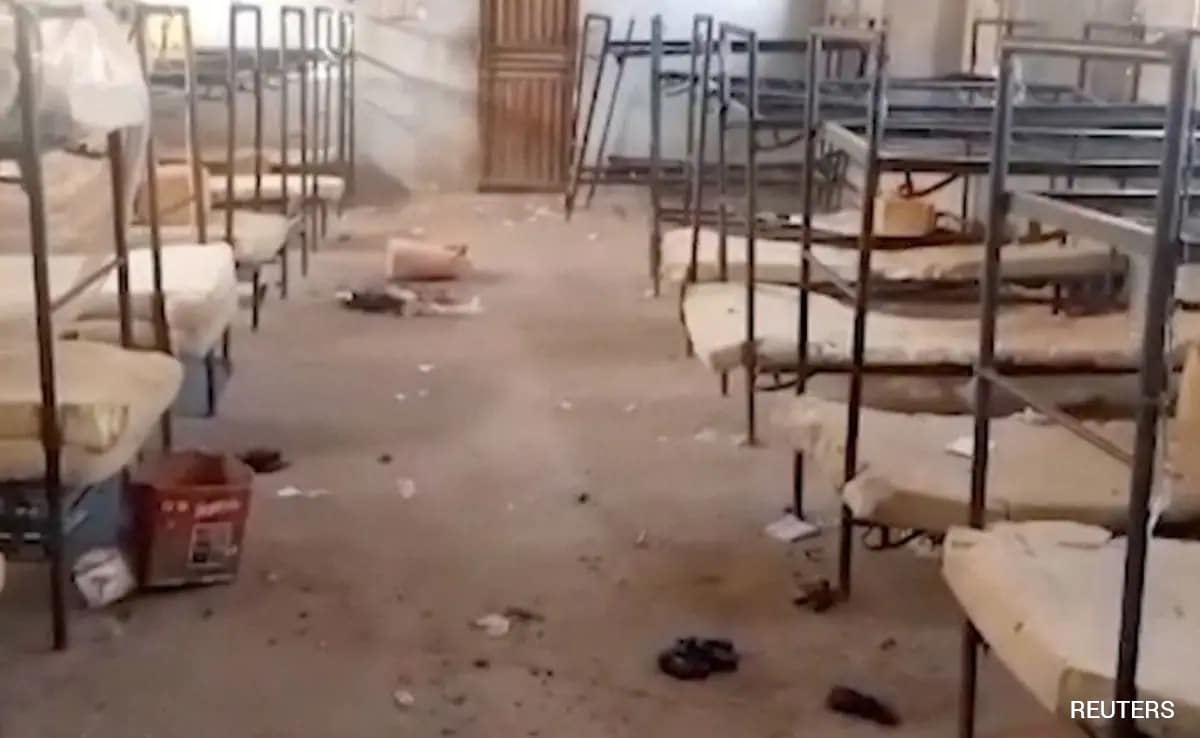
A school dormitory remains empty following an armed attack on a girls' boarding school in Kebbi state, Nigeria.
Lagos:
Nigeria has once again captured international attention due to a series of violent incidents involving the kidnapping of numerous students from two educational institutions and a deadly attack on a church congregation.
This week's violent events have intensified pressure on Nigerian authorities, particularly in light of U.S. President Donald Trump's threats of potential military intervention regarding alleged persecution of Christians in Africa's most populous nation.
Below is essential information about these attacks—which compelled President Bola Tinubu to delay scheduled international visits—and Nigeria's broader security challenges.
No organization has publicly taken responsibility for these recent attacks, though perpetrators of Tuesday's incident appear to be members of armed gangs motivated primarily by financial gain through ransom demands.
The assaults follow consistent patterns. Criminal groups, locally referred to as bandits, arrive heavily armed, fire randomly to create panic, capture victims, and quickly retreat into nearby forest hideouts.
On Monday, armed individuals invaded a predominantly Muslim girls' school in northwestern Kebbi state and abducted 25 students. This marked the first mass school kidnapping since March 2024 when over 200 students were taken in northern Kaduna.
That same day, another armed group kidnapped 64 individuals, including women and children, from their residences in neighboring Zamfara state.
The following day, gunmen attacked Christ Apostolic Church in central Kwara state during a service, killing two attendees and abducting 38 worshippers. A church representative reported the attackers demanded 100 million naira (approximately $69,000) ransom per captive.
By Friday, armed men had abducted multiple students from St. Mary's Catholic school in Niger state, with Arise News reporting 52 students taken.
Security analysts indicate these abductions and attacks are financially motivated, with educational institutions representing vulnerable targets due to inadequate security measures. Additionally, parents often mobilize quickly to pay ransoms for their children's safe return.
"This enterprise generates substantial profits," noted Ikemesit Effiong, senior partner at Lagos-based SBM Intelligence consultancy.
Most of northern Nigeria, encompassing over 20 of the country's 36 states, experiences significant security challenges that disrupt daily activities including transportation and agricultural production.
In northwestern regions, armed groups without clear religious or political agendas conduct kidnappings for ransom and shelter in forest areas. Nigeria contains vast, ungoverned rural territories where numerous additional attacks remain unreported.
The northeastern region faces ongoing insurgency from extremist groups Boko Haram and Islamic State West Africa Province (ISWAP), creating Nigeria's most severe humanitarian crisis with over 2 million displaced persons and tens of thousands killed during 15 years of conflict. On November 14, ISWAP captured and executed an army general.
Central Nigeria, where the predominantly Muslim north meets the largely Christian south, experiences deadly conflicts over religious differences, ethnic tensions, and competition for land and water resources.
Nnamdi Obasi, senior adviser at International Crisis Group, observed that while numerous incidents of faith-based violence have occurred in central and northeastern regions, Muslim communities have suffered equally alongside Christian ones.
Nigerian authorities maintain that allegations of Christian persecution mischaracterize the complex security situation and fail to acknowledge efforts to protect religious freedom.
Ethnic and religious tensions frequently emerge in this nation of 230 million citizens representing approximately 200 ethnic groups.
"Many Nigerians believe successive administrations could have implemented more effective measures against armed groups, prevented atrocities, and held perpetrators accountable," Obasi stated. "However, no credible evidence suggests government forces, led by both Christians and Muslims, have participated in violence targeting specific religious communities."
A senior U.S. State Department official indicated Thursday that the United States is considering various measures including sanctions and Pentagon counter-terrorism engagement as part of efforts to compel Nigerian authorities to enhance protection for Christian communities and religious freedom.
Nigeria's military, the largest in sub-Saharan Africa, leads counter-insurgency operations, while in northwestern regions, traditional leaders often pursue peace through negotiations with bandit groups.
Military resources are stretched thin while insurgents and bandits operate across extensive territories.
In August, Nigeria's Air Force reported airstrikes killing nearly 600 insurgents. However, militant attacks continue on the ground.
Data compiled by U.S. crisis-monitoring organization ACLED documents over 1,923 attacks against civilians in Nigeria this year, resulting in more than 3,000 fatalities. President Tinubu dispatched his minister of state for defence to Kebbi on Wednesday to personally supervise efforts to rescue the abducted schoolgirls.
Source: https://www.ndtv.com/world-news/explained-whats-behind-nigerias-latest-school-abductions-church-attack-9677222