
Bangladesh Crisis: Sheikh Hasina's Death Sentence and Its Implications for Democratic Future
- Date & Time:
- |
- Views: 43
- |
- From: India News Bull
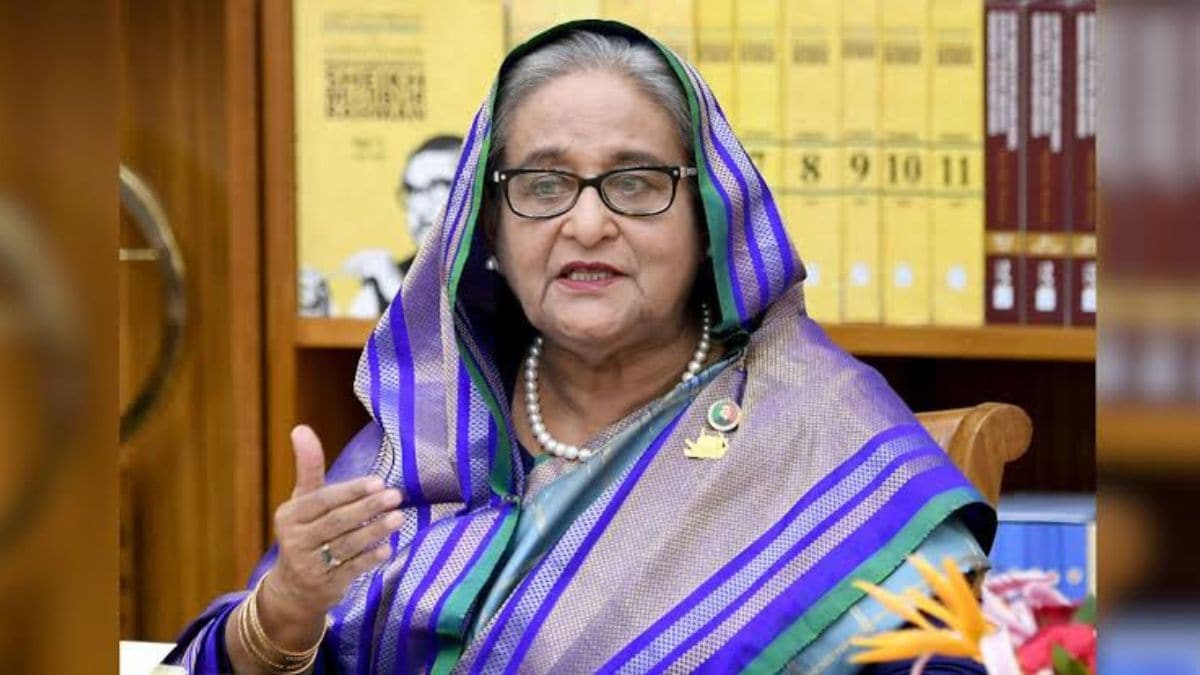
Bangladesh has formally requested India to extradite former Prime Minister Sheikh Hasina following her recent sentencing.
Dhaka, Bangladesh:
The recent death sentence handed to Bangladesh's former Prime Minister Sheikh Hasina on charges of crimes against humanity represents a potential turning point for a nation still recovering from the violent uprising that ended her 15-year leadership. Her opponents view this verdict as an opportunity for national healing and progress.
Sheikh Hasina has been residing in India since August 5 last year when widespread violence forced her from power, resulting in hundreds of fatalities and thousands of injuries. She has firmly dismissed Monday's court decision as "biased and politically motivated."
The interim government led by Nobel Peace Prize recipient Muhammad Yunus faces significant challenges as it prepares for a February election after decades of political dominance alternating between Hasina and her longtime political rival.
Here's a comprehensive analysis of the situation.
Bangladesh's interim leadership is committed to restoring democratic governance through the upcoming election, which they have deliberately structured to exclude Hasina and her Awami League party. However, political tensions remain extraordinarily high.
"The interim government has completely marginalized the Awami League... The level of polarization is unprecedented," observes analyst Michael Kugelman, senior fellow with the Asia Pacific Foundation of Canada.
Election-related violence represents the most significant concern moving forward.
"Elements within the Awami League may attempt to disrupt the electoral process through unrest. With Bangladesh's police force experiencing serious morale issues, there are legitimate concerns about the state's capacity to manage potential violence," Kugelman explained. Bangladesh's police suffered casualties during the 2024 protests when demonstrators attacked police stations.
Hasina's son has indicated that the party might attempt to obstruct the election unless restrictions on its political activities are lifted, emphasizing that only an inclusive electoral process can bring stability to the country.
Despite Bangladesh's renewed extradition request following Monday's verdict, India is unlikely to surrender Hasina.
"Hasina will probably remain patient, continue managing her party from India, and adopt a long-term strategy hoping for eventual political reentry if circumstances evolve in coming years," notes Kugelman. "Throughout the region, dynastic leaders and their parties may face setbacks, but they rarely disappear permanently."
Analyst Sabir Mustafa, formerly heading BBC's Bengali Service, suggests that while the Awami League may struggle without Hasina's leadership, the party requires fundamental reforms to remain relevant.
"Hasina herself needs to initiate the party's reformation," he stated, indicating she must focus on future prospects if she hopes to eventually return to politics.
Mustafa characterized the trial as "seriously flawed" and considered a death sentence inappropriate for a case conducted in absentia. Nevertheless, he acknowledged that mobilizing supporters for protests would prove challenging in the near term.
Without substantial reforms and new leadership under Hasina's guidance, Mustafa believes the Awami League would struggle to regain political relevance.
"That's the difficult reality they must accept," he said.
Human rights organizations and the UN High Commissioner for Human Rights have expressed varied responses to the verdict and trial procedures.
Human Rights Watch and Amnesty International questioned the fairness of the judicial process, while the UN rights body described the verdict as "an important moment" for victims of last year's deadly crackdown, though maintaining its opposition to capital punishment in all circumstances.
Consequently, the Yunus administration faces the task of convincing the international community regarding the credibility of the trial process.
From Kugelman's perspective, Yunus's primary challenge is ensuring a secure environment for the upcoming election.
The stakes are particularly high: this represents Bangladesh's first election in nearly two decades with strong expectations for free and fair voting. The January 2024 election that granted Hasina a fourth consecutive term was boycotted by opposition parties and marred by violent protests and international scrutiny.
Mustafa contends that Yunus has already compromised his legacy as a Nobel Peace Prize recipient by presiding over numerous rights violations, including mob justice, deaths in custody, mass arrests, and imprisonment of individuals—particularly Hasina supporters—without credible charges.
Nevertheless, he believes the international community will maintain support for the interim leader.
"Between now and February, his challenge is ensuring smooth operations and facilitating peaceful, credible elections," Mustafa said.
Given the electoral ban on the Awami League, Mustafa emphasized that Yunus must prevent election manipulation by the Bangladesh Nationalist Party, led by former Prime Minister Khaleda Zia, or the country's largest Islamist organization, Jamaat-e-Islami.
"By doing so, he can restore his legacy as a Nobel Peace Prize laureate."
Source: https://www.ndtv.com/world-news/what-ex-pm-sheikh-hasinas-death-sentence-means-for-bangladesh-9662260