
Trump Approves F-35 Fighter Jet Sale to Saudi Arabia Despite Technical and Diplomatic Challenges
- Date & Time:
- |
- Views: 59
- |
- From: India News Bull
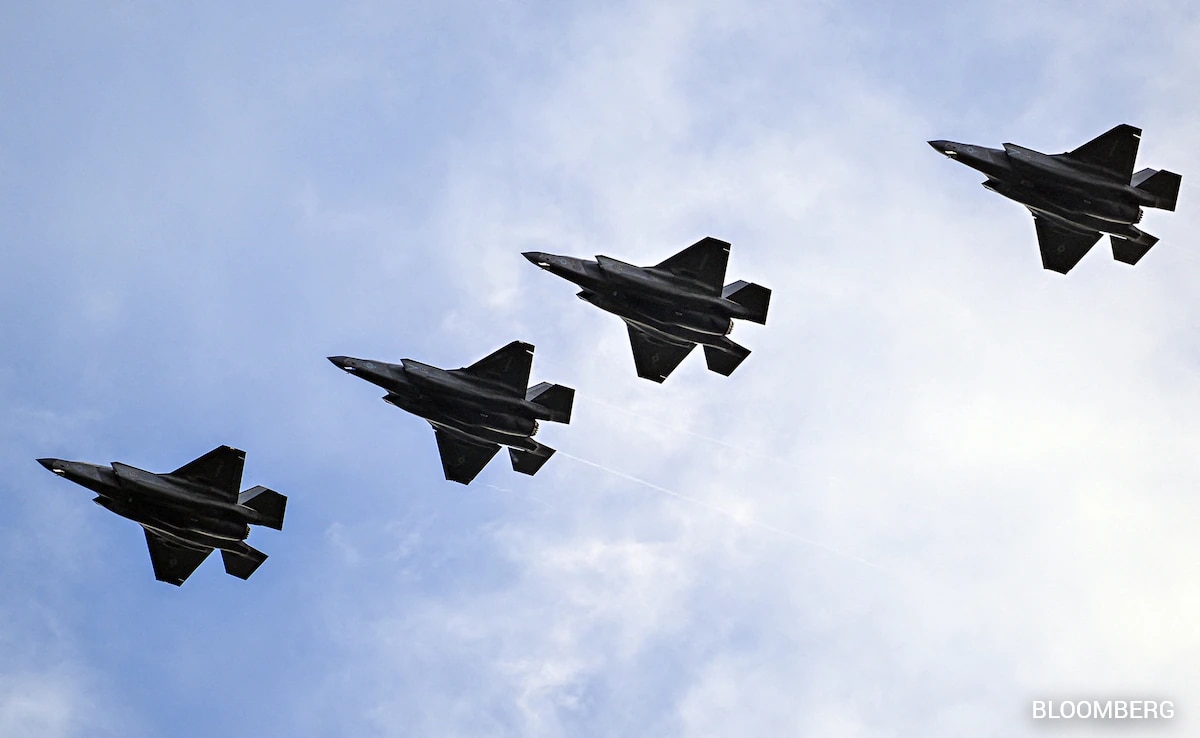
F-35 fighter jets are considered among the world's most sophisticated weapons systems available today.
President Donald Trump has announced that the United States will sell F-35 fighter jets to Saudi Arabia, fulfilling a long-held desire of Crown Prince Mohammed bin Salman, although numerous challenges remain before the advanced aircraft are delivered.
The agreement to sell F-35s represents a significant concession to Prince Mohammed, who is scheduled for a White House visit on Tuesday, as both nations seek to strengthen bilateral relations. One key motivating factor for Trump appears to be encouraging Saudi Arabia to establish diplomatic relations with Israel.
"I will say that we will be doing that — we'll be selling F-35s," Trump stated when questioned about the potential sales at the White House on Monday. He described Saudi Arabia as a "great ally."
However, Trump's approval marks only the beginning of a complex process requiring years of detailed negotiations, with no guarantee of final delivery. This situation mirrors what occurred when Trump approved selling the aircraft to the United Arab Emirates during his first term. Despite that approval over five years ago, the UAE has yet to receive any F-35 jets.
A Lockheed Martin F-35A fighter jet, operated by the US Air Force, was displayed at the Paris Air Show on June 16. (Bloomberg)
The F-35 represents cutting-edge military technology, and Saudi Arabia has desired these aircraft for years, according to officials familiar with discussions. Each aircraft costs approximately $100 million. Following Trump's announcement, shares of manufacturer Lockheed Martin Corp. increased by up to 1.1%.
The advanced technology of these aircraft presents one of the major complications for this deal. Trump's intended approval comes despite Israel's desire to maintain its regional monopoly as the only Middle Eastern nation currently possessing F-35s.
Under American legislation, Israel is guaranteed weapons necessary to maintain its "qualitative military edge" over Arab states. U.S. officials have indicated they can provide this assurance regardless of F-35 sales, though they haven't publicly specified what would be offered to Israel.
Israel is "keeping an eye on QME, so they're going to be careful about those F-35s and they're going to probably want to weigh in on those," noted Foundation for Defense of Democracies Executive Jonathan Schanzer.
Additional concerns exist. A Pentagon report has highlighted the risk that China could potentially acquire the plane's advanced technology if a sale to Saudi Arabia proceeds, citing Beijing's defense relationships with Riyadh, according to the New York Times.
The UAE case illustrates potential challenges ahead. Late in his first term, Trump pushed through approval for selling up to 50 F-35 fighter jets to the UAE in a deal valued at up to $10.4 billion. In exchange, the UAE agreed to join the Abraham Accords normalizing relations with Israel.
While the Abraham Accords proceeded, the F-35 agreement stalled after multiple disagreements between the countries. When former President Joe Biden succeeded Trump in 2021, his administration pressured the UAE to remove Huawei Technologies Co. from its telecommunications networks and take additional steps to distance itself from China.
After extensive negotiations, the UAE removed Huawei from certain networks. The Biden administration sought additional restrictions, including limitations on how the UAE could use the jets. Eventually, these discussions ceased without resolution.
Numerous challenges await this current proposal as well. Saudi Arabia must formally request the jets, and Congress must approve the sale. The Pentagon would then need to finalize a "Letter of Offer and Acceptance," followed by Saudi Arabia negotiating terms with Lockheed Martin.
Deliveries would be years away, and Lockheed would need to balance production schedules and priorities among 19 foreign partners and customers who have ordered 1,172 jets. Israel has already received or committed to purchase 75 of these stealth aircraft.
Nevertheless, Trump's approval builds momentum for Saudi Arabia and signals his support for a crucial regional ally.
"MBS wants a defense deal with the US like Qatar's, F-35s like Israel's, a deal on chips like the UAE's, and US help to develop a civilian nuclear program," wrote Dina Esfandiary, Middle East Geoeconomics Lead for Bloomberg Economics. "He won't get it all, but he'll get some, and that's a win."
Source: https://www.ndtv.com/world-news/trump-agrees-to-sell-f-35-fighter-jets-to-saudi-arabia-amid-china-concerns-9654988