
Chile's Presidential Runoff: Far-Right Jose Antonio Kast Gains Momentum Against Leftist Jeannette Jara
- Date & Time:
- |
- Views: 38
- |
- From: India News Bull
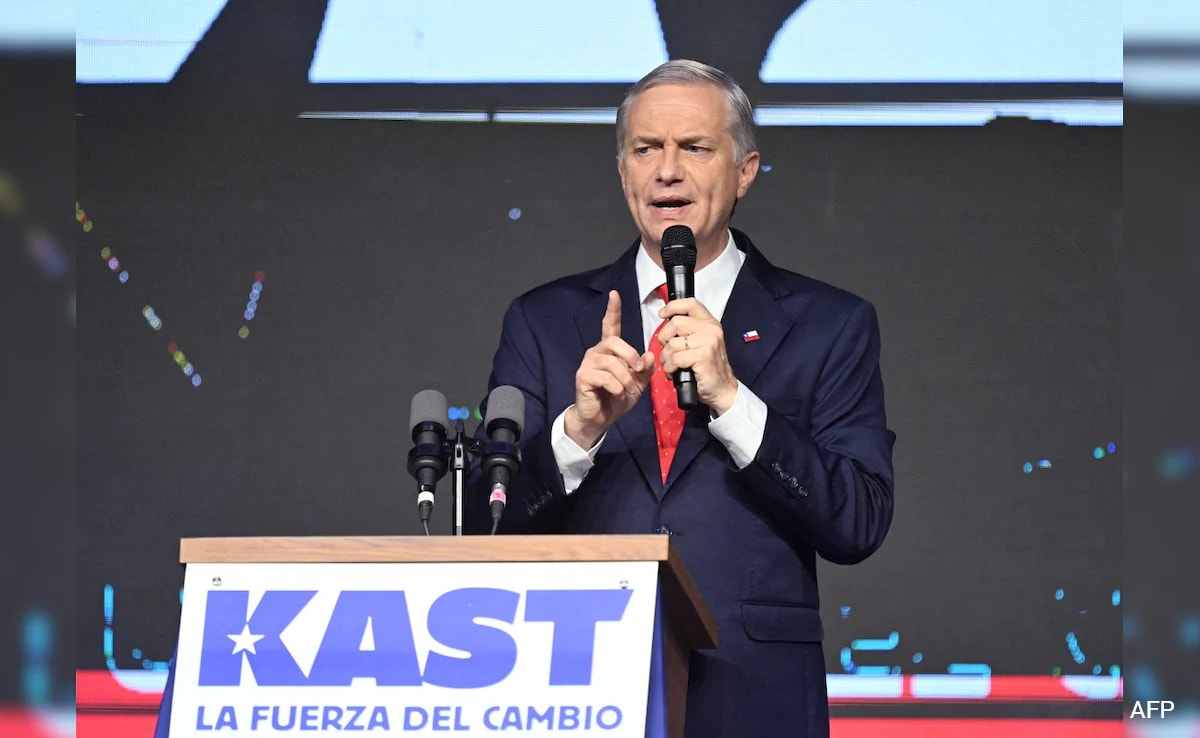
Jose Antonio Kast placed second behind leftist candidate Jeannette Jara in Chile's first-round presidential election on Sunday.
After two unsuccessful previous presidential campaigns, Chilean candidate Jose Antonio Kast is now considered the frontrunner to win the presidency in next month's runoff election. Political analysts attribute his rise to growing public support for his far-right anti-immigration stance amid escalating concerns about crime rates.
The 59-year-old Kast finished just behind leftist Jeannette Jara in the initial round of voting. Analysts widely predict he will gain most votes from three other right-wing candidates who didn't advance, some of whom have already endorsed him or appeared alongside him as results were announced.
Kast previously lost to leftist President Gabriel Boric in 2021, when polls indicated his hardline policies weren't aligned with an electorate affected by the pandemic, widespread inequality protests, and hopes for constitutional reform. However, public sentiment has shifted dramatically, and his proposals now resonate with voters predominantly concerned about crime and immigration.
He has promised to seal borders against undocumented migrants, dismantle organized crime networks, and reduce hospital waiting times.
His main opponent, Jara, has distinguished herself by highlighting her achievements as labor minister, including pension reform, workweek reduction, and minimum wage increases. She advocates for controlled migration without mass deportations and expanded funding for social programs.
Ironically, Kast himself is the son of a German immigrant—a former Nazi party member and army lieutenant who fled to South America after World War II and eventually established a successful sausage business near Santiago.
A devout Catholic with nine children, Kast has been married to Maria Pia Adriasola, a lawyer who frequently campaigns alongside him, for more than 30 years.
His older brother, Miguel Kast, served as a government minister and central bank president in the early 1980s during General Augusto Pinochet's dictatorship. As one of the "Chicago Boys" who implemented shock therapy economics, Miguel advocated for deregulation and privatization.
During his 2021 presidential campaign, Kast faced criticism and media scrutiny regarding his family's Nazi connections. He has maintained that his father was a forced conscript.
After studying law, Kast joined the right-wing Independent Democratic Union (UDI) party in the late 1990s. Following more than a decade as a UDI congressman, he resigned in 2016 to pursue the presidency as an independent but secured less than 10% of the vote. He gained more traction in 2021 running under his self-founded Republican Party.
David Altman, a political scientist at Chile's Pontifical Catholic University, notes that Chileans now view Kast as a familiar figure with over two decades of political experience, and he has benefited from growing dissatisfaction with Boric's leftist government.
"It's not that people became more fascist in the space of four years," Altman explained. "People abandoned the left and as there essentially was not a political center, they went right. It was the only place where they could land."
Kast has drawn inspiration from the United States for his strict border policies and visited Salvadoran mega-prisons built by President Nayib Bukele last year—a model his platform seeks to replicate, along with establishing a militarized border zone.
He has also expressed admiration for former Brazilian President Jair Bolsonaro and U.S. President Donald Trump, pledging to create a specialized police force modeled after U.S. Immigration and Customs Enforcement (ICE) to track and rapidly deport undocumented migrants.
His potential victory would make Chile the latest Latin American country to shift rightward following Bolivia's election in August.
Kast's economic platform advocates more flexible labor laws, corporate tax reductions, and decreased regulation—though analysts expect him to moderate proposed spending cuts widely considered unrealistic as he incorporates elements from his main right-wing rivals' platforms.
Previously, Kast stated he would repeal Chile's limited abortion rights and ban morning-after pill sales. While focusing on other issues during this campaign, he has confirmed his views remain unchanged.
"I support life from conception to natural death," Kast affirmed when questioned on the topic during the final televised debate.
Kast is widely expected to gain support from his main right-wing competitors, but voters who supported Franco Parisi—an anti-establishment candidate who finished third with 20% of Sunday's vote—will be crucial in the runoff.
Nicholas Watson, Latin America Managing Director at Teneo, observed that neither candidate can take Parisi's supporters for granted.
"The success of this exercise goes beyond Kast's ability to win the runoff but speaks to the construction of a new right-leaning coalition," Watson stated.
An October 31 Panel Ciudadano UDD poll found 46% of voters would support Kast in a runoff, compared to 32% for Jara, though more than one-fifth remained undecided.
Source: https://www.ndtv.com/world-news/far-right-candidate-jose-antonio-kast-leads-chiles-presidential-race-9653901