
The Secret Alliance: How Jeffrey Epstein and Ehud Barak Established Israel's Security Footprint in Cote d'Ivoire
- Date & Time:
- |
- Views: 51
- |
- From: India News Bull
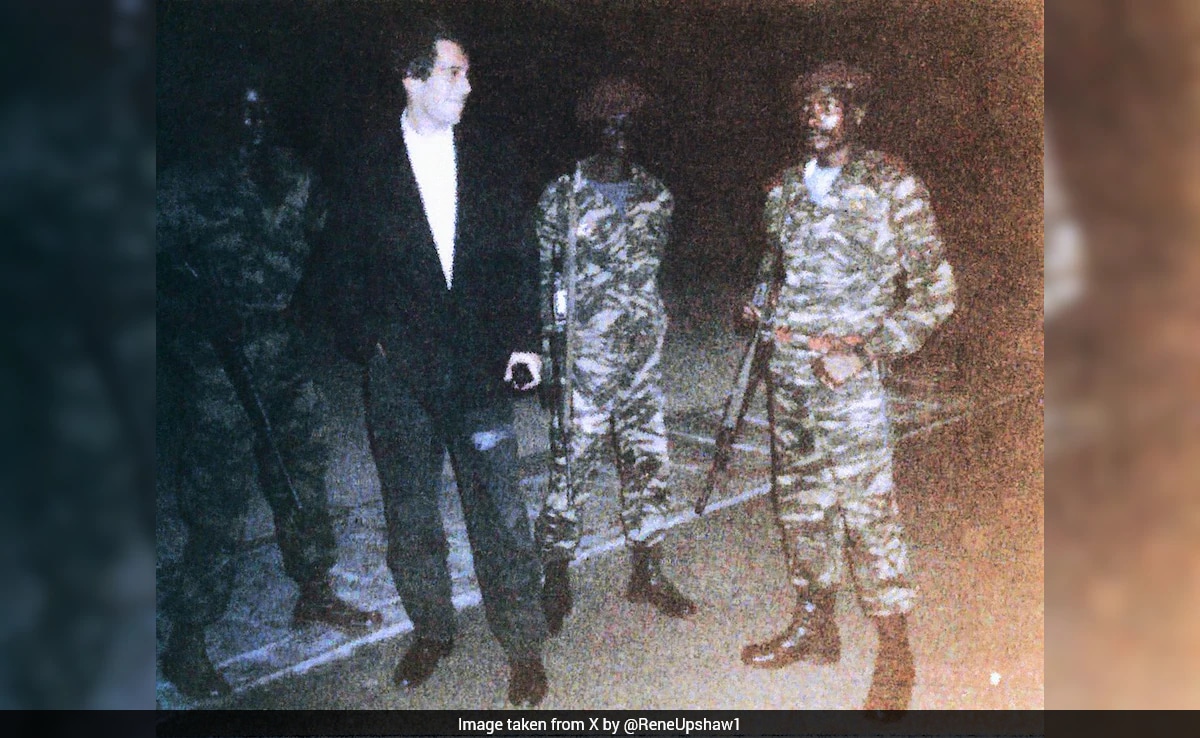
Ehud Barak orchestrated meetings through Epstein in New York.
As a West African nation stood on the precipice of political turmoil, two unexpected players worked behind the curtain to influence its destiny. Jeffrey Epstein, the notorious financier and sex offender, alongside Ehud Barak, Israel's former prime minister and defense minister, transformed Cote d'Ivoire's political instability into a lucrative business venture using confidential communications, discreet gatherings, and backdoor diplomacy.
The narrative commenced in late 2010 when a contested presidential election in Cote d'Ivoire sparked violent confrontations. While the UN confirmed Alassane Ouattara as the legitimate victor, incumbent Laurent Gbagbo refused to step down. A subsequent intervention by French forces and UN peacekeepers removed Gbagbo in 2011. By June 2012, after Ouattara thwarted an attempted coup, he met with Barak and Israeli Prime Minister Benjamin Netanyahu in Jerusalem to explore counterterrorism collaboration. Shortly thereafter, Israeli security advisors visited Côte d'Ivoire to provide consultation on security frameworks and reconstruction of presidential military forces.
Following his official "retirement" from his position as Israel's Defense Minister in 2013, Barak began marketing Israeli security expertise to troubled governments, with Epstein providing discreet assistance. Documents obtained by Drop Site News reveal Epstein writing to Barak: "with civil unrest exploding [...] and the desperation of those in power, isn't this perfect for you." Barak acknowledged: "You're right [in] a way. But not simple to transform it into a cash flow."
Their activities in Cote d'Ivoire involved facilitating agreements between Israel and the African nation. According to leaked correspondence and files from the US House Oversight Committee cited by Drop Site News, Epstein participated in Israeli intelligence operations throughout Africa in 2012, while Barak still served as Defense Minister.
Epstein facilitated the presentation of surveillance systems designed to monitor Ivorian telecommunications and internet traffic, developed by former Israeli intelligence personnel. These private arrangements eventually evolved into a formal security agreement between Israel and Cote d'Ivoire in 2014.
Working diligently in the background, Epstein arranged critical meetings. On June 18, 2012, coinciding with Barak's meeting with Ouattara, the Ivorian president's son met with Epstein in New York. Three months later, Epstein conducted separate meetings with Ouattara's niece Nina Keita and then privately with Barak at the Regency Hotel. Subsequently, Epstein traveled to Africa with planned visits to Cote d'Ivoire, Angola, and Senegal.
While Barak maintained that his interactions with Epstein were strictly personal, documentation suggests Epstein functioned as an intermediary. After departing from office in March 2013, Barak continued pursuing the agreement. On March 19, he received correspondence from his brother-in-law Doron Cohen containing materials from MF Group outlining proposals for a surveillance and video monitoring center in Abidjan. Their communications employed cryptic references to maintain secrecy.
Negotiations temporarily stalled following a UN report concerning Israeli-marked ammunition, resulting in an extension of the embargo. Barak subsequently contacted Israeli security figures including Amos Malka and Michael "Micky" Federmann, and on May 27, reached out to Sidi Tiemoko Toure, Chief of Staff to President Ouattara.
Using a "non-security" pretext of constructing hospitals, Barak arrived in Abidjan on August 1, 2013, holding meetings with high-ranking officials and President Ouattara.
On September 16, 2013, Barak received a comprehensive 13-page proposal from Aharon Ze'evi-Farkash detailing a SIGINT (Signals Intelligence) system for Cote d'Ivoire. Farkash noted, "The document is based on experience that has been accumulated during Amnon's and my service in the unit… I believe this meets the 'export‑of‑knowledge' test. I thought it appropriate to bring this to your attention."
Barak arranged additional meetings through Epstein in New York.
By mid-2014, UN embargoes were lifted, allowing the defense and internal security agreement between Israel and Cote d'Ivoire to be formalized.
The correspondence also revealed that Yoni Koren, a former Israeli intelligence officer and longtime aide to Ehud Barak, stayed at Epstein's Manhattan residence multiple times between 2013 and 2015. A Mossad veteran, Koren continued serving as an informal liaison between Barak and Israeli intelligence services.
Source: https://www.ndtv.com/world-news/how-jeffrey-epstein-helped-israel-establish-a-police-state-in-this-country-9645587