
BBC Navigates Political Crossfire: The Struggle for Impartiality in Today's Polarized Media Landscape
- Date & Time:
- |
- Views: 62
- |
- From: India News Bull
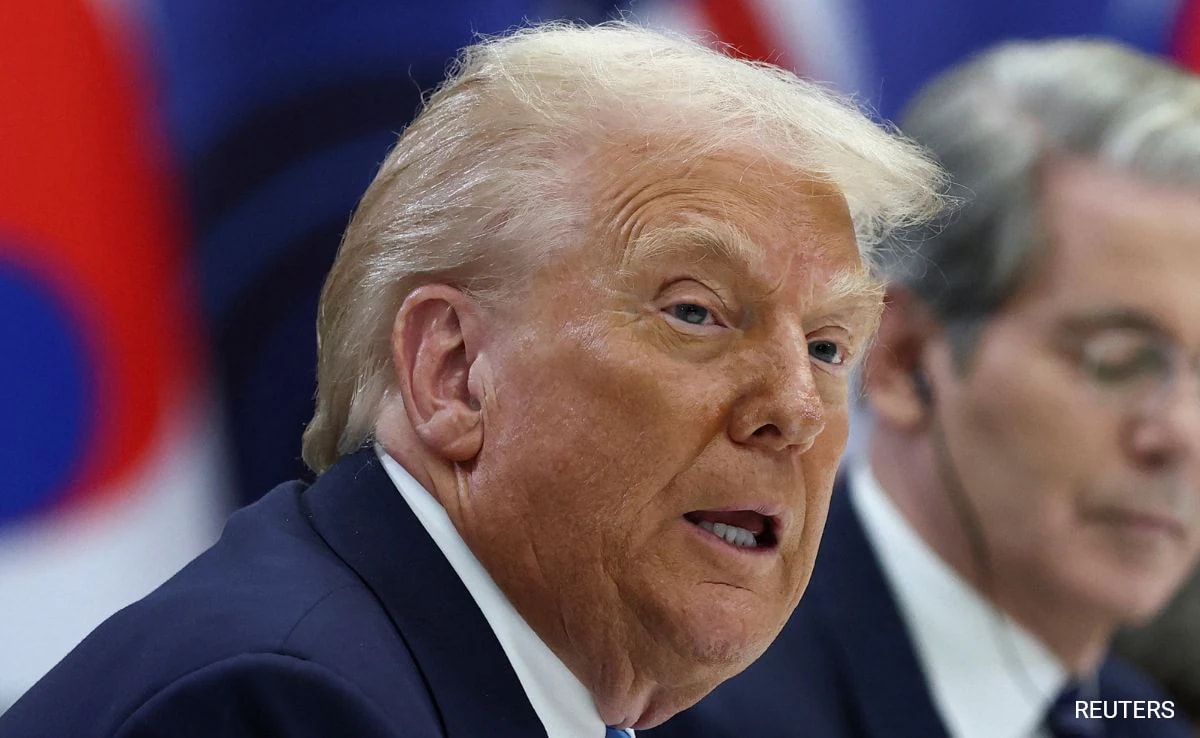
While 31 percent of Britons perceive the BBC as too left-wing, 19 percent view it as too right-wing, highlighting the broadcaster's position in a divided landscape.
United Kingdom:
The BBC finds itself at the center of an intensifying debate about impartiality and public broadcasting in an increasingly polarized society. Some accuse the organization of bias while others defend it as a bastion of balanced reporting.
Frequently used as a political pawn, the BBC faces criticism for its coverage on contentious issues ranging from climate change to Brexit. Recent events have placed the broadcaster under unprecedented scrutiny after it was revealed that a documentary aired last year contained misleadingly edited footage of US President Donald Trump's speech.
Trump has taken the extraordinary step of threatening legal action over the documentary, which examined American voters' willingness to re-elect a convicted felon and was broadcast prior to the US presidential election.
In Uxbridge, west London—formerly represented by BBC critic and ex-prime minister Boris Johnson—local resident Sandra Madden expressed conflicted feelings about the broadcaster. "I don't want to get rid of the BBC... but I think they have been biased on a lot of things," the octogenarian told AFP.
She described the editing of Trump's speech—which suggested he directly called for violence before the January 2021 Capitol attack—as "really the straw that broke the camel's back," concluding that the BBC was "too left-wing."
Despite these controversies, the BBC remains the UK's most popular news source according to media watchdog Ofcom. A recent YouGov poll revealed approximately half of Britons hold positive views of the broadcaster, compared to 29 percent with negative opinions.
BBC chairman Samir Shah recently defended the organization's "sacred job" of maintaining impartiality and truth. However, on controversial topics such as immigration, transgender rights, Gaza, or the rise of the far-right, the BBC consistently finds itself caught between opposing ideological camps.
Lee Edwards, professor at the London School of Economics' Department of Media and Communications, observed that the BBC "has been weaponised by people who want to use it as an example (in their view) of the world going too far in one direction."
During a recent parliamentary debate, Conservative lawmakers led criticisms against the BBC. Oliver Dowden accused the broadcaster of being "obsessed" with liberal and urban issues, while Nigel Huddleston criticized it for "seeking inclusivity and diversity" in "every area."
Conversely, Liberal Democrat MP Anna Sabine defended the BBC as vital in countering "dangerous misinformation and conspiracy theories that populists like... Donald Trump trade on."
The BBC's international World Service, described by Culture Secretary Lisa Nandy as a "light on the hill," reaches over 318 million people globally each week. London resident Jennifer Kavanagh, 78, called the World Service "an absolute lifesaver" in certain countries, adding that "The BBC has always been attacked from the right and from the left."
Author Dan Hind, who focuses on media and democracy, cautioned against exaggerating the decline in public trust of the BBC. However, he noted that increasing numbers of people, particularly youth, are "slipping outside the zone of the BBC influence" due to growing "distrust" and reliance on social media for information.
Robin Scott, another Uxbridge pensioner, stated she no longer relies on the BBC, preferring GB News—a right-wing commercial competitor where Reform UK party leader Nigel Farage regularly hosts a show. "They talk about things... that you never see talked about on the BBC," Scott explained.
The BBC "struggles to compete with these platforms because it's just not sensational, tries to be sober, it tries to be balanced, it tries to be accurate," Hind observed. Meanwhile, "a lot of very extreme political ideas are becoming much more easily accessible" on less-regulated social media platforms, often originating from the United States where traditional media has faced increasing skepticism under Trump.
Professor Edwards concluded that since people have a "certain expectation" of the broadcaster, "when you have events like the Trump speech or the debates around the coverage of the Gaza war, those things are perhaps more existential" for the BBC.
Source: https://www.ndtv.com/world-news/bbc-caught-in-crossfire-of-polarised-political-and-media-landscape-report-9642028