
Fossils Tell Story Of Baby Flying Reptiles Doomed By Tropical Storms
- Date & Time:
- |
- Views: 60
- |
- From: India News Bull
A tropical storm gathered strength over a group of islands at the edge of the ancient Tethys Ocean approximately 150 million years ago, ensnaring a baby pterosaur in its violent winds.
The young flying reptile, though capable of flight despite its young age, was no match for the storm's ferocity. The powerful winds fractured its humerus—the upper arm bone critical for supporting its wing membrane—before hurling the helpless creature into a lagoon where it drowned and was rapidly buried by turbulent mud.
Researchers have identified identical wind-induced fractures while examining well-preserved fossils of two baby Pterodactylus specimens discovered separately in Bavaria, southern Germany. These fossils, representing individuals of slightly different ages, were housed in different museum collections.
"We detected the injuries completely by chance during our examination," explained paleontologist Rab Smyth of the American Museum of Natural History in New York, who led the study published this month in Current Biology.
The research team affectionately named the hatchlings Lucky and Lucky II—unfortunate in their storm-related demise, but fortunate for science in providing valuable insights into juvenile pterosaur anatomy and Jurassic Period ecology.
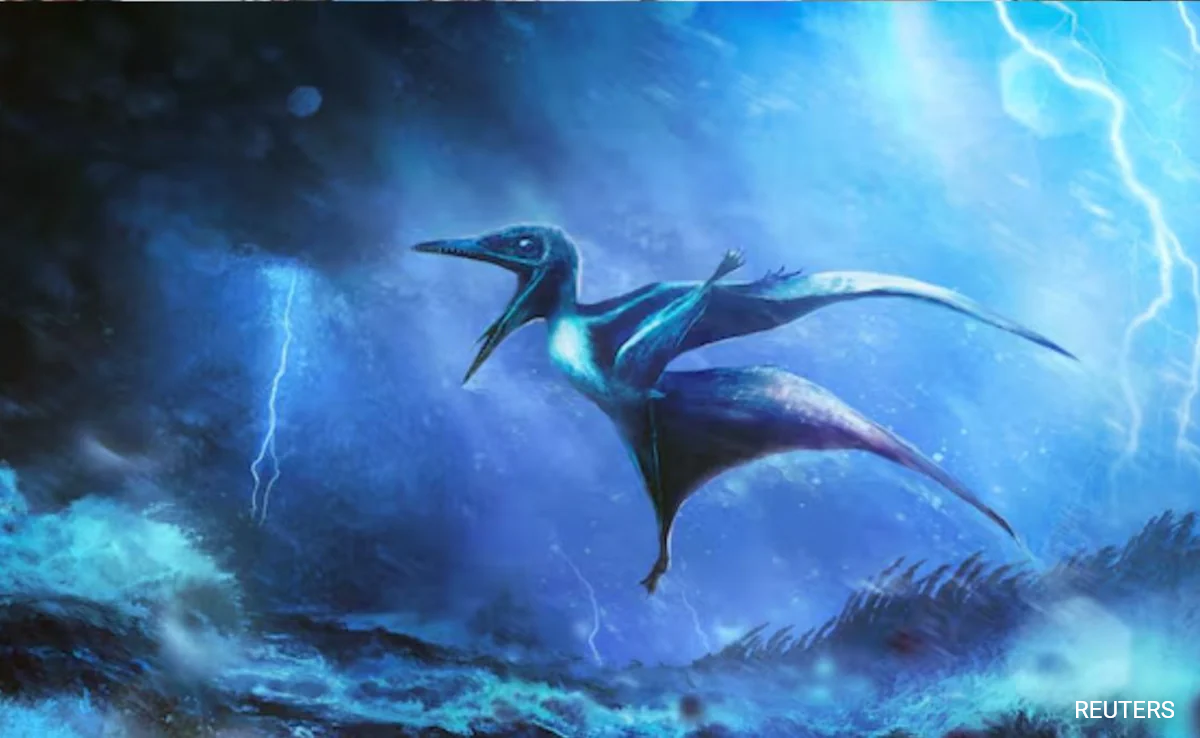
Pterosaurs, dinosaur relatives, were vertebrates' first evolutionary achievement of powered flight, preceding both birds and bats. Pterodactylus gained scientific recognition as the first described pterosaur in 1784, with more than 50 individuals of various sizes discovered since then.
The specimens in this study were extremely young at death, likely only days to weeks old. Their diminutive size is remarkable—wingspans less than eight inches (20 cm), "small enough to sit in the palm of your hand," noted Smyth.
"Their skeletal elements remained quite fragile and incompletely formed, which indicates their young age," added Smyth, who conducted this research while at the University of Leicester in England.
The fossils provided critical evidence about their cause of death.
"The crucial clues come from injuries preserved in the fossils. Both specimens exhibit upper arm bones broken diagonally along the shaft. This unusual fracture pattern doesn't resemble damage from a crash, fall, or predator attack. Instead, it suggests wings subjected to tremendous pressure, likely from powerful storm winds or waves," Smyth explained.
"We can speculate about the hatchlings' activities before the storm struck. They might have been practicing flight, hunting small invertebrates, or perhaps resting on the islands. When the storm hit, their minimal weight—just a few grams—would have provided virtually no resistance against the violent winds," Smyth said. The storm likely transported them considerable distances, perhaps several miles from their original habitat into the lagoon.
"While a wing fracture alone might not have been immediately fatal, their rapid sinking suggests water inhalation and drowning. They were quickly entombed in fine storm-bed sediments. Oxygen-depleted conditions protected their delicate remains from scavengers, preserving their bones in lifelike positions—providing an extraordinary snapshot of their final moments," Smyth elaborated.
Pterodactylus was a comparatively small pterosaur, with adults reaching wingspans of approximately three feet (one meter). They possessed relatively compact, broad wings, lightweight bodies, and elongated, pointed beaks lined with small, conical teeth.
"Even as hatchlings, they already displayed the same fundamental wing structure as adults, suggesting they likely achieved powered flight very early in life and functioned as small, independent fliers rather than depending on parental care," Smyth observed.
These fossils offer a glimpse into Jurassic ecosystems.
"It's tempting to envision prehistoric environments merely as stages for giant creatures, but these habitats were as dynamic and challenging as today's. In this era of massive animals, most creatures were actually small, including tiny individuals like these Pterodactylus hatchlings, each navigating daily hazards," said Smyth.
The fossils, according to Smyth, "provide a rare window into life's fragility for the smallest creatures, making their story particularly moving."