
US To Revoke Sanctions Waiver For Iran's Chabahar Port. Will It Affect India?
- Date & Time:
- |
- Views: 66
- |
- From: India News Bull
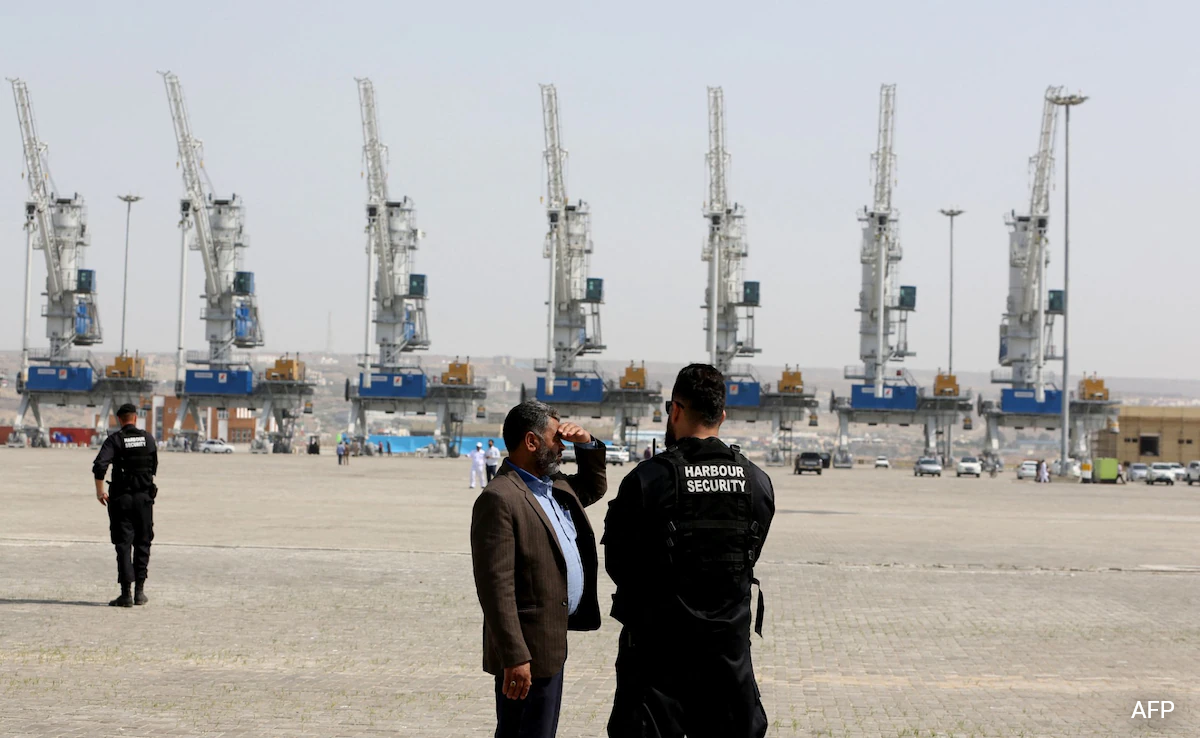
India allocated Rs 100 crore for Chabahar Port development in fiscal year 2024-25.
New Delhi:
The Trump administration has announced plans to withdraw the sanctions waiver for Iran's strategic Chabahar Port, previously granted in 2018, marking another challenging decision affecting India's interests. This revocation, scheduled to take effect from September 29 as stated by the US Department of State, threatens India's crucial connectivity project that provides access to Afghanistan and Central Asia.
The Trump team has positioned this action as part of Washington's "maximum pressure" strategy against Iran regarding its alleged nuclear program activities.
"Following the revocation's implementation, individuals operating the Chabahar Port or engaging in activities described under IFCA (Iran Freedom and Counter-Proliferation Act) may subject themselves to sanctions pursuant to IFCA provisions," the official statement indicated.
Chabahar Port's Strategic Significance for India
Situated in Iran's resource-rich Sistan-Balochistan province in the southeast, near China-operated Gwadar Port, Chabahar Port offers considerable strategic and logistical benefits. The facility comprises two principal terminals - Shahid Kalantari and Shahid Beheshti - each featuring five berths that enable substantial cargo handling capabilities.
Commonly referred to as the Golden Gate, this port allows India to circumvent Pakistan while establishing alternative trade and transit routes to landlocked Afghanistan and Central Asian nations. As the nearest Iranian port to Indian territory, it has been jointly developed by New Delhi and Tehran to strengthen connectivity and commercial relations.
The port's origins date back to the 1970s, with India consistently expressing development interest. Analysts suggest that a fully operational Chabahar port could serve as a counterbalance to Chinese influence in the Oman Sea and at Gwadar Port.
During Prime Minister Atal Bihari Vajpayee's 2001 Iran visit, New Delhi entered into an agreement with Tehran regarding Chabahar port development. However, progress stalled when the United States under President George W. Bush classified Iran among the "axis of evil," compelling India to step back from its strategic partnership with Tehran.
In subsequent years, India renewed its interest in the Iranian port, seeking to strengthen its commitment to Chabahar. May 2024 saw India and Iran signing a long-term bilateral contract for port operations, facilitating the management of Shahid-Beheshti terminal within the Chabahar Port Development Project for a ten-year period.
The Ministry of External Affairs (MEA) allocated Rs 100 crore for Chabahar Port in its 2024-25 budget, highlighting India's commitment to connectivity initiatives with Iran.
Potential Impact of Sanctions on India
Since India assumed operational control of the Shahid Beheshti terminal through India Ports Global Limited, the port has experienced remarkable growth in cargo throughput, handling over 8 million tonnes of goods and processing tens of thousands of containers. It has also functioned as a vital channel for delivering humanitarian assistance to Afghanistan, particularly following the Taliban's return to power.
The US sanctions will target entities facilitating Iranian oil sales and financing Iran's military operations and regional proxy groups, directly impacting Iran's shadow banking infrastructure.
With the waiver revocation, Indian operations at the port could now face US sanctions risk, complicating India's regional ambitions and potentially endangering New Delhi's substantial investments, which exceed $120 million in infrastructure development and credit lines.
This situation creates a diplomatic challenge for India as it attempts to maintain balance between its essential partnership with the United States and its strategic and economic relationships with Iran.